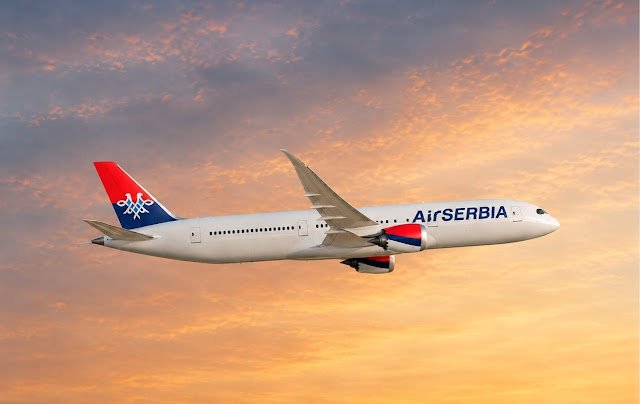

Aircraft manufacturer Boeing has held an airline planning workshop with Air Serbia in Belgrade as it looks to develop deeper commercial engagement with the country’s flag carrier. The Boeing Airline Planning Workshop is typically designed to help carriers analyse traffic flows, identify underserved markets and assess aircraft economics. Boeing uses these sessions globally with airlines to showcase how its aircraft can support different network strategies through performance modelling and market forecasting. Emphasis was also put on renewing the long-haul fleet with 787 Dreamliners and reaching new far-away markets. Air Serbia retired its last Boeing aircraft in February 2021, with the carrier and its predecessor operating Boeing 737s, 727s and 707s.
The US Embassy in Belgrade noted, “This collaboration reflects the momentum we are building in US – Serbia relations, with partnerships focused on tangible results and shared objectives. Boeing’s presence in Belgrade underscores confidence in Serbia’s aviation sector and its strategic importance”. It added, “Air Serbia holds a unique position as the only national carrier in the region offering direct flights to the United States, serving as an important economic and strategic link. The airline’s continued expansion contributes to stronger regional connectivity, the creation of new jobs, and the further strengthening of Serbia’s international presence”.

In March, Air Serbia said it was looking to grow its Embraer fleet while retaining a mix of ATR turboprops, Airbus jets and regional aircraft, noting that the ongoing war in the Middle East could prompt it to seek newer models sooner rather than later. “While it remains uncertain how long the conflict in the Middle East will persist, the business case last year did not justify new aircraft acquisitions, as the higher ownership costs were not offset by fuel savings. However, with fuel prices now significantly higher, and with uncertainty over how long they will remain at these levels or continue to rise, the economics have shifted considerably. That said, the situation remains fluid. Aviation is a constantly evolving industry, and we must remain adaptable. At present, market conditions are favouring aircraft manufacturers. New-generation aircraft deliver meaningful fuel savings, and as fuel prices increase, so too does demand for more efficient equipment. Our main strategy is not to take aircraft when we need them, but when there is a good deal and we have communicated that to lessors”, Air Serbia’s CEO, Jiri Marek, said.



