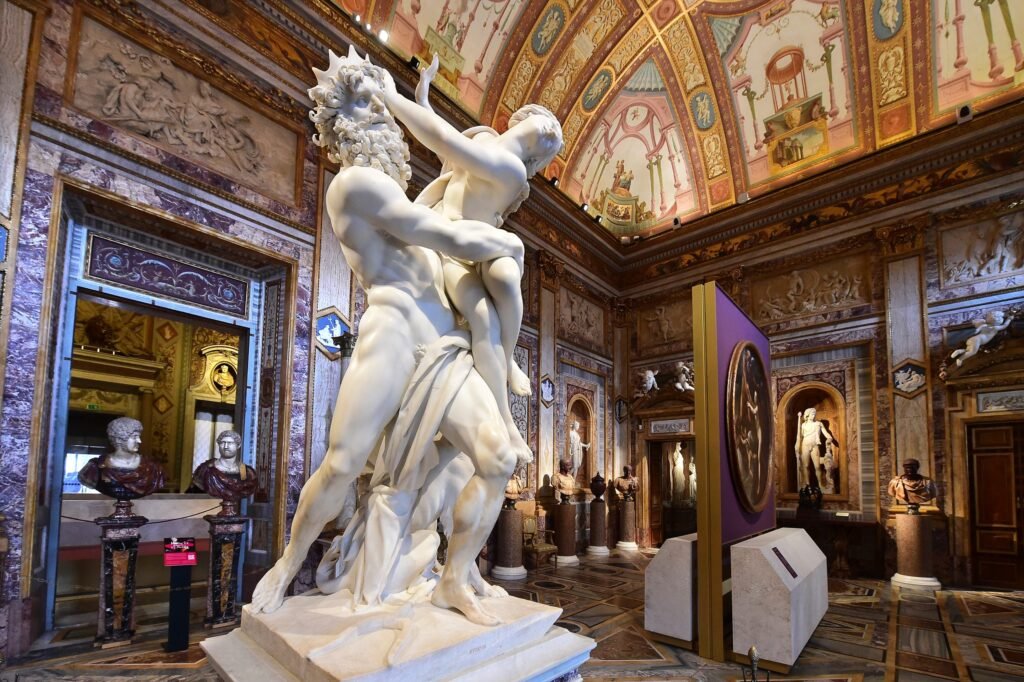
Heritage groups in Italy are pushing back against the Borghese Gallery’s newly released proposal to build an adjacent facility in Rome, arguing that the move prioritizes commercial over cultural interests.
Earlier this year, the 17th century villa, which sits within an English landscape garden and boasts a world-class collection of Baroque art, commissioned an engineering firm to assess the feasibility of constructing a new building that would allow it to display more of its collection and accommodate greater visitor numbers.
At present, the site limits capacity to 360 visitors who are admitted in two-hour time slots. Although the museum welcomed more than 630,000 visitors in 2025 (a roughly 25 percent increase from 2015), it’s a far-cry from other attractions in the Eternal City, which is experiencing a tourism surge in the wake of the 2020 pandemic.
Beyond increasing visitor numbers, the museum believes it needs more space to present works from its collection which have long remained in storage. The Borghese Gallery is due to hold a press conference on May 19 to provide additional details on the expansion project. Over email, a spokesperson for the museum, stressed that at this stage the process is “purely administrative in nature.”
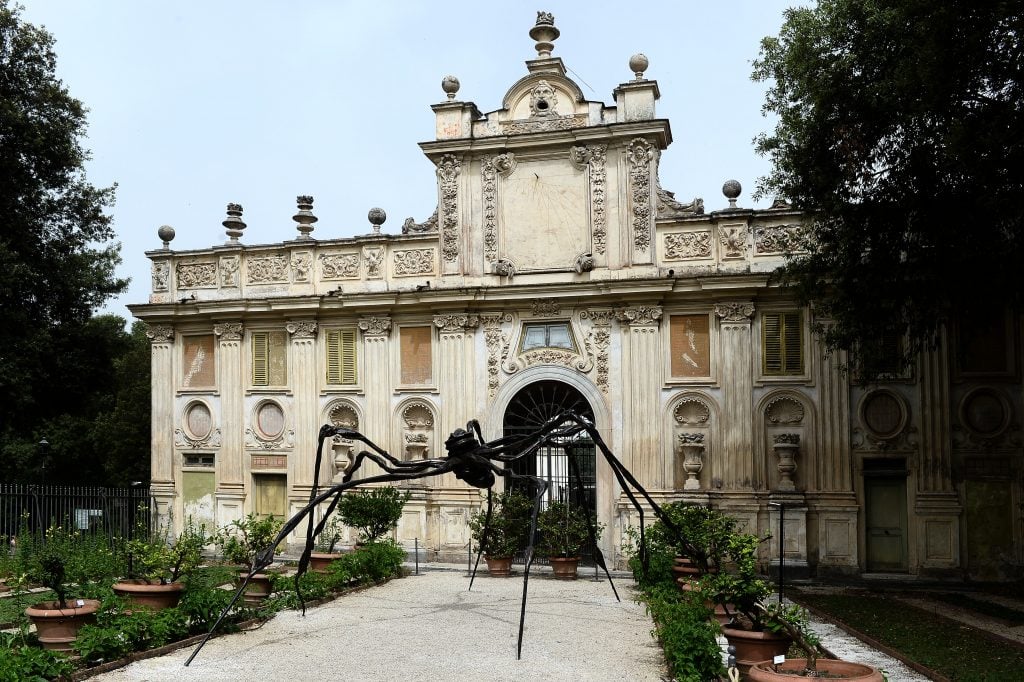
A general view of Louise Bourgeois: “Unconscious Memories” during the exhibition preview at Galleria Borghese on June 20, 2024 in Rome, Italy. Photo: Roberto Serra – Iguana Press/Getty Images.
Italian Heritage groups and art historians were quick to criticize the potential development, claiming it would disturb the carefully crafted aesthetics of the 400-year-old villa and its gardens.
“No to the construction of a new building next to the [Borghese] Gallery,” Friends of Villa Borghese, a nonprofit, wrote on Facebook. “One must truly hope that this outrage is cancelled.”
Another voice joining the backlash is Tomaso Montanari, an art historian and frequent defender of conserving Italy’s cultural heritage. “In the logic of a hypermarket, we must increase, increase, increase,” Montanari wrote in an op-ed published in the newspaper Il Fatto Quotidiano. “Never mind if we overturn the centuries-old aesthetic identity of something alive and unique in the world.”
The Borghese Gallery declined to comment on the pushback to its plans.
Rome City Council, which holds jurisdiction over the Borghese Gallery, approved the initial feasibility study in January of this year, but insists no decision has been made. In comments provided to Corriere della Sera, Massimiliano Smeriglio, Rome’s culture councilor, insisted the project was at an initial stage. “We have taken note of the needs expressed by the museum, but it is a generic will for now,” Smeriglio said. “The technical and economic feasibility project has to be submitted for evaluations and deductions.”
The Villa Borghese was built in the first decades of the 17th century by Cardinal Scipione Borghese, the nephew of Pope Paul V and a devoted art collector. The Borghese Gallery’s collection includes works by Bernini, Caravaggio, Correggio, Raphael, and Titian.