
Photo-Illustration: The Strategist; Photos: Natalie So, Jade Pover, Britney Gill
Everyone knows that person who spends weeks sniffing around travel blogs, going deep into Tripadvisor rabbit holes, collecting Google docs from friends of friends, and creating A Beautiful Mind–style spreadsheets to come up with the best vacations and itineraries possible. In this recurring series, we find those people who’ve done all the work for you and have them walk us through a particularly wonderful, especially well-thought-out vacation they took that you can actually steal.
For me, choosing a vacation destination is not about making a calculated choice between various options; rather, plans are typically made when a specific place (e.g., a lodging, a restaurant, a museum, a sight) has come to occupy so much real estate in the fantasyland of my brain that the only way to exorcise it is to find a way to get there. This isn’t always possible, of course. But in the case of Bowen Island’s Kitoki Inn, which I’d first heard about from designer and co-owner Kimberly Wu of the now-defunct accessories brand Building Block (RIP), I was instantly captivated by the location of a Japanese bathhouse in the middle of a forest and became determined to go. When its bookings opened for 2025, I managed to snag a two-night stay there. And that is how I ended up taking a trip to Bowen Island, 20 minutes off the coast of Vancouver, British Columbia. Here’s how I spent three days there.

Takenaka.
Photo: Naomi So
We’d actually flown into Vancouver a couple nights earlier — highlights of our brief time in the city included the shops Neighbour (they have three stores: Men, Women, and Object); Itsumo (Japanese home goods); Out & About (Japanese stationery and clothing); and One of a Few (women’s clothing). This morning, we went to Takenaka, which bills itself as an “onigiri café.” The food was refined but unpretentious, the setting low-key and casual. We ordered the colorful bara chirashi and the obanzai set, which comes with a lot of little dishes that allow you to DIY your own onigiri. It was delicious and filling.

The Queen of Capilano ferry to Bowen Island.
Photo: Naomi So
There are two ways to reach Bowen Island from Vancouver: ferry or water taxi. Both take off from Horseshoe Bay, but the latter is for foot passengers only, whereas the ferry can carry cars over, a very novel concept for an infrequent islandgoer like me. The organization of the terminal was impressive, with different booths and queues for each ferry line. We’d been warned that the wait could be quite long, but we only idled for 15 minutes before we were ushered onto the ferry platform. We didn’t even know that we’d begun moving until we looked out our window and saw the landscape passing us by. It’s a short ride, about 20 minutes long, that brings you to Snug Cove, the more commercial area on the East Coast of Bowen Island.
We had a little time to kill before we could check in at Kitoki, so we dropped by Artisan Square, an area that seems to comprise nearly half the shops and cafés on the island (it’s small). We were tempted by the hot chocolate at Cocoa West Chocolatier, but ended up getting fresh OJ and a cookie at Artisan Eats Café — which turned out to be very satisfying. We also swung by one of the few grocery stores on the island, the Ruddy Potato Whole Foods Market, where we discovered (and subsequently stocked up on) a German brand of sour, foamy gummies called Katjes that fueled our stay on the island.
Most places on the island are pretty close to one another; Kitoki is only a four-minute drive from the ferry but feels secluded and quiet, on the edge of a densely forested area. It was opened in 2021 by wife-and-husband team Mitsumi Kawai and Rob Leadley, who previously ran a restaurant called Kuma on Vancouver Island and were inspired to build Kitoki (which translates to “tree and spirit”) after staying at traditional ryokans during a trip to Japan.
The entrance to the inn is demarcated by a small placard and a wooden gate that needs to be opened by hand; a short drive up a fern-lined driveway takes you to three identical, stand-alone cedar-clad cabins.

Photo: Natalie So
As soon as I stepped into my cabin, I immediately felt calmed. Absent was the chaos of my toddler-dominated home. The measured design choices were apparent: The ceilings and walls were paneled in fir; a Noguchi-esque pendant hung over the queen bed in the center. I noticed more thoughtful details, like the canvas boxes under the bed that could be used to store clothes; a handmade quilt made by Kawai’s mother, Miju; a small hand broom and metal dustpan hanging near the entrance — all objects that strike that difficult balance between utilitarian and beautiful. One side of the cabin has large sliding glass doors that open up onto a wooden deck and beyond that, tall grasses and trees. There was a beautifully printed guide on the desk in the cabin, which I immediately read cover to cover. I learned from the guide that the cabins were built by Kawai’s dad.
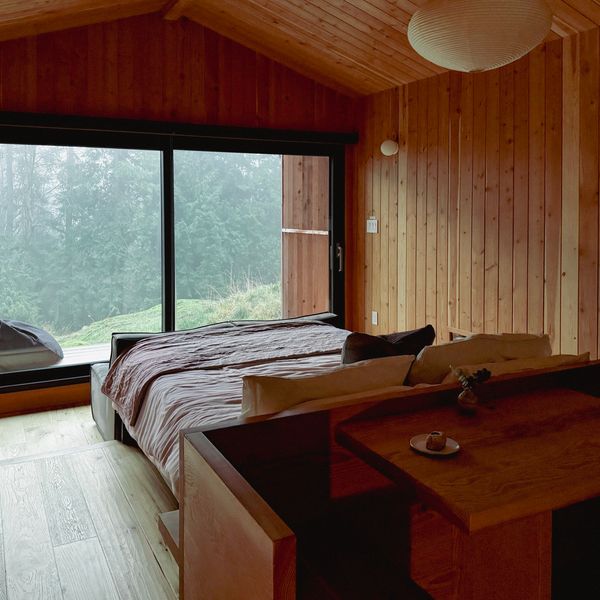
Photo: Jade Pover
[Editor’s note: Kitoki Inn lists its rates in Canadian dollars, so the rate shown is an approximate conversion to U.S. dollars.]
By visit, I mean I took ten steps to get from my cabin to a small wooden structure that appeared to be constructed from burnt wood. This building houses the self-serve gift shop as well as a lending library stocked with books, games, and puzzles. There was complimentary hojicha tea as well. The souvenirs were thoughtfully curated, mostly local brands, and I was particularly taken with the wooden bowls and sashiko-embroidered textiles, which I later learned were made by Kawai’s father and mother, respectively. Some of the bowls were in fact made from leftover salvaged wood that was used in the construction of the inn. I bought a couple bowls and a handkerchief, logging the purchases on a sheet of paper — it’s all on an honor system.


The cabins at Kitoki Inn have kitchenettes, but we were not prepared to cook dinner. Dining-out options on a Tuesday night were scant; the only restaurant that seemed to be open was Doc Morgan’s. I got fish tacos, which were decent but nothing to write home about, but the setting was quaint and pleasant, with an outdoor patio that looked out onto the harbor.
For every night that you spend at the Kitoki Inn, you can reserve two 90-minute slots at the private bathhouse — one in the evening and another in the morning. It’s first-come, first-serve, but there are only three cabins, so there are enough slots for everyone. It’s nice not to have to share the tub with strangers, which also means being able to bathe freely in the nude.
The bathhouse, located right next to the cabins, is walled on only three sides; the fourth looks out directly into a small bamboo-bounded Japanese garden, and then beyond that the forest. Looking out into nature while soaking in hot water is, I believe, one of life’s greatest pleasures. I stayed in until I started sweating and then had to get out to cool down.
Unfortunately, while rolling back the cover of the hot tub, I banged my head on a metal pole and nearly gave myself a concussion.


From left: Photo: Natalie SoPhoto: Joann Pai
From left: Photo: Natalie SoPhoto: Joann Pai
I take bathing seriously (an attitude inherited from my mother, who has a deep love for hot springs and onsens), so I made sure to squeeze in a morning soak before breakfast. I tried to follow the hydrotherapy cycle suggested by Kitoki: a hot soak for 10 to 15 minutes, followed by a 10- to 15-second cold rinse in the shower and then a rest in the garden-lounge area (which is also equipped with a fireplace), but instead, I decided to get back in the hot tub after the shower. I don’t like being wet on land. Afterwards, I headed back to my cabin to shower again and noticed some additional amenities, like the botanical shampoo from Sangre de Fruta (made on Bowen Island), the binchotan charcoal washcloths, and the soft made-in-Japan UCHINO towels — such a luxurious array of goods.

Photo: Natalie So
A simple but charming homemade breakfast is provided by the inn and stocked in the kitchenette upon arrival: homemade matcha granola with bits of candied ginger; scones (we had two types: fig and some kind of savory herb-cheddar); a seasonal compote (ours was strawberry); yogurt; coffee; and an array of loose-leaf teas from Ranger, a Canadian company that harvests a lot of its herbs in the Whistler area. It was a rainy and gray morning, but drinking tea and eating a simple breakfast in the cabin while reading the first book in the On the Calculation of Volume series felt idyllic.
The sun came out, so we decided to go to the pier, which is right next to the ferry dock. At Tell Your Friends Café, which serves healthy-ish soups and sandwiches, I ordered a breakfast sandwich and a curried carrot soup. We ate outside next to the water. Afterwards, I couldn’t resist a cup of baklava ice cream from Branch on Bowen next door. We also popped into the gift shop attached to Branch, called Narwhal, which carries an assortment of books, outdoor gear, and home goods.
A walk seemed nice at this point — nothing too strenuous or grueling, but something that would allow us to see a little more of the island — so we drove 15 minutes to the southwestern end of Bowen, where we ambled along the coastal Sea Walk trail. The trail starts at Collingwood Lane; 20 minutes in, we reached a beach, where we sat for a while before turning back. Along the way, we saw a peregrine falcon with a massive wingspan, as well as five vultures pecking at a dead sea lion. Magenta foxgloves were blooming everywhere, and the rain from earlier in the day had dried up, leaving perfectly clear blue skies.

Photo: Natalie So
I first came across Dana Lee Brown’s work via my friends Erin Wylie and Jonah Weiner’s newsletter, Blackbird Spyplane, and was struck by her thoughtful and frankly radical approach to the textile supply chain. We’d emailed back and forth last year after I had placed an order, so I was excited to meet her and see her atelier in person. Her shop is located on the lower level of Artisan Square; she’d recently moved into a larger space that wasn’t yet open to the public, so we made an appointment to visit. Online, Dana’s work looks modest and understated; when you actually touch the clothing in person — crewneck sweatshirts, button-up shirts, wool-hemp pants — it’s instantly clear that the fabric she’s using is exceptional, like nothing you’ve ever touched before. Her sweatshirts, for instance, are made from a custom Rambouillet (that’s a specific breed of sheep) wool-backed cotton fleece; every fiber originates from a North American farm, after which it is spun into yarns in North Carolina and Maine and then turned into fabric in Quebec. I ended up buying a cropped version of the sweatshirt in the colorway Lichen.
Dana was disarmingly kind, extremely knowledgable, and completely without airs. She served us some Jin Xuan milk oolong from Cultivate, a Vancouver tea shop, while she told us about the various goods in the shop, which includes a collection of vintage clothing she’s amassed over the years, as well as a selection of bowls and textiles made by the aforementioned Hiroshi and Miju Kawai — variations of what I encountered in the Kitoki gift shop.
There were a few additional dinner options on a Wednesday night (but still not that many), so we decided to go for Italian at Tuscany. We sat outside and ordered a pizza and pasta. The weather was extremely pleasant, and we left very full.
I took a minor risk and wore my CurrentBody LED mask into the hot tub this time, a perk of being completely alone in the bathhouse. I luxuriated in completely spacing out, looking out into the distance until the forest scene became fuzzy and abstract, something I do not do enough of at home.
I had to make the most of the bathhouse access and was sad that our stay was coming to an end. Two nights felt too short. I wish I could start and end every day with some hot-water therapy!

Photo: Natalie So
Dana Lee Brown had recommended lunch and a drink at the Bowen Cider House, and though we contemplated going, we decided to make a beeline for the ferry instead. We arrived just as they were loading the platform — we were the last car on. And then just 20 minutes later, we were back in Vancouver. We headed straight to La Grotta Del Formaggio, where I ate a delicious Montreal-style smoked-meat sandwich on their homemade focaccia.

As a chronic phone misplacer, I’ve found this phone strap to be very handy, especially for travel when you’re handling so many bags and belongings. I have this 8-mm. rope in the colorways Nautica and Neon Yellow, and also the 3-mm. rope in brown; they’re all easily interchangeable.

I don’t understand the American obsession with extremely large water bottles; when I’m out, I prefer the smallest possible water bottle that I can slip inside almost any purse or bag. Though plastic isn’t ideal, I like how simple, light, and generic-looking this water bottle is. I own multiple.

Very few drinks are sour enough for me, so I carry these crystallized lemon-powder packets in my purse, deploying two to three at a time when a drink is too boring or too sweet. And I no longer have to burden restaurant waiters with requests for a side of lemon wedges.

I always bring a small scarf when I travel. I particularly like these wool ones from Minneapolis-based Scarf Shop. Martha, the founder, mixes and creates the most electrifying and interesting colors, like Prince and Poppy, but offers a broad selection of neutrals as well. I also like the colorways Iceland and Straw.

The cropped wool-fleece sweatshirt turned out to be excellent for travel. It simulates the comfort of pajamas but is cut and sewn in a way that still feels polished. I also feel good knowing exactly where and how the sweatshirt is made and knowing who I’m supporting in wearing it.

I am a little neurotic about my skin-care regimen, and I like having clean washcloths on hand when I travel. I used to bring actual washcloths, but then I discovered these cleansing coins, which expand when you put them in water. They’re so compact and easy to throw into a toiletry kit. There are other less expensive brands that make similar products, but these are particularly sturdy and large.

I’ve tried and continue to try so many sunscreens; this one is my current favorite. I heard that a tinted mineral sunscreen gives the best protection against sunspots. This one is very mousse-y and light, and it doesn’t feel heavy on the face.

This is the easiest way to travel with a massage tool that doesn’t take up a lot of space. I like to roll out my feet and back with these balls, and I always bring one with me when I travel.
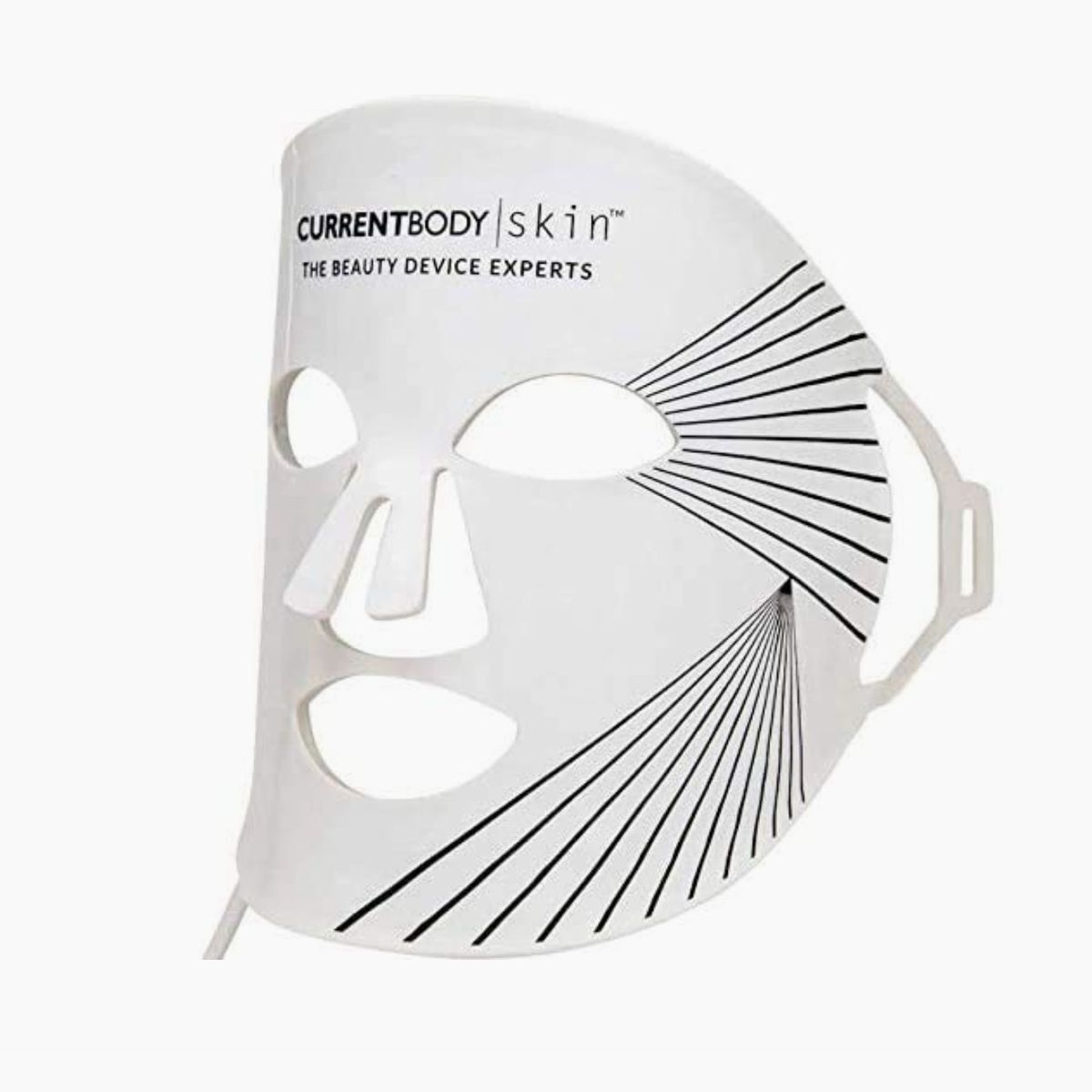
I love skin-care devices, but realistically, I only use the ones that require the least amount of effort, like this LED mask that you wear for ten minutes at a time. It’s easy to travel with, and with consistent use, I’ve seen a noticeable difference in my complexion. I have the older model (Series 1).

I am very particular about the shoes I wear because I have a lot of foot problems (bunions, flat feet, tendinitis, etc.). The Oboz x Blackbird Spyplane Swagtooth are extremely comfortable and strike a rare balance between rugged and aesthetically appealing. They are meant for hiking and walking, but they can also function as a dressier and more stylish “boot” when worn with the right pair of pants. I also love the dark-purple colorway, a unique hue I find novel and interesting but still dark enough to not be too conspicuous.
[Editor’s note: Natalie’s Obozes were a limited edition, but she says these are similar even if not dark purple.]
The Strategist is designed to surface useful, expert recommendations for things to buy across the vast e-commerce landscape. Every product is independently selected by our team of editors, whom you can read about here. We update links when possible, but note that deals can expire and all prices are subject to change.


