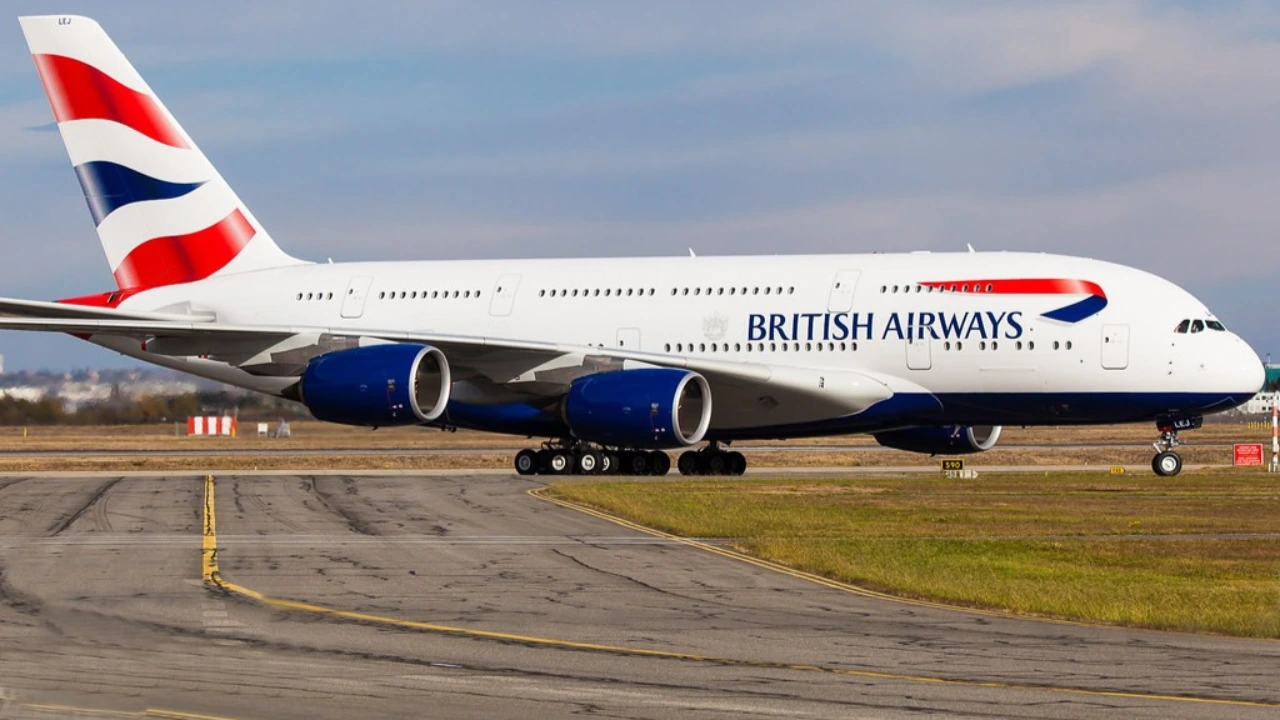
LONDON— A British Airways (BA) Airbus A380-800 performed a go-around during its final approach into London Heathrow Airport (LHR), after appearing to touch down too deeply on the runway before initiating a climb-out.
The event unfolded during the airline’s long-haul service from Los Angeles International Airport (LAX) to its primary hub in London.
The aircraft briefly made runway contact before applying thrust and aborting the landing, turning what initially appeared to be a firm touchdown into a standard go-around procedure.
The maneuver has drawn attention from aviation observers as an example of a safety-first decision during a critical phase of flight.

A380’s Heathrow Go-Around
The flight involved British Airways Flight BA268, operated by an Airbus A380-800, which departed Los Angeles International Airport (LAX) and headed for London Heathrow Airport (LHR). The superjumbo reached its destination on schedule but encountered an unstable approach during the final landing phase.
Based on available flight data and visual footage, the aircraft appeared to touch down later than ideal on the runway before the crew initiated a go-around. The decision came within seconds of landing contact, demonstrating rapid crew response during the final approach phase.
The aircraft then climbed away safely, following standard missed-approach procedures, before repositioning for a subsequent landing attempt at Heathrow. No injuries or technical issues were reported following the maneuver.
Go-Around Safety
A go-around occurs when pilots discontinue a landing attempt and climb back into the traffic pattern. Aviation experts consider it a standard and essential safety procedure, particularly when an approach becomes unstable or the aircraft lands beyond the ideal touchdown zone.
In this case, the decision likely followed stabilized-approach criteria, which require pilots to abandon landing if speed, alignment, or touchdown distance falls outside safe limits. The Airbus A380, being one of the world’s largest passenger aircraft, requires precise runway positioning to ensure safe stopping distance.
Such decisions are strongly encouraged in commercial aviation training, where safety takes priority over landing completion. Pilots regularly rehearse go-around procedures to ensure immediate execution when required.

Landing Risk Control
Unstable or long landings can increase the risk of runway excursions, making go-around decisions critical in preventing potential incidents. Aviation safety guidelines emphasize that any unsafe landing attempt should be discontinued without hesitation.
For British Airways, the event reflects adherence to standard operating procedures rather than operational failure. The crew’s decision to reject the landing aligns with global aviation safety practices that prioritize aircraft control and passenger safety over schedule adherence.
Stay tuned with us. Further, follow us on social media for the latest updates.
Join us on Telegram Group for the Latest Aviation Updates. Subsequently, follow us on Google News


