
 Getty Images
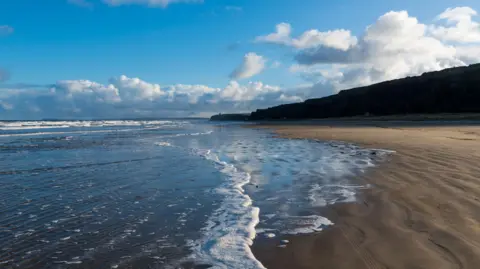
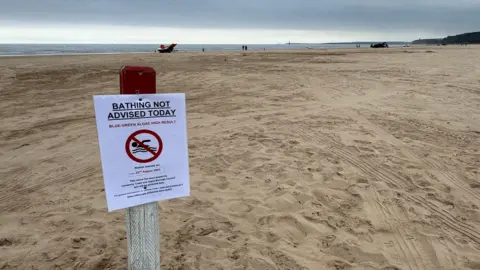
A bathing ban at a popular north coast beach due to the presence of blue-green algae has now been lifted.
High levels of the potentially toxic algae were found at Benone Strand on Thursday.
The Department of Agriculture, Environment and Rural Affairs (Daera) said blue-green algae was no longer a risk.
A number of reports of the algae in loughs and waterways in Northern Ireland have been made over the past few months, particularly at Lough Neagh.
Temporary signage at Benone advising against bathing has now been removed.
What is blue-green algae?
 PA Media
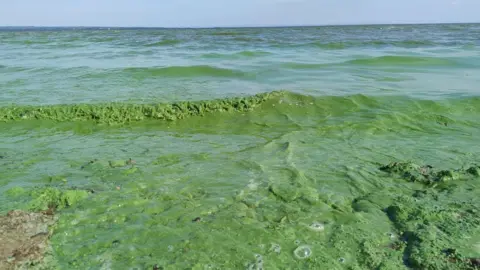
Blue-green algae, technically known as cyanobacteria, is a collection of microscopic organisms that are naturally present in lakes and streams.
Under certain conditions, blue-green algae can become abundant in warm, shallow, undisturbed, nutrient-rich surface waters that receive a lot of sunlight.
When this occurs, blue-green algae can form blooms that discolour the water, or produce floating mats or scums on the water’s surface.
It can spread rapidly, with blooms beginning to double every seven to 14 days.
While some blue-green algae can produce toxins, it is not possible to tell by sight alone. For pets, livestock and wildlife, the blooms can be extremely dangerous.
If people are exposed to high levels of blue-green algae, either through contact with water blooms, swallowing the water or inhaling airborne droplets, may cause health effects.
These can include diarrhoea, nausea or vomiting, skin, eye or throat irritation; and allergic reactions or breathing difficulties.
Read more here.