HONG KONG- Cathay Pacific (CX) and Hong Kong International Airport (HKG) faced a safety-related disruption when a Melbourne-bound aircraft experienced a tire explosion shortly after departure. The flight returned safely with no injuries reported.
The CX105 service departed from Hong Kong International Airport en route to Melbourne when the crew detected indications of a flat tire after takeoff. Fire services were placed on standby, and the aircraft landed safely around 1 AM.
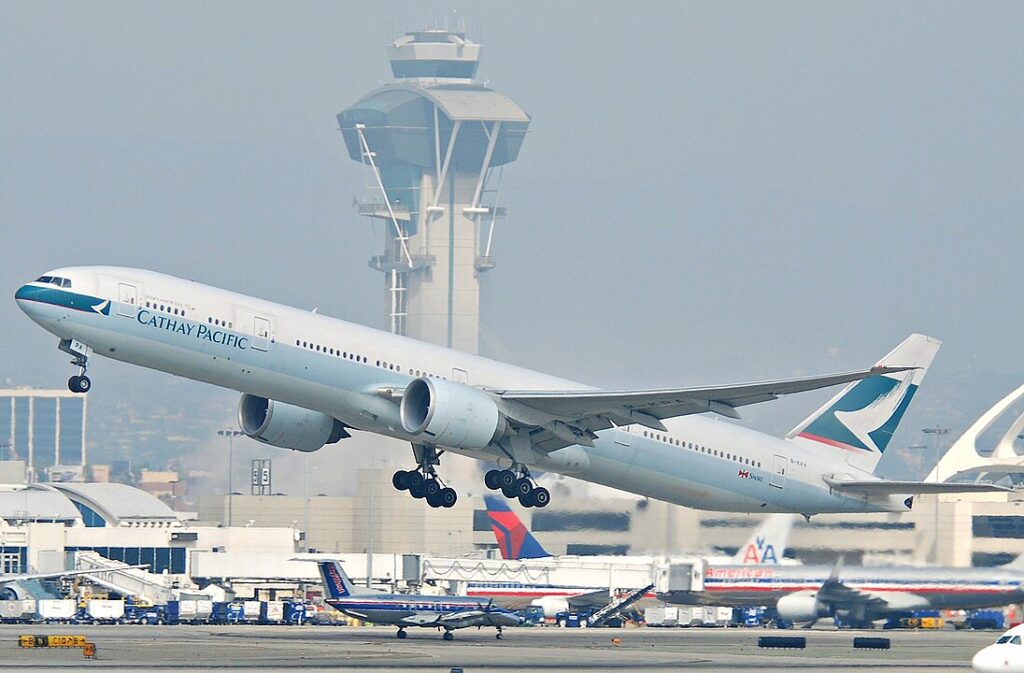
Cathay Pacific Flight Tire Explodes Mid-Air
CX105 departed at 12.30 AM and circled for about an hour while the crew evaluated aircraft handling, fuel conditions, and runway landing requirements.
Reported by The Standard, a passenger described hearing a loud bang during takeoff on social media, noting that the disruption caused missed connections and affected pre-arranged accommodation in Tasmania.
Upon landing, the aircraft was held briefly on the runway before passengers and crew disembarked without incident.
Airport Authority information confirmed that affected travelers were rebooked on a rescheduled service that departed at approximately 7 AM.
Cathay Pacific stated that the crew followed standard procedures after indicators confirmed a flat tire post-takeoff.
A replacement aircraft was arranged later the same day to transport all passengers to Melbourne. The airline added that engineering teams are conducting a full inspection and will complete all required maintenance.
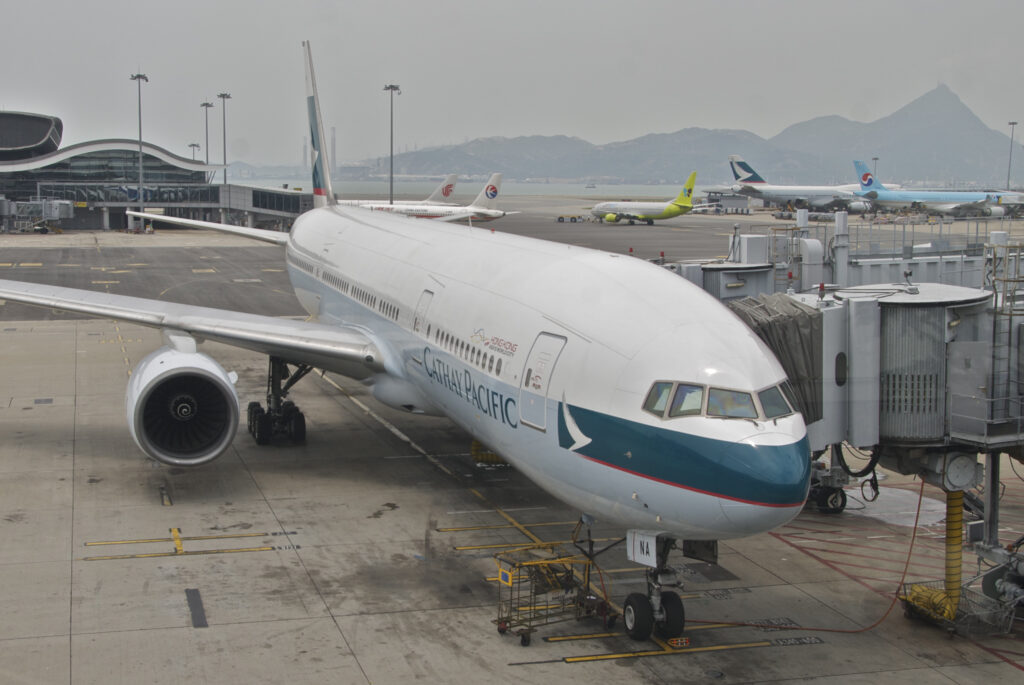
Airline Safety and Coordination
Commercial pilots undergo simulator assessments every 6 months to practice manual aircraft handling and responses to non-routine events such as tire failures, emergency returns, and takeoff abnormalities.
These sessions focus on decision making, adherence to safety procedures, and operational discipline during abnormal scenarios.
Cathay Pacific emphasized that safety remains the core priority, supported by structured return protocols, escalation procedures, and coordinated communication between cockpit crew, operations control, and airport authorities.
Ground teams, flight operations units, and airport authorities coordinated the passenger transfer process after CX105 returned.
Rebooking activities were initiated immediately to minimize onward disruption, ensuring travelers were accommodated on the earliest available departure.
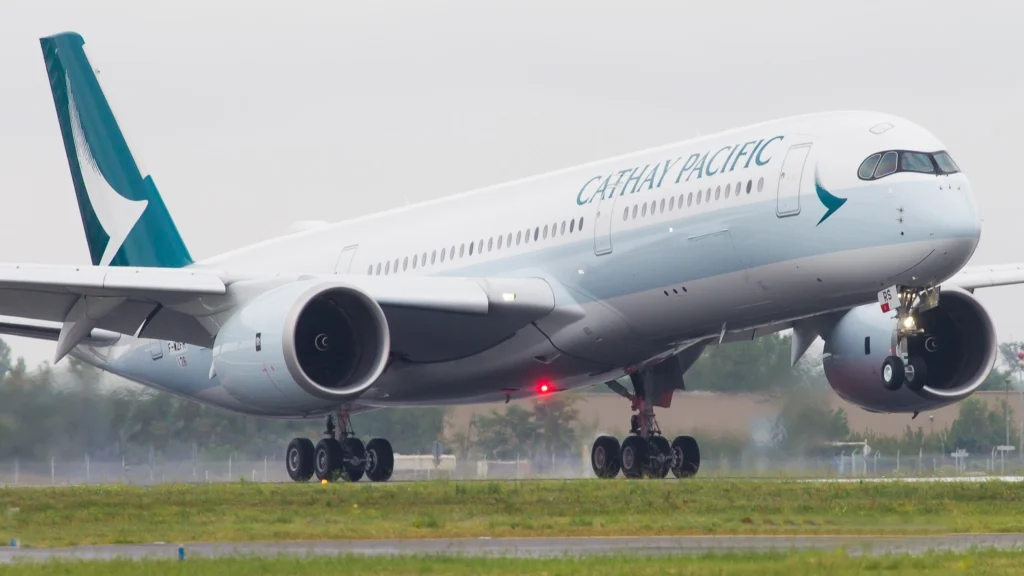
Similar Incident
Cathay Pacific (CX) grounded an Airbus A350-1000 after a tail strike occurred during a go-around at Hong Kong International Airport (HKG).
The aircraft had arrived from Ho Chi Minh City (SGN) and was approaching Runway 07C when it began veering left during the final stage of descent. The crew initiated a go-around to stabilize the approach, and the tail strike occurred during the maneuver rather than touchdown.
Despite the impact, the aircraft climbed normally to 6,000 feet and later completed a safe landing on its second approach.
FlightRadar24 data shows the landing took place 34 minutes behind schedule at 11 minutes before midnight.
The aircraft, only four years old, has remained grounded for four days while engineering teams conduct structural inspections and repairs. Cathay Pacific will release further information once more details are available.
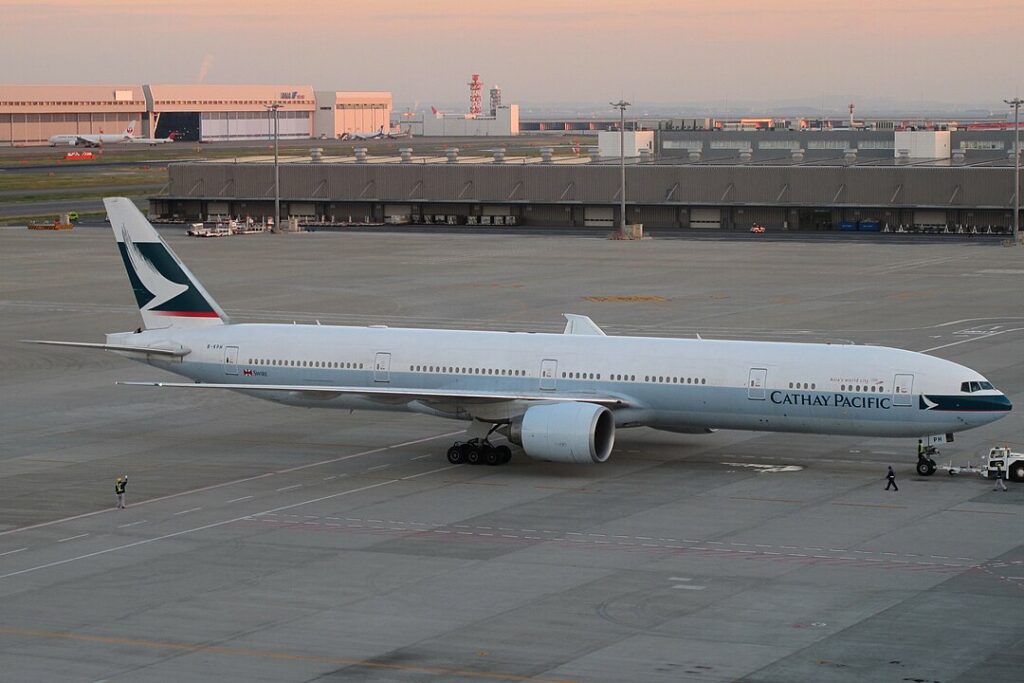
Understanding Tail Strikes
A tail strike occurs when excessive nose-up pitch causes the underside of an aircraft’s aft fuselage to contact the runway.
Airbus data shows that most tail strikes occur during landing, with integrated pitch-limit cues appearing below 400 feet and audible “PITCH PITCH” alerts when critical pitch values are exceeded.
Boeing’s Tail-Strike Protection system, introduced on the 777-300ER, automatically adjusts elevator inputs during takeoff if an excessive rotation rate is detected.
Go-arounds demand precise aircraft handling because pilots apply TOGA thrust and pitch-up input at the same time. Autopilot and autothrust systems support the maneuver, but pilots must manage the rapid pitch response to prevent over-rotation and structural damage.
Stay tuned with us. Further, follow us on social media for the latest updates.
Join us on Telegram Group for the Latest Aviation Updates. Subsequently, follow us on Google News


