SHANGHAI- A China Eastern (MU) Airbus A350-900 was involved in an unusual ground collision at Shanghai Hongqiao Airport (SHA) after arriving from Chengdu (CTU). The aircraft struck a jet bridge twice during taxi, raising concerns about a possible mechanical failure.
The airline confirmed a malfunction during low-speed taxi, while all passengers remained safe. The rare sequence of events has triggered an ongoing investigation.
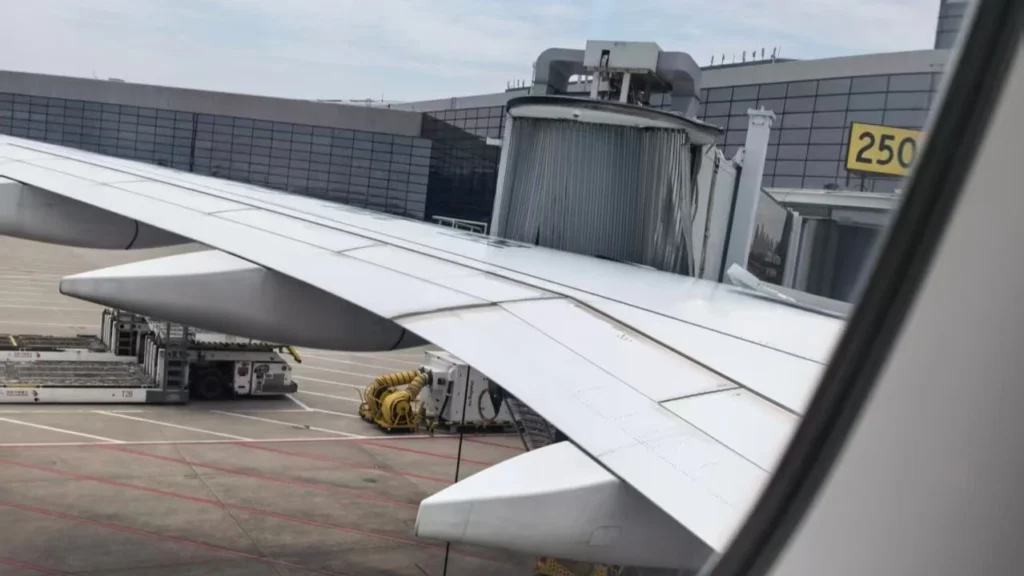
HXD3D0138 | X.com
China Eastern A350 Jet Bridge Collision Explained
The incident occurred around 11:40 AM local time on May 2, 2026, involving flight MU 5406. The aircraft departed Chengdu at 9:18 AM and arrived in Shanghai at 11:33 AM after covering approximately 1,033 miles.
The aircraft, an Airbus A350-900 registered as B-324W, had been in service for about 4 years and 3 months, though some reports describe it as five years old.
While taxiing toward the gate, the aircraft failed to stop as expected, and its left engine and wing struck the jet bridge.
Video footage from multiple angles shows an unusual sequence. After the initial impact, the aircraft reversed using thrust, moved backward, and then advanced again, striking the jet bridge a second time.
Cabin crew were seen looking toward the tail camera display with visible confusion as the situation unfolded.
According to OMAAT, the footage confirms that the pilots actively attempted corrective actions, indicating the issue was likely linked to aircraft systems rather than standard operating procedures.
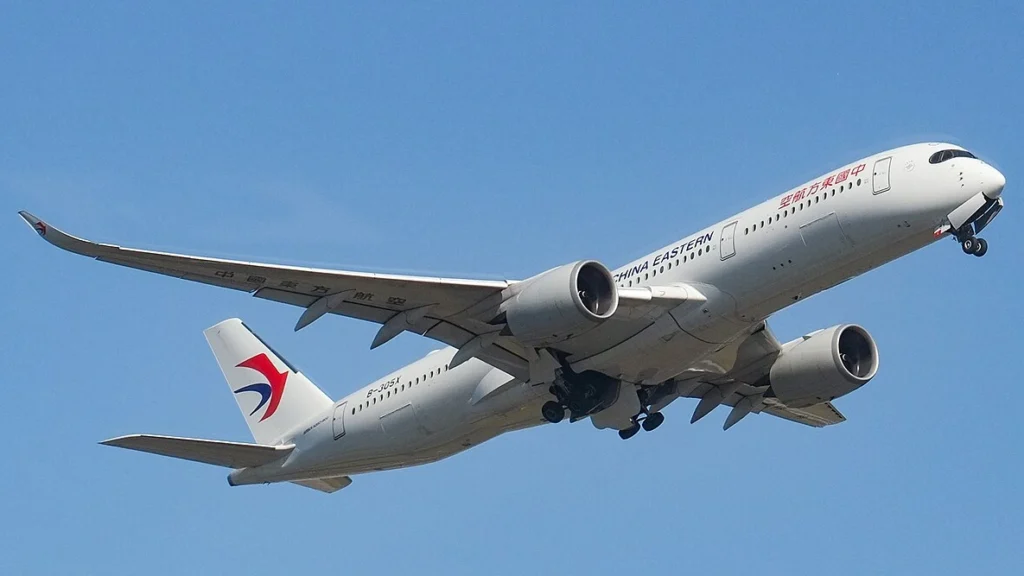
https://commons.wikimedia.org/wiki/File:20230821_Airbus_A350-941_of_China_Eastern_Airlines_(B-305X)_at_SYD_02.jpg
Mechanical Failure Theories and Flight Crew Actions
China Eastern Airlines stated that a mechanical malfunction occurred during taxi. Early analysis suggests a possible braking system failure, as the aircraft was unable to stop under normal conditions.
The use of reverse thrust indicates that the pilots attempted to counter forward motion when braking proved ineffective.
After reversing, the aircraft’s forward movement resumed, leading to a second impact. This sequence remains the most unusual aspect of the incident.
SCMP Reports indicate that the aircraft eventually stopped after the engines were shut down. This raises questions about how quickly the malfunction developed and whether earlier engine shutdown was feasible given system feedback and situational awareness.
It remains too early to assign responsibility. The investigation will likely examine braking systems, thrust control logic, and pilot inputs to determine the root cause.
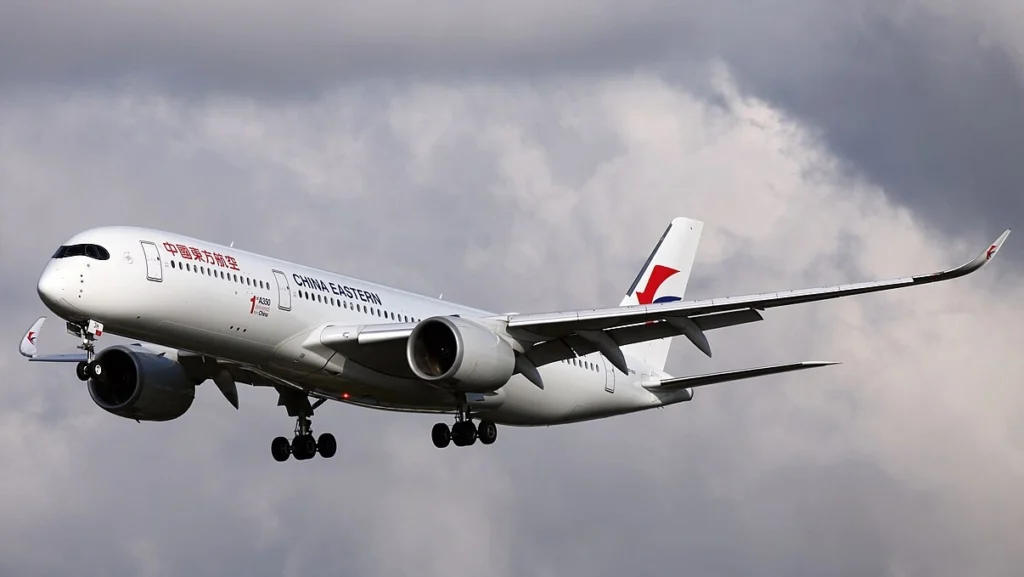
https://commons.wikimedia.org/wiki/File:B-323H_Airbus_A350-900_China_Eastern_LHR_13.10.22_(52429742528).jpg
Passenger Experience and Onboard Observations
Passengers reported hearing a loud noise at the moment of impact. Some described the sensation as similar to mild turbulence, suggesting limited force inside the cabin.
After disembarking, passengers observed visible damage to the aircraft’s wing and reported unusual engine sounds.
Disembarkation was delayed by more than 30 minutes, after which passengers exited from the unaffected side of the aircraft.
China Eastern provided compensation of 300 yuan (approximately $44) to affected passengers.
The airline stated that the crew handled the situation according to established procedures and ensured an orderly evacuation.
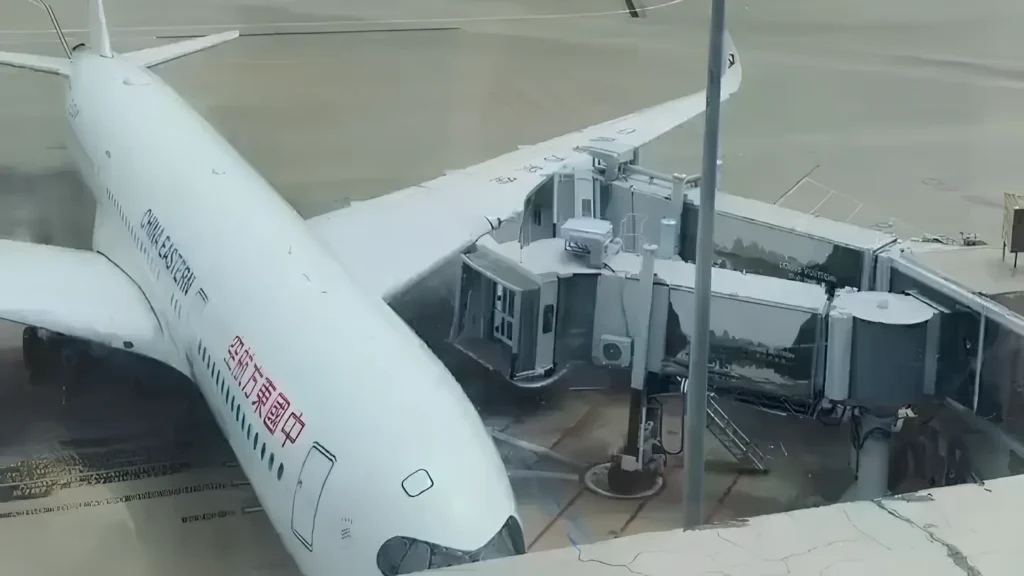
HXD3D0138 | X.com
High Traffic Period and Investigation Status
The incident occurred during China’s May Day holiday peak travel period. Authorities estimated that 1.52 billion trips would take place nationwide, including approximately 11.75 million air travelers.
High traffic density at major hubs like Shanghai Hongqiao increases operational pressure, though such incidents remain extremely rare.
Importantly, the pilots may have prevented a more severe outcome, such as a collision with terminal infrastructure.
No injuries were reported among passengers or crew, and there were no confirmed injuries on the jet bridge.
The cause of the incident remains under investigation. Authorities are expected to analyze aircraft system data, cockpit inputs, and ground coordination.
The event highlights the importance of redundancy in braking systems and the effectiveness of pilot training in managing abnormal ground scenarios.
While the aircraft sustained damage, the safe outcome reflects controlled risk management under unexpected conditions.
Bottom Line
A China Eastern Airbus A350 struck a jet bridge twice at Shanghai Hongqiao Airport due to a suspected mechanical malfunction during taxi.
Despite the unusual sequence of events, all passengers remained safe, and the incident is under detailed investigation.
Stay tuned with us. Further, follow us on social media for the latest updates.
Join us on Telegram Group for the Latest Aviation Updates. Subsequently, follow us on Google News


