ATLANTA- A Delta Air Lines (DL) flight from Seattle–Tacoma International Airport (SEA) to Taiwan Taoyuan International Airport (TPE) diverted after a serious onboard altercation involving a passenger and a flight attendant.
The incident escalated when the passenger used a racial slur and issued threats mid-flight.
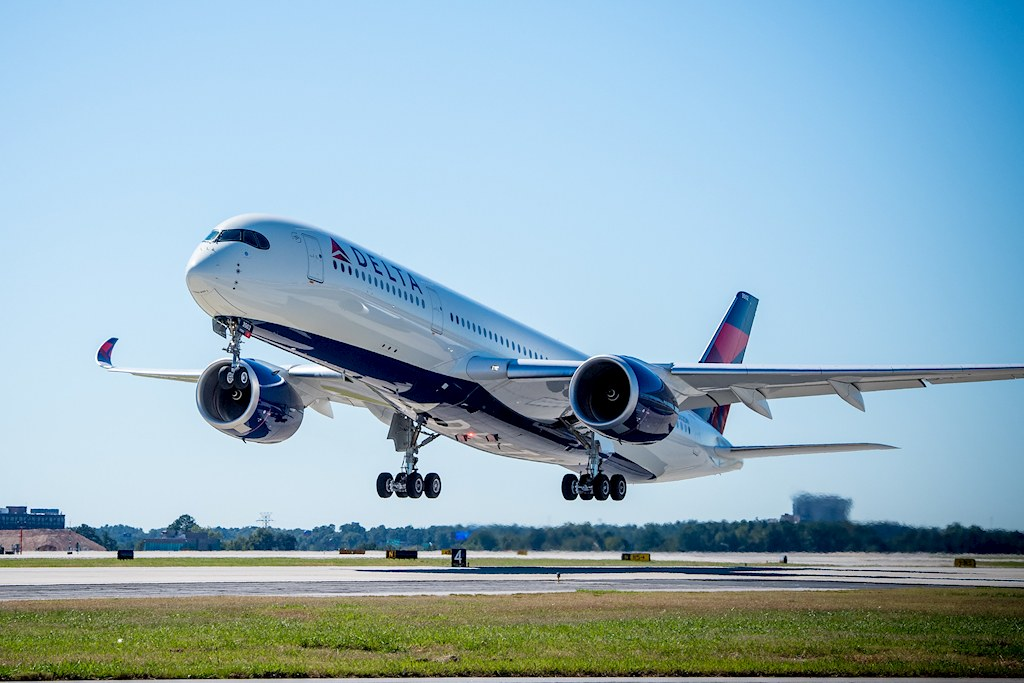
Operating as Flight DL 69, the Airbus A350-900 diverted to Ted Stevens Anchorage International Airport (ANC), where authorities detained the passenger.
The case highlights strict aviation safety enforcement and legal consequences for inflight misconduct.
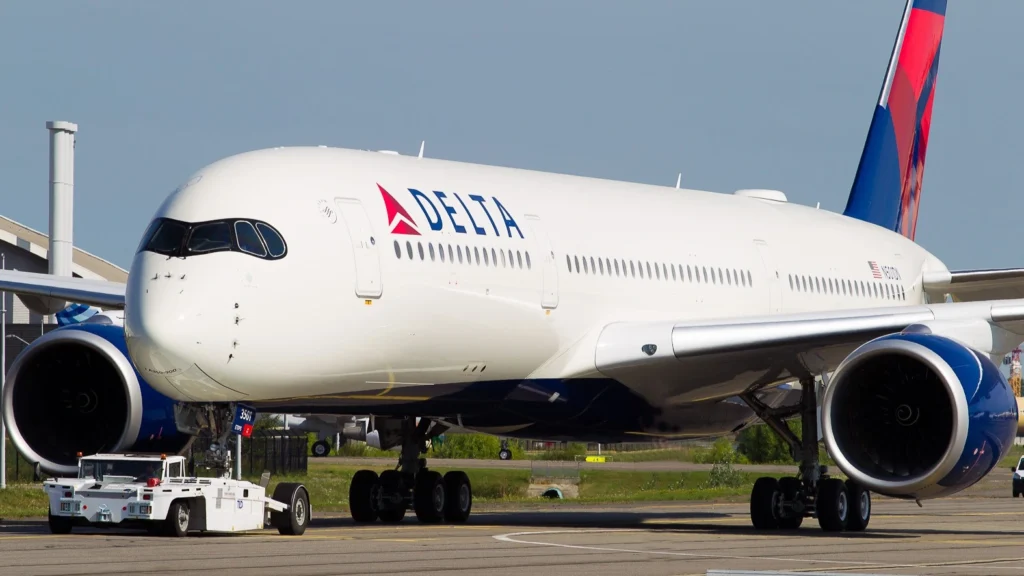
Delta A350 Flight Emergency Landing
According to an affidavit filed by the Federal Bureau of Investigation, the incident occurred on March 14 shortly after departure from Seattle at approximately 5:00 PM.
The aircraft climbed to a cruising altitude of 36,000 feet and tracked north along the Canadian coastline on what was scheduled to be a 13-hour transpacific journey.
Fellow passengers reported that Malcolm Martin displayed aggressive behavior even before boarding.
Reported by PYOK, the situation escalated after the main meal service when flight attendants moved to the galley to eat.
Martin entered the forward galley and forcefully grabbed a flight attendant’s shoulder to get attention.
The crew member, identified as “V-1” in the affidavit, stated that Martin asked about lavatory availability in a disrespectful tone.
The flight attendant explained that the locked indicator on the door meant the lavatory was occupied and returned to his meal. Martin continued making disrespectful remarks. After using the lavatory when it became available, he resumed the confrontation upon exiting.
Verbal Abuse and Threat Escalation Onboard
The disagreement intensified into a heated verbal exchange between Martin and the flight attendant.
During the argument, Martin allegedly used a racial slur against the African-American crew member and accused him of discriminatory behavior based on race.
He further escalated the situation by threatening to “kick his ass” upon arrival in Taipei. This marked a shift from verbal disruption to a more serious safety concern.
Another flight attendant observed the situation and initially classified it as a Level 2 threat, indicating physically abusive behavior.
As the confrontation escalated, the threat level was upgraded to Level 3 due to explicit threats and aggressive actions.
Crew Intervention and Passenger Involvement
As tensions rose, the cockpit was placed under lockdown in line with standard security procedures.
The second flight attendant prepared a restraint kit and physically positioned himself between the two individuals to de-escalate the situation.
The confrontation nearly turned physical. The second crew member attempted to restrain the situation while passengers intervened by surrounding Martin to prevent further escalation.
During this sequence, Martin allegedly swung at the second flight attendant, although the punch did not make contact. The situation was eventually brought under control, and Martin was escorted back to his seat.
Diversion to Anchorage and Legal Proceedings
Despite regaining control in the cabin, the flight crew decided to divert the aircraft to Anchorage as a precaution. Upon landing, law enforcement officers boarded the aircraft and took Martin into custody.
During an initial interview, Martin declined to answer questions from authorities. He has been charged with interference with flight crew members under federal law.
If convicted, he faces a maximum penalty of up to 20 years in prison and a fine of up to $250,000. However, custodial sentences in such cases are rare and typically do not exceed six months.
Unruly Passenger Threat Levels
Aviation authorities categorize disruptive passenger behavior into four levels to guide crew response:
- Level 1: Verbal disruption and refusal to comply
- Level 2: Physically abusive actions such as pushing or grabbing
- Level 3: Life-threatening threats or attempted assault
- Level 4: Attempted or actual cockpit breach
These classifications ensure consistent and effective handling of onboard security threats.
Previous Delta Incident
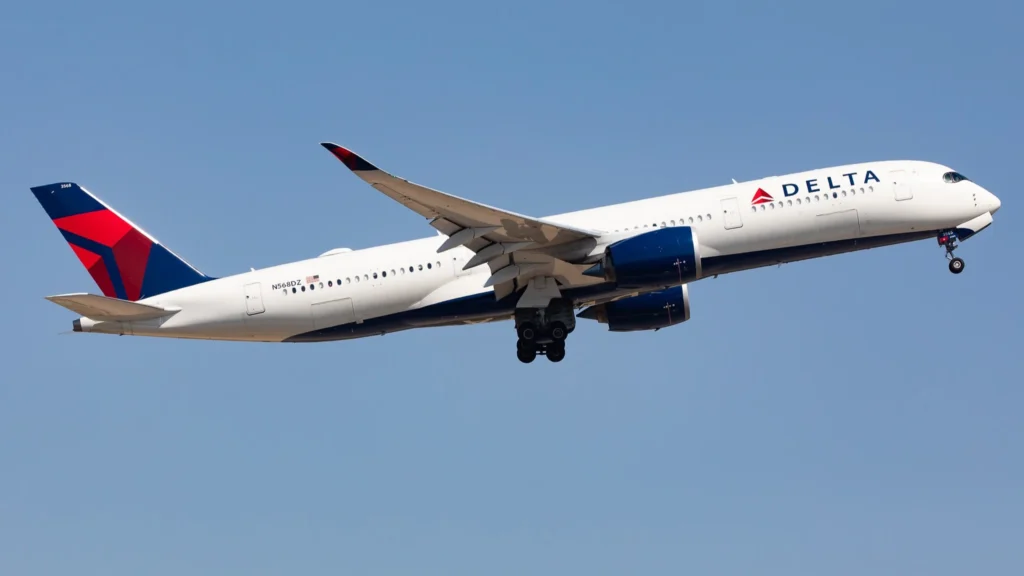
A similar incident occurred on January 12 aboard a Delta Air Lines flight from Minneapolis–Saint Paul International Airport (MSP) to Tokyo Haneda Airport (HND).
In that case, 64-year-old Harry Matthews physically pushed a flight attendant three rows into the aft galley.
He later attempted to move toward the front of the aircraft, raising concerns about a potential cockpit breach.
Crew members used beverage carts to block him into his seat. Although he showed unusual behavior before departure, the crew initially suspected dementia. Investigations later indicated that sleeping tablets taken before the flight may have contributed to his actions.
Safety Enforcement and Operational Impact
Airlines maintain strict zero-tolerance policies for abusive or threatening behavior. Any interference with crew duties is treated as a serious safety violation requiring immediate action.
Flight diversions, while operationally disruptive and costly, are necessary to ensure passenger and crew safety.
These incidents reinforce the importance of compliance, crew training, and legal enforcement in modern aviation.
Stay tuned with us. Further, follow us on social media for the latest updates.
Join us on Telegram Group for the Latest Aviation Updates. Subsequently, follow us on Google News