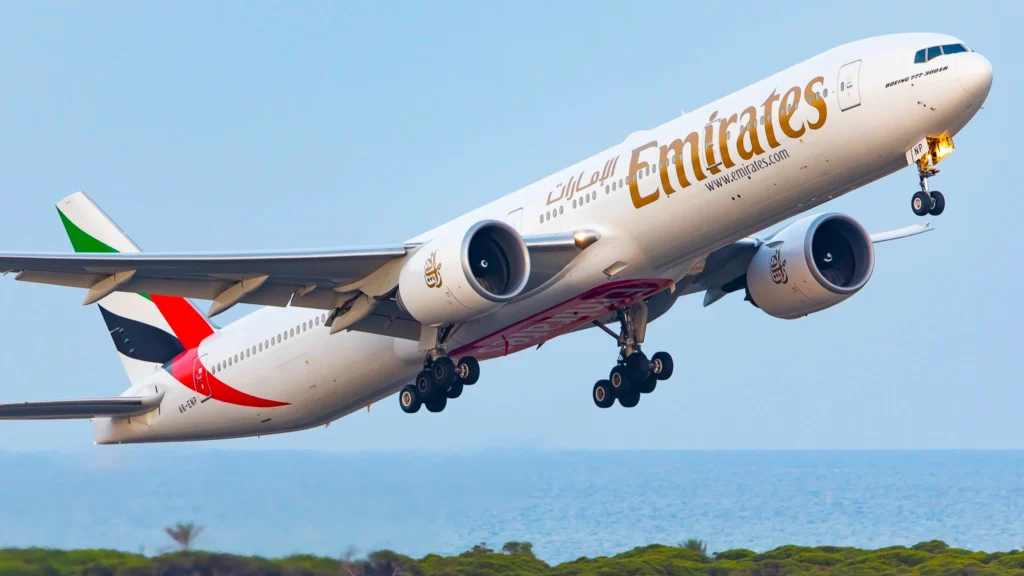
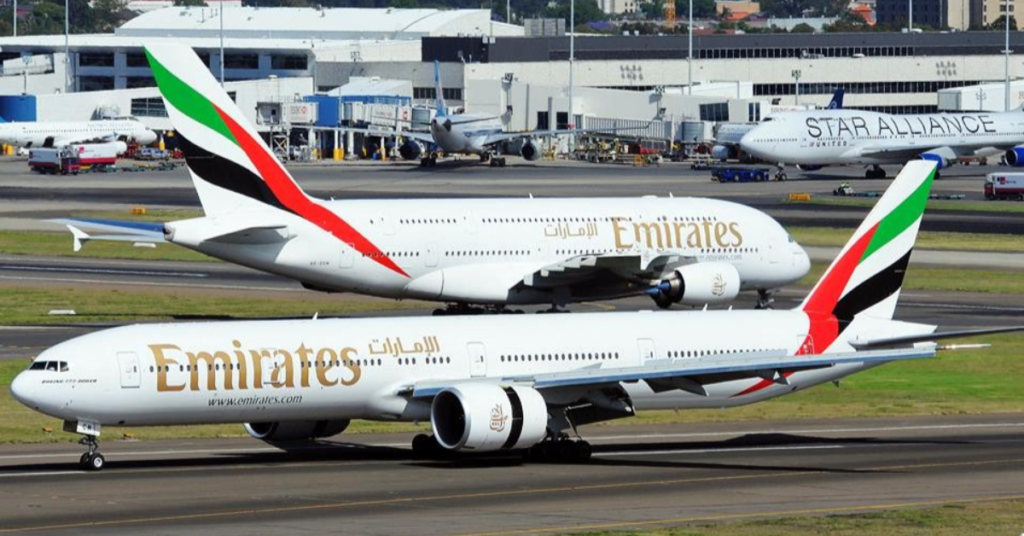
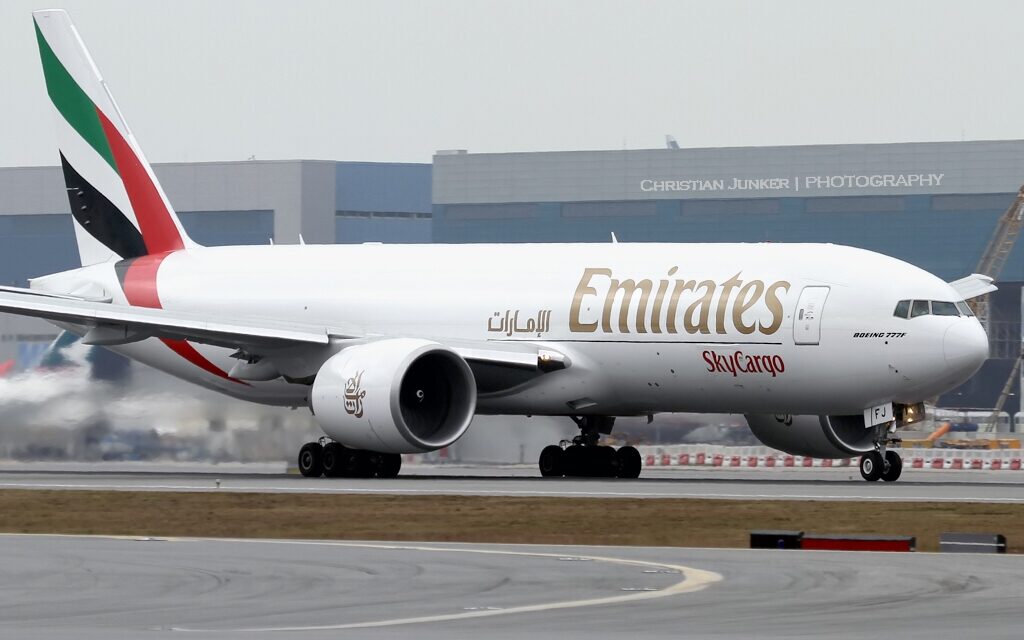
DUBAI- Emirates (EK) has confirmed a significant aircraft change on its long-haul US network, replacing the Boeing 777-300ER with the Boeing 777-200LR on its Dubai–Seattle service from the 2026 summer season.
The route links Dubai International Airport (DXB) with Seattle–Tacoma International Airport (SEA).
The update reduces capacity, removes First Class cabins, and reshapes Emirates’ longest 777-200LR nonstop operation. The change follows recent schedule filings with industry databases.
Emirates Drops First Class on Seattle Route
Like all major carriers, Emirates regularly submits schedule updates to Cirium Diio and OAG.
In its latest filing, the airline confirmed an equipment downgrade on the Seattle route, replacing the higher capacity Boeing 777-300ER with the smaller, ultra long range 777-200LR during the northern summer season.
This adjustment makes Dubai–Seattle Emirates’ longest nonstop route operated by the 777-200LR, overtaking the Barcelona–Mexico City fifth freedom service.
The change also reflects a broader capacity recalibration across the US network rather than an expansion, as Emirates has not announced any new US destinations for 2026.
However, the airline is adding one additional weekly Boeing 777-300ER flight to Orlando, partially offsetting reduced capacity elsewhere.
Emirates’ Seattle frequency varies by season. Between January and March, the route operates primarily 6 times weekly, down from daily service during the same period in 2025. Daily flights resume during the northern summer.
The Boeing 777-300ER, configured with 328 seats including First Class, will continue operating the route until March 28, 2026.
This date marks the end of the IATA northern winter slot season. From March 29, the start of the IATA summer season, the 302 seat Boeing 777-200LR will take over and is currently scheduled to remain in service through at least the end of 2026, though future changes remain possible.
Operational Schedule
During peak summer months such as July, the route is scheduled to operate daily with consistent timings:
| Route | Departure Time | Arrival Time | Flight Duration |
|---|---|---|---|
| Dubai to Seattle | 9:55 AM | 1:25 PM | 14h 30m |
| Seattle to Dubai | 5:15 PM | 6:30 PM +1 | 14h 15m |
Capacity Reduction and Cabin Changes
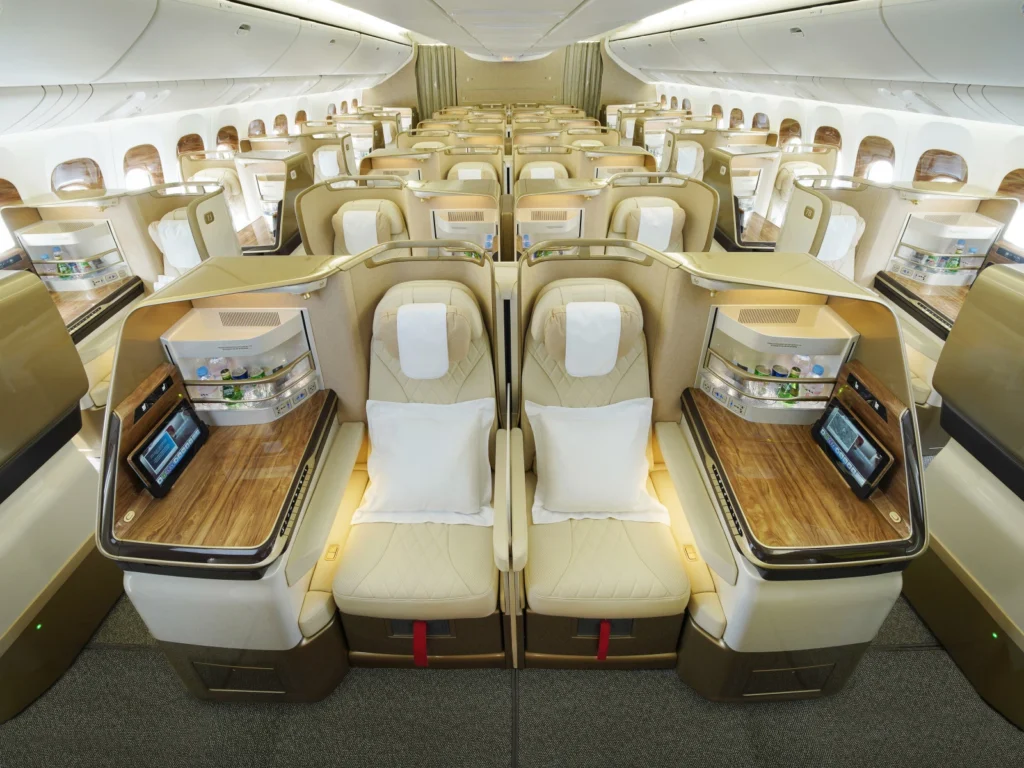
During the IATA summer season from March 29 to October 24, Emirates will now offer 126,840 round-trip seats on the Dubai–Seattle route. This represents an eight percent reduction from the previously planned 137,600 seats.
The downgrade removes First Class entirely, eliminating 3,360 premium seats across the season.
While notable, Cirium data shows that First Class was not offered on the route from its launch in March 2012 until the pandemic period, indicating limited historical reliance on that cabin for this market.
Emirates’ Longstanding Presence in Seattle
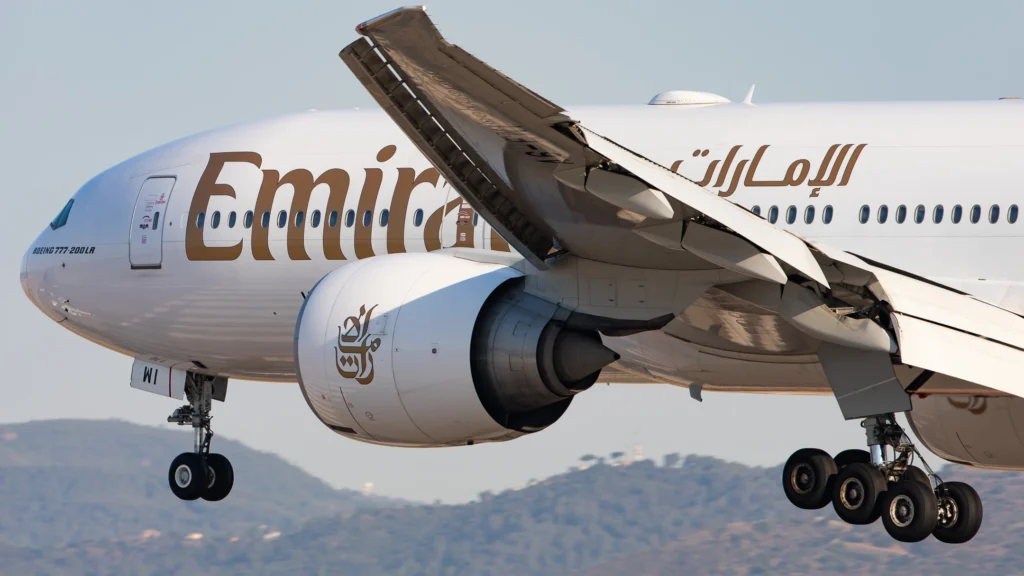
Emirates has served Seattle continuously since March 2012 and has exclusively used the Boeing 777 family on the route.
Cirium data indicates that the 777-200LR operated the service from 2012 to 2018 and returned again in 2021, making the upcoming deployment a return to a proven configuration.
Between 2012 and 2026, Emirates scheduled 1,284 departures to Seattle using the 777-200LR. According to Simple Flying, over the same 14 year period, the airline deployed the aircraft to 146 destinations worldwide from Dubai.
Seattle ranks as the 13th most served 777-200LR market, behind Mumbai, Ahmedabad, Barcelona, Mexico City, Dallas, Tehran, Tokyo Haneda, Karachi, Rio de Janeiro, Kochi, Buenos Aires, and Perth.
Frequency Shifts and Load Factor Impact
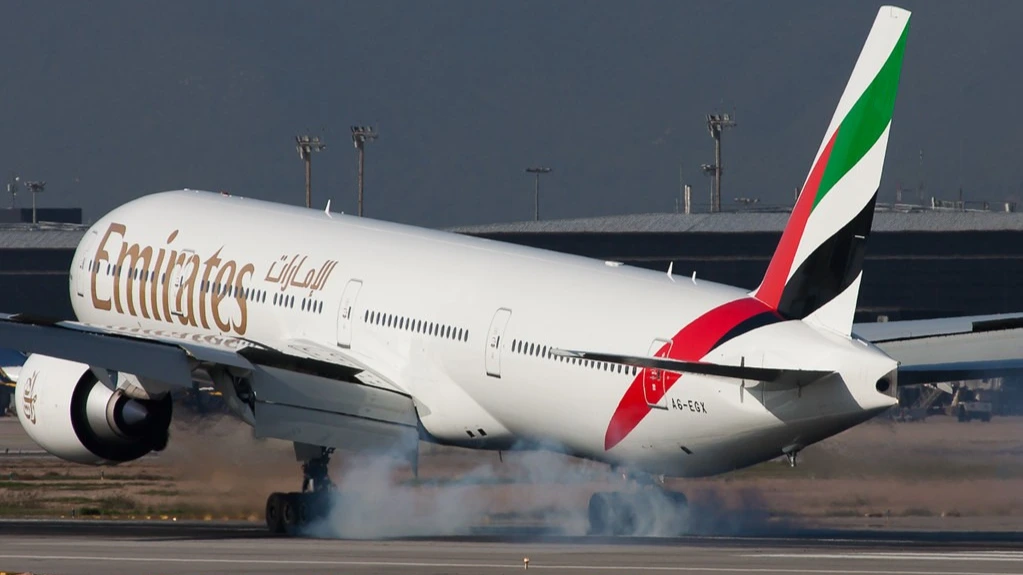
For most of its history, Emirates has operated a single daily flight to Seattle. However, between 2015 and 2017, the airline briefly offered double daily service.
In January 2016, arrivals reached Seattle at 6:55 AM and 12:55 PM, with departures at 9:40 AM and 5:40 PM.
US Department of Transportation data shows that this capacity surge significantly diluted demand. Load factors fell from 92 percent in January 2015 to just 74 percent in January 2016, as the additional seats far exceeded incremental traffic.
A similar outcome was recently observed on Turkish Airlines’ Los Angeles route, highlighting the risks of rapid capacity expansion on long-haul markets.
Recent Performance and Traffic Trends
US DOT data for January through September 2025 indicates that Emirates carried approximately 141,200 round-trip passengers on the Seattle route, filling only 73 percent of available seats.
Five months during this period recorded load factors between 62 and 70 percent, with July performing best at 83 percent.
Booking data shows that roughly three-quarters of passengers connected onward in Dubai. India dominated connecting traffic, accounting for more than two-thirds of all onward journeys.
The most popular city pairs included Seattle–Delhi, Bengaluru, Hyderabad, Mumbai, Chennai, Addis Ababa, Nairobi, Ahmedabad, Johannesburg, and Kochi.
Strategic Implications
The shift to the Boeing 777-200LR reflects a measured response to sustained demand softness rather than a retreat from the US market.
By aligning capacity more closely with traffic patterns, Emirates preserves daily connectivity on one of its longest routes while improving operational efficiency and network balance.
Stay tuned with us. Further, follow us on social media for the latest updates.
Join us on Telegram Group for the Latest Aviation Updates. Subsequently, follow us on Google News


