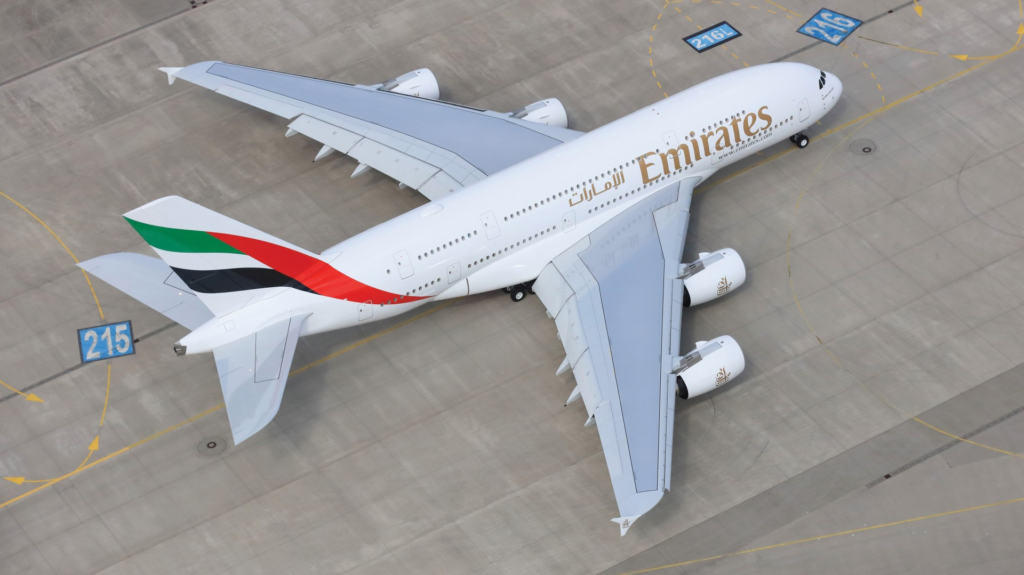
DUBAI- Emirates (EK) will operate its shortest-ever Airbus A380 flight during the current month, connecting Dubai (DXB) with Madinah (MED) to address exceptional Umrah travel demand. The 2 hour 30 minutes service represents an uncommon use of the 4-engine superjumbo on a short regional sector.
The one-off flight underscores wider winter growth at Dubai International Airport (DXB) and Dubai World Central (DWC), where rising demand from Saudi Arabia, Europe, and beyond is prompting airlines to deploy larger aircraft and increase frequencies.
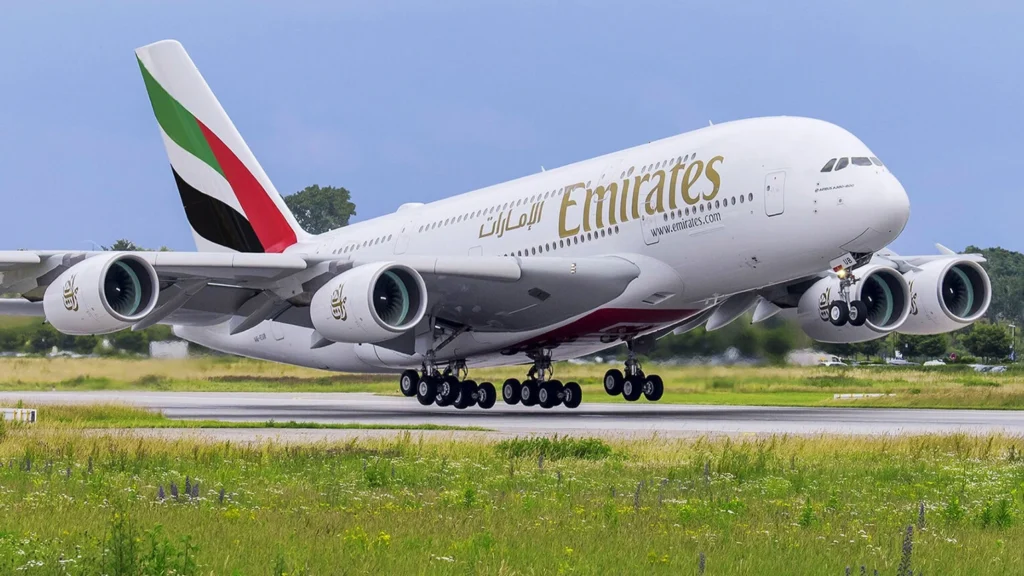
Shortest A380 Emirates Route
Emirates is scheduled to operate the Airbus A380 between Dubai and Madinah on December 25, making it the airline’s shortest A380 service by block time anywhere in its global network during the month. Aviation data from Cirium confirms the flight duration at approximately 150 minutes.
The aircraft will feature a high-density, 2-class configuration with 615 seats, replacing the Boeing 777-300ER that normally serves the route.
The 777-300ER offers 421 seats and does not include a first-class cabin. The capacity increase was driven by unusually strong demand from a large Umrah tour group, prompting Emirates to upgauge despite the route’s short length, a scenario rarely seen for the A380.
According to Gulf News, this deployment highlights the airline’s ability to flex capacity rapidly when demand spikes.
Emirates has only operated the A380 to Madinah on a handful of occasions. Available flight data shows one operation in 2017, two in 2019, and two in 2025.
Notably, the airline has never previously scheduled an A380 service to Madinah in December, making the upcoming flight unprecedented for this time of year.
The rarity reflects the aircraft’s typical role on long-haul, high-density international routes rather than short regional services.
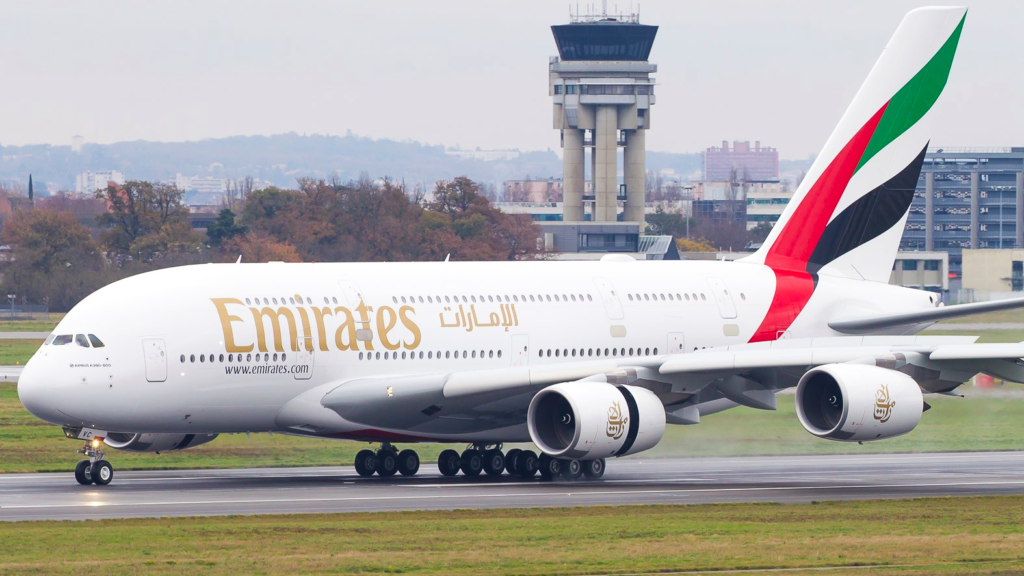
Dubai to Madinah Flight
A review of Emirates’ network shows the Dubai–Madinah sector undercuts all other A380 routes by duration.
The next shortest A380 services are Jeddah–Dubai at around 2 hours and 45 minutes, Amman–Dubai at 2 hours and 55 minutes, Dubai–Mumbai at 3 hours and 5 minutes, and Cairo–Dubai at approximately 3 hours and 15 minutes.
Emirates operates the world’s largest Airbus A380 fleet, with configurations ranging from four-class layouts seating 468 passengers to high-density two-class layouts accommodating up to 615 passengers.
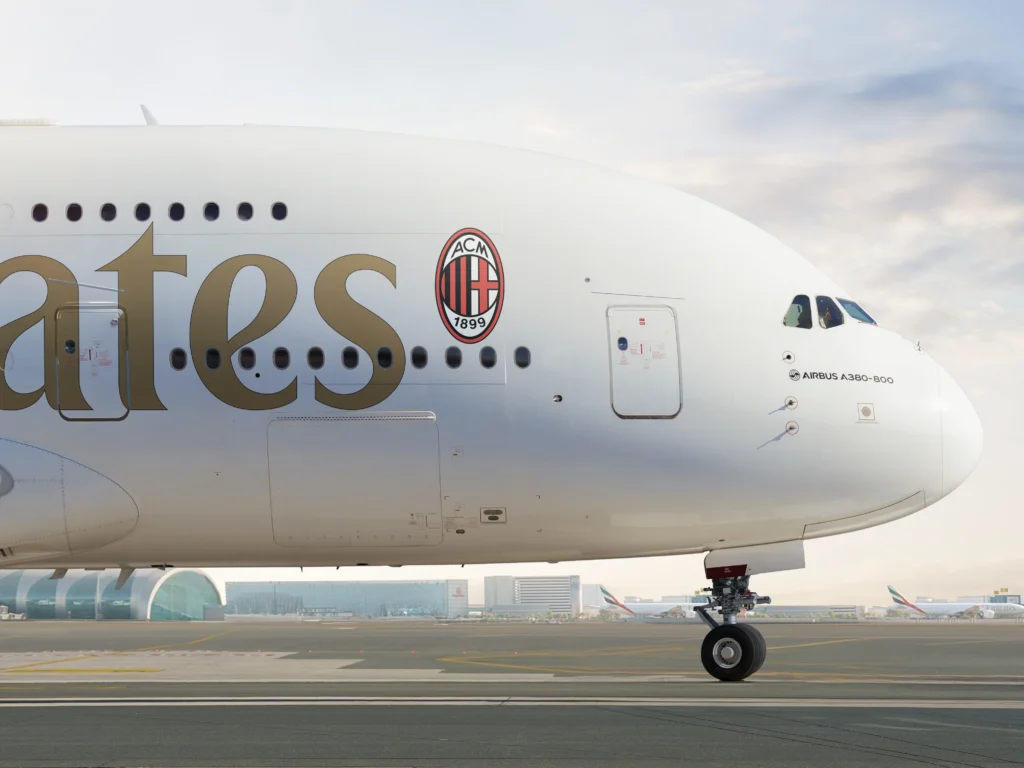
Aircraft Arrive for Dubai’s Winter Season
The short-haul A380 deployment coincides with a broader winter capacity push into Dubai. European airlines are introducing larger aircraft and additional services as demand strengthens across leisure, business, and events travel.
Virgin Atlantic has upgraded its Dubai service to the Airbus A350-1000, increasing seat capacity by 52 percent.
British Airways has resumed Airbus A380 operations between London Heathrow and Dubai (DXB). German carrier Eurowings now operates daily Stuttgart–DXB flights, three weekly Düsseldorf–DWC services, and increased frequencies from Berlin, Cologne, and Hannover.
Air France has also expanded its presence, offering up to 18 weekly flights between Dubai and Paris Charles de Gaulle from November 25 through March 2026.
Laila El Mansouri, Country Manager UAE at Air France-KLM, said the additional services strengthen connectivity while delivering the airline’s signature onboard experience.
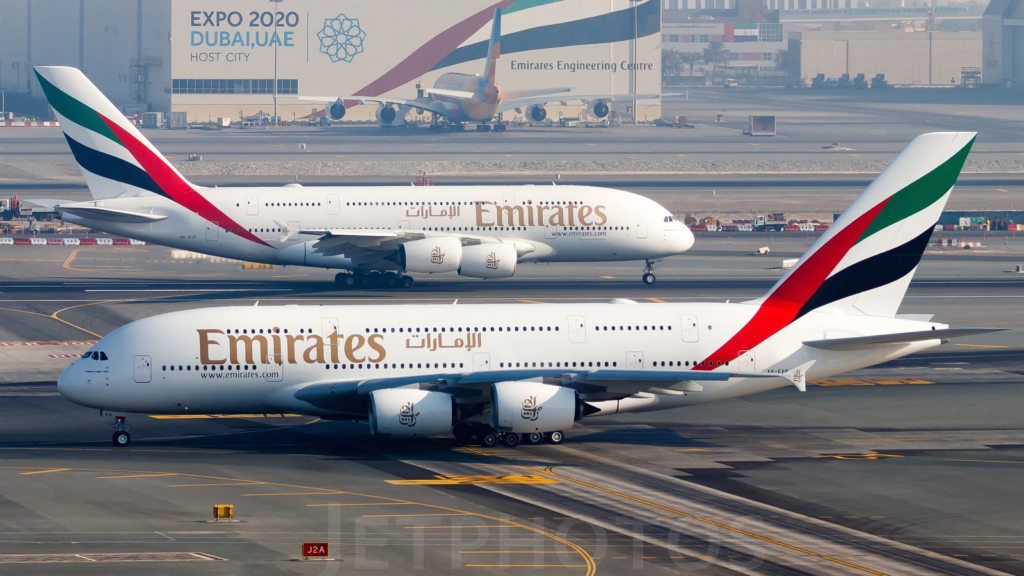
Passenger Growth and Market Capacity
Dubai International Airport is on track to handle around 96 million passengers this year, approaching its pre-pandemic record. Saudi Arabia has become DXB’s second-largest market, accounting for 7.8% of passengers.
Combined traffic from Saudi Arabia across DXB and DWC has reached 6.3 million passengers and continues to rise.
Paul Griffiths, CEO of Dubai Airports, has described connectivity as the cornerstone of relevance in global aviation, stressing that network strength must be delivered with precision, efficiency, and a seamless guest experience.
Seasonal demand from Europe and Central Asia is also increasing, with Kazakhstan’s FlyArystan joining the DXB network from Aktau and Austrian Airlines resuming Vienna services.
Additional point-to-point growth from cities such as Sari in Iran and Lahore in Pakistan is further strengthening Dubai’s traffic mix.
DWC’s Expanding Role in Peak-Season Capacity
Dubai World Central is playing a growing role in absorbing winter demand. The airport welcomed 1.1 million passengers in the first 10 months of the year, representing a growth of 36.6 percent, supported by traffic from CIS, GCC, and Western European markets.
Robert Whitehouse, Vice President of Research at Dubai Airports, noted that growth across both DXB and DWC reflects a balanced mix of inbound visitors, outbound resident travel, and long-term population growth, making Dubai’s aviation network more resilient.
Stay tuned with us. Further, follow us on social media for the latest updates.
Join us on Telegram Group for the Latest Aviation Updates. Subsequently, follow us on Google News