ABU DHABI- Etihad Airways (EY) is weighing a fresh widebody order with Airbus as the Dubai Airshow approaches. The airline is expected to evaluate additional Airbus A350s and the Airbus A330neo family, reinforcing its long-term growth plans.
Reports by Reuters indicate the carrier is exploring options to support expansion from Abu Dhabi (AUH) rather than fleet replacement, given the young average age of its aircraft.
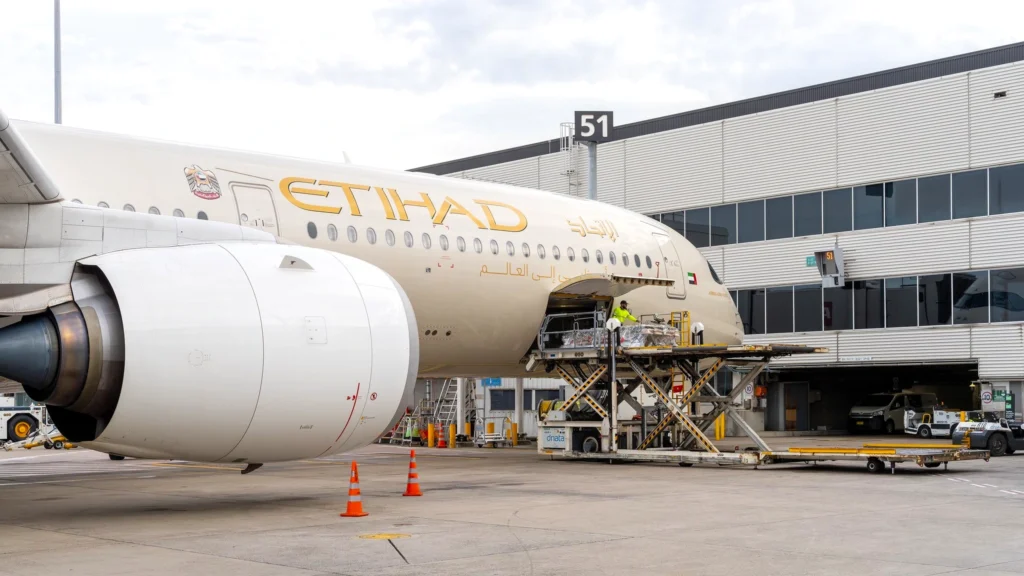
Etihad New Airbus Orders
Early discussions point to a mix of Airbus A350 and A330neo aircraft that could join Etihad Airways’ (EY) long-haul network.
While extra A350s are a natural fit as the airline already flies the A350-1000, the potential return of the A330 platform is more surprising, especially since Etihad currently operates 47 Boeing 787s.
Etihad maintains a diverse fleet that includes the Airbus A320 family, A350-1000, A380-800, Boeing 777-300ER, 787-9, and 787-10. With 11 outstanding A350-1000 orders, the airline may choose to expand that commitment or introduce the A350-900 to fill a different operational niche.
The more unexpected element is the renewed interest in the Airbus A330neo. Etihad retired its older A330-200 and A330-300 years ago, making a return to the A330 platform a strategic shift given its heavy reliance on the Boeing 787 for medium and long-haul routes.
How These Aircraft Fit Into Etihad’s Network
The A350-900 would support long-range demand and complement the 787-9 on higher-capacity routes.
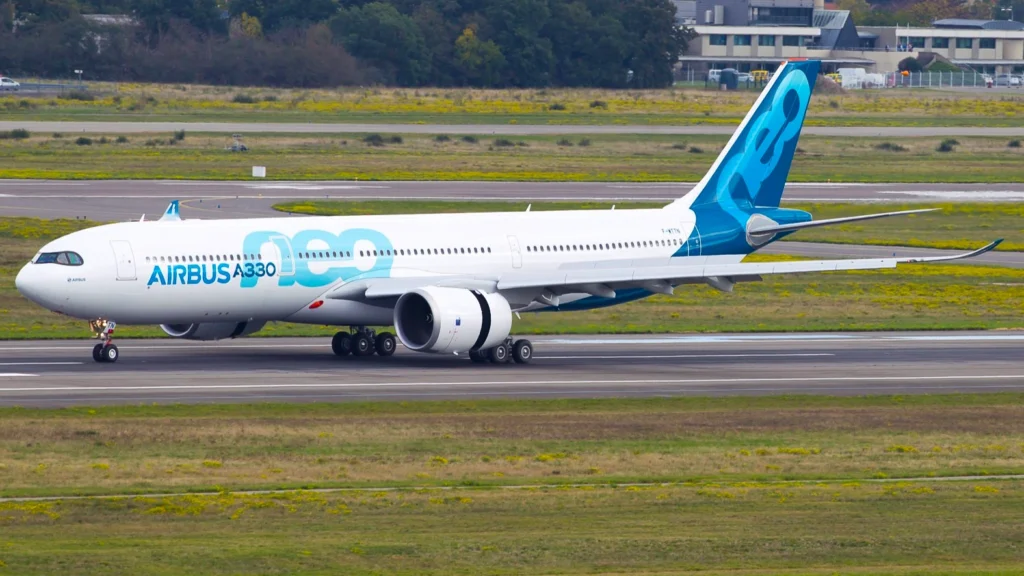
The A330-900, meanwhile, aligns well with Etihad’s hub strategy. Many destinations in Europe, Africa, and Asia fall within a 10-hour radius of Abu Dhabi (AUH), where the A330neo offers strong fuel efficiency advantages on mid-range sectors typically flown by the 787-9.
Compared to the 787-10, the A330-900 has a similar range but offers a smaller, more flexible payload footprint. It also benefits from lower acquisition costs and shorter delivery timelines, which suit airlines targeting rapid growth, Simple Flying reported.
Growth Strategy And Competitive Position
Etihad currently operates 112 passenger aircraft, far fewer than larger Gulf competitors Qatar Airways and Emirates. After years of restructuring and financial setbacks, the airline has rebuilt itself into a profitable carrier with a stronger focus on sustainability and network efficiency.
To support its 2030 growth targets, Etihad plans to double its fleet and triple passenger volume. It already has 88 passenger jets and 10 Airbus A350F freighters on order.
Any new Airbus widebody deal would reinforce this long-term expansion and signal Etihad’s intent to reassert itself among the major Gulf carriers.
Etihad’s Current Passenger Aircraft On Order
| Aircraft Type | On Order |
|---|---|
| Airbus A321LR | 28 |
| Airbus A350-1000 | 11 |
| Boeing 777-8 | 8 |
| Boeing 777-9 | 17 |
| Boeing 787-9 | 4 |
| Boeing 787-10 | 20 |
The expected Airbus order may be smaller in scale, but it highlights a shift toward strategic growth focused on profitability and market gaps. Etihad’s network strategy now prioritizes underserved destinations, illustrated by its upcoming Abu Dhabi to Charlotte route, which currently sees no service from Emirates (EK) or Qatar Airways (QR).

New Era at Etihad
Etihad Airways is preparing a major upgrade cycle that will reshape its onboard and ground experience, starting with high-speed internet across most aircraft operating from Abu Dhabi Zayed International Airport (AUH) to key routes such as Hong Kong (HKG).
The airline outlined cabin retrofits, lounge renovations, and broader network plans designed to support its fast-growing passenger base.
Etihad Airways is set to introduce high-speed internet on most of its fleet beginning next year, followed by full cabin upgrades scheduled for 2027.
Captain Majed Al Marzouqi, Chief Operations and Guest Officer, said the carrier is reviewing every service touchpoint to raise overall guest satisfaction.
Reported by Gulf News, the airline has already added meet-and-assist and chauffeur services for first-class customers, with plans to renovate lounges at Abu Dhabi and across its global network.
He noted that by 2030, travellers can expect a transformed Etihad shaped by long-term investments in comfort, technology, and ground services.
Expansion Across Asia
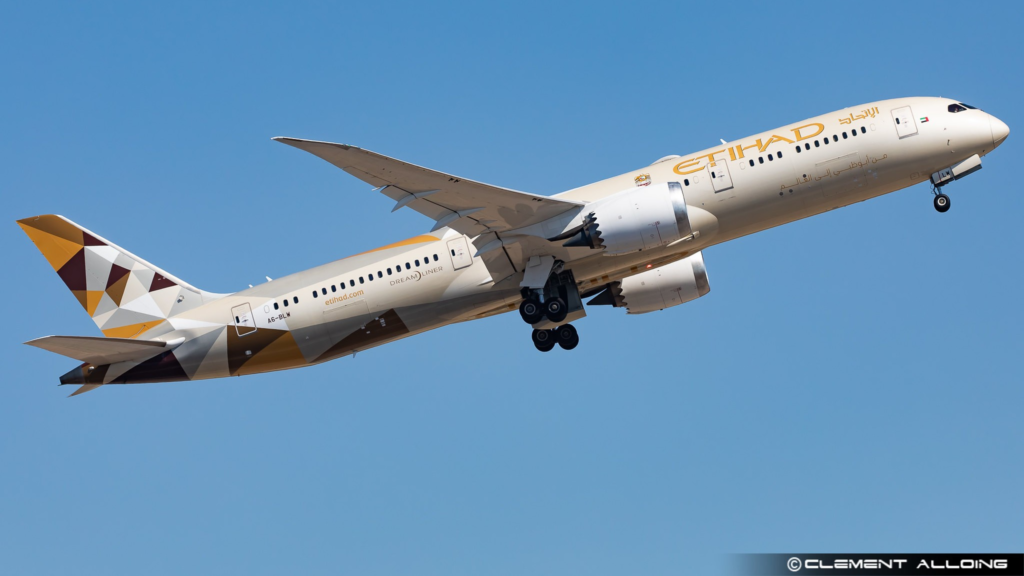
The airline’s rapid growth across Asia-Pacific underpins its wider push to become a major connecting hub. Etihad now operates four daily flights to Bangkok and four daily flights to Phuket, alongside double-daily services to several other key Asian destinations.
Its network additions this year include Hong Kong, Medan, Krabi, Chiang Mai, and Hanoi, complementing existing services to Manila, Bali, Jakarta, Kuala Lumpur, and Singapore.
The expansion forms part of a plan to launch 31 new routes by next year and reach 30 million passengers annually by 2028.
The backbone of these operations is the Boeing 787 Dreamliner, supported by newly delivered A321LR aircraft that allow Etihad to serve thinner routes with premium service standards.
Strong demand for new routes
Load factors on newly launched Asian routes have been encouraging, with Hong Kong flights operating close to full capacity since services resumed.
Etihad balances point-to-point demand with strong transfer traffic via Zayed International Airport, offering efficient connections between Asia, Europe, and beyond.
The schedule also caters to business travellers who rely on tight turnaround times for multi-city itineraries.
A321LR Drives Growth
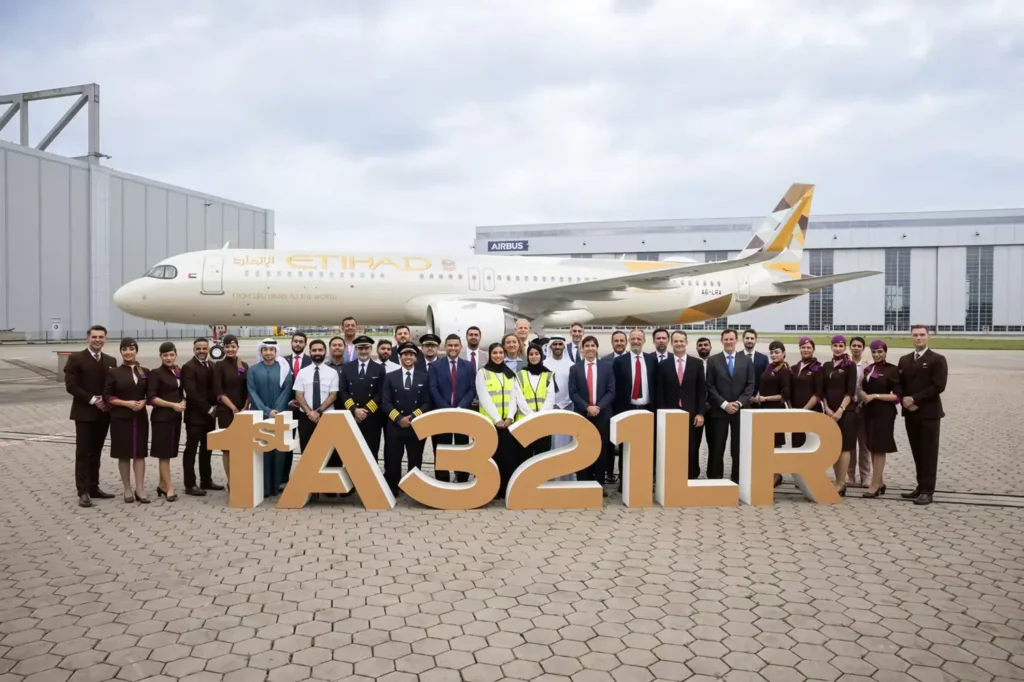
The Airbus A321LR has become a central tool in Etihad’s expansion. Introduced in July, the aircraft carries a premium layout featuring two first-class seats, 14 business-class seats, and 144 economy seats.
Its range allows Etihad to operate long, thin routes that cannot support a wide-body aircraft while still offering a high-end cabin product.
Customer feedback has exceeded expectations, prompting detailed internal reviews of performance and service outcomes.
Maintaining Operational Strength During Growth
Despite the pace of expansion, Etihad remains confident in its ability to manage complexity.
Captain Al Marzouqi highlighted the airline’s lean structure and fast decision-making approach, noting that the team is prepared to pivot quickly when adjustments are needed.
This operational agility supports reliability while the carrier continues its network and fleet build-out.
Stay tuned with us. Further, follow us on social media for the latest updates.
Join us on Telegram Group for the Latest Aviation Updates. Subsequently, follow us on Google News


