“Hyperloop is dead.”
That was the prevailing feeling (and, indeed, the headline) when Hyperloop One ceased operations in December 2023.
The dream was over. The idea of hyperloop — trains “flying” through pressurized tubes, shooting from one city to the next at 700 mph — was finished.
Or was it?
Arguably the main player in the crowded hyperloop space, Hyperloop One — which had previously seen investment from the Virgin Group founded by Richard Branson — couldn’t balance the books.
Yet nearly two years on, in other parts of the world, hyperloop projects are ongoing.
A handful of companies in China and Europe are working on the technology, while the European Union is backing research on a project that hopes to open its first line in a little more than a decade.
Of course, this might be pie in the sky. Anybody planning a hyperloop line faces an uphill battle of funding, building the infrastructure needed, and the constraints of simple physics. Many in the rail industry remain skeptical that hyperloop could be anything more than a pipe dream.
But those working on the tech still believe they could have us all hurtling along in high-speed tubes — perhaps underground or above ground through a tube supported by stilts — within a generation or two.
So how did the idea crash and burn — and could it rise again from the flames?
While high-speed rail propels travelers across the globe at hundreds of miles per hour, engineers have been dreaming for more than a century of reaching aircraft-level speeds without having to take off.
Over the decades, all manner of weird and wonderful technologies have been proposed to reach speeds that conventional trains cannot match. Magnetic levitation, air currents, jet-propelled monorails and vacuum tubes have all been touted as “the future of travel.” Yet so far not one has managed to dislodge traditional steel wheels on steel rails as the world’s most efficient method of mass transit.
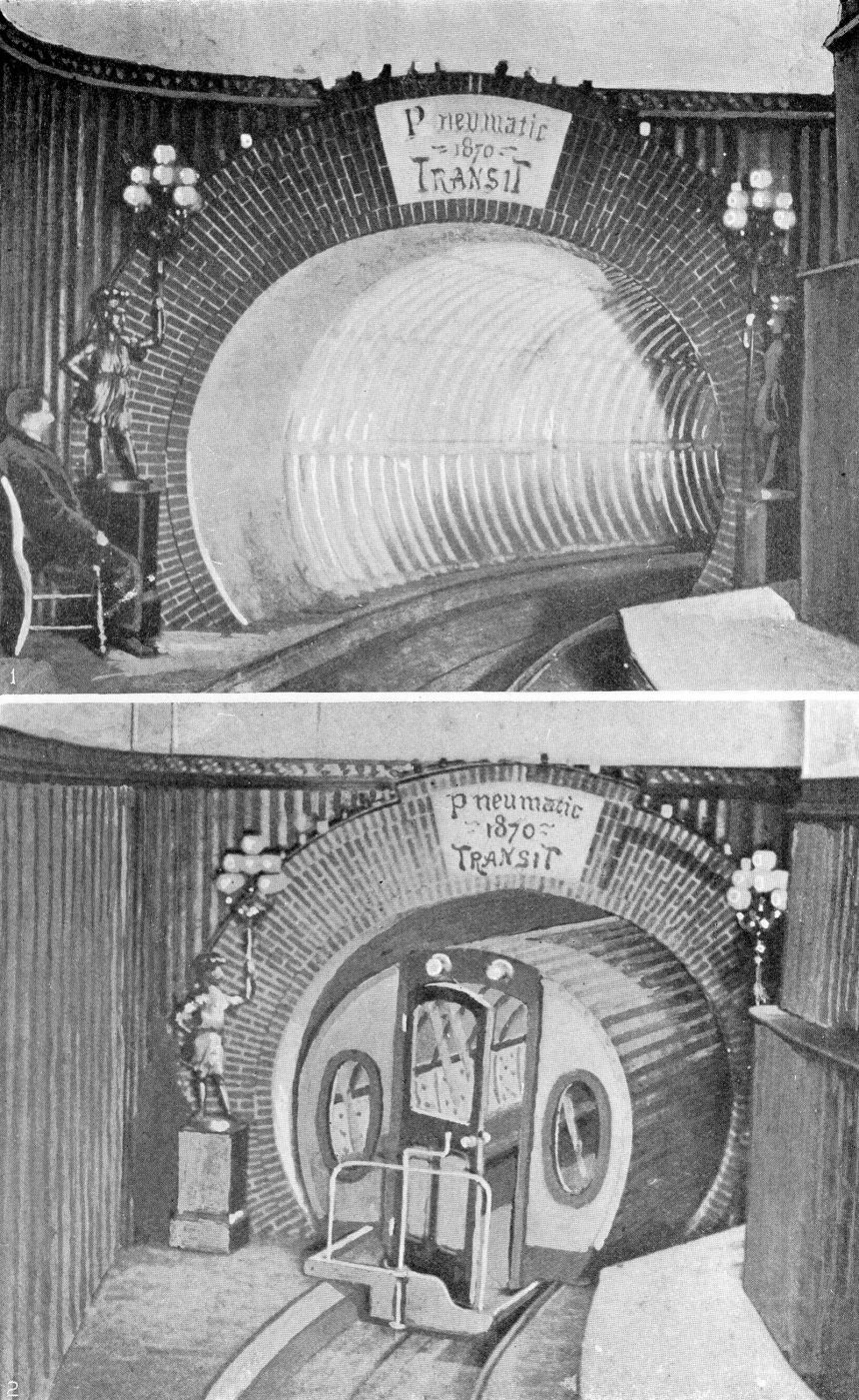
But could the key to super-fast rail lie in the 19th century? In the 1800s in Manhattan, one bold inventor, Alfred Beach, designed a giant pneumatic tube to run underneath Broadway. Like a scaled-up version of the vacuum tube delivery systems in department stores and hospitals, it would have used air pressure to shoot passengers in sealed capsules up and down the island at high speed.
Sound familiar? In 2013, Elon Musk proposed a form of transport called hyperloop — essentially trains in vacuum tubes capable of whisking travelers from New York City to Washington, D.C., in just 30 minutes.
Musk’s concept married magnetic levitation (maglev) technology, already in use in Asia, with low-pressure vacuum tubes to reduce drag and turbulence. The result? Speeds of up to 760 mph, theoretically — using far less energy than high speed trains or open-air maglev trains, and operating in near silence.
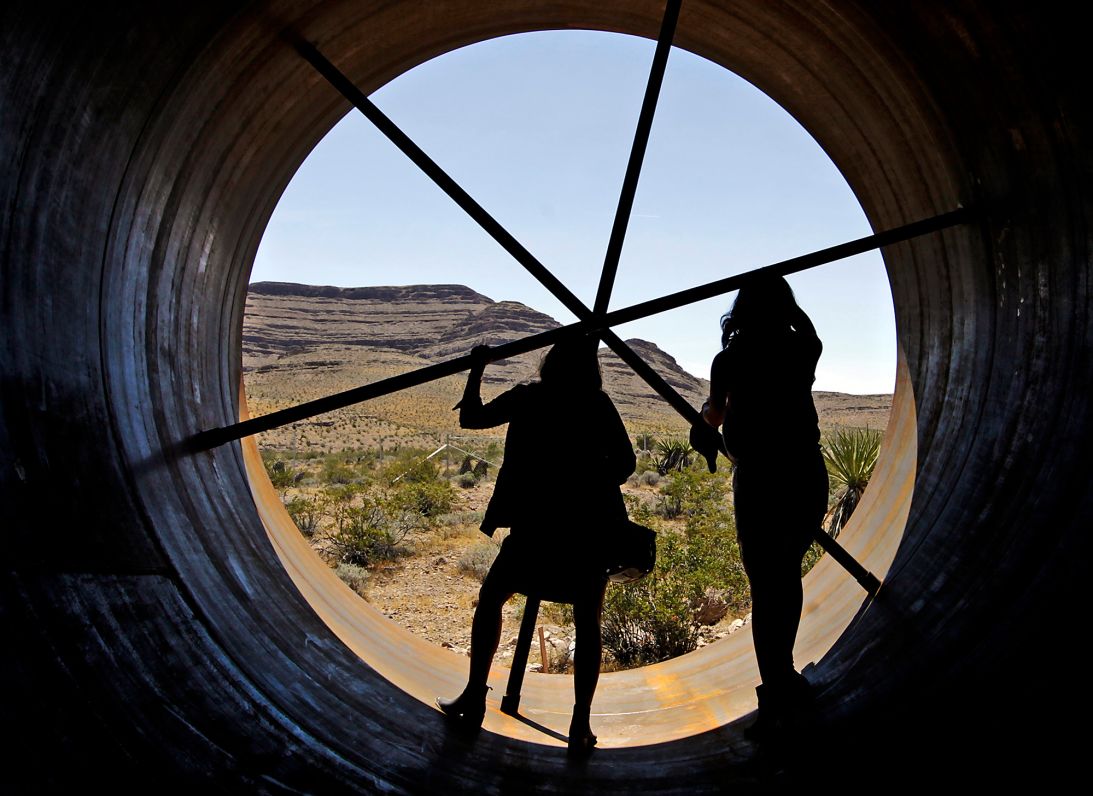
Musk’s concept — which he deliberately did not patent — immediately sparked interest across the globe. Hyperloop wasn’t just seen as an upgrade to high-speed rail; people thought it could replace air travel, too. While many were wary about its feasibility, investors around the world jumped on the bandwagon, and by 2017, 35 routes had been proposed in 17 countries.
Hyperloop One, the main player, received a huge boost in 2017 when Virgin joined as an investment partner and the company rebranded as Virgin Hyperloop, with Richard Branson joining its board of directors. This involvement helped it secure more than $400 million in investment, but that wasn’t enough to prevent Virgin from pulling out five years later. Reverting to its original name, Hyperloop One subsequently decided to focus on carrying cargo in unmanned pods, before giving up for good.
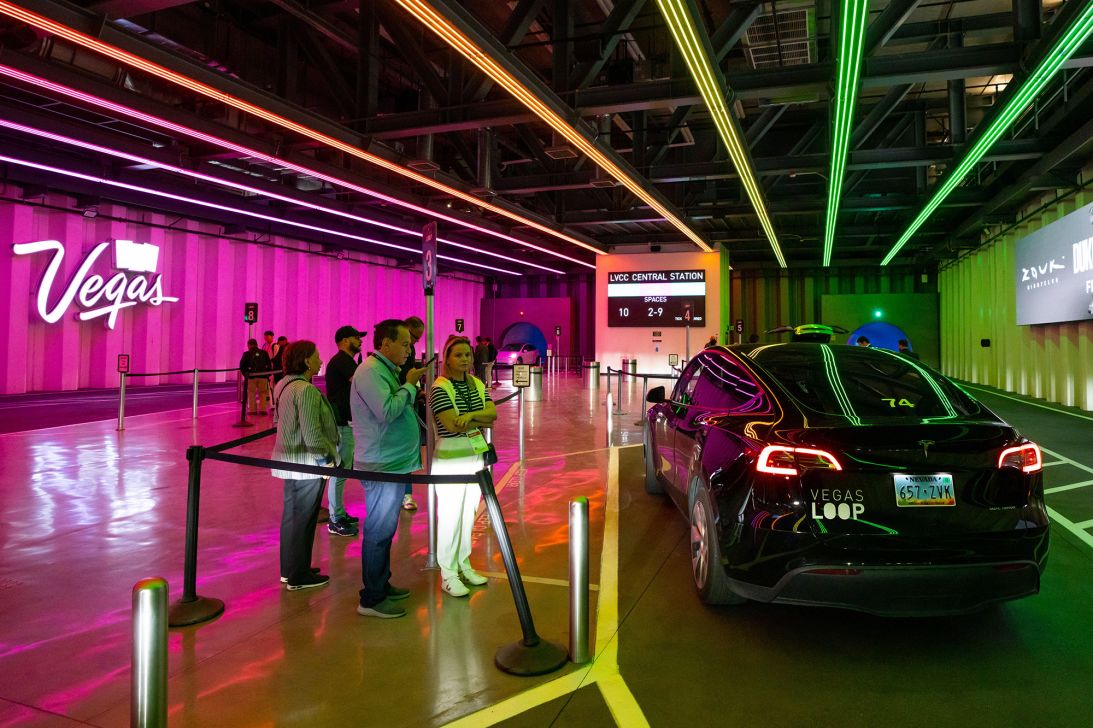
Meanwhile Musk announced in 2022 that his Boring Company would attempt to build a working hyperloop “in the coming years.” However, so far it appears to be concentrating on other projects, from collaborations with Amtrak to the Las Vegas Loop, which is running autonomous Teslas through tunnels in the city. The company did not reply to a request for comment from CNN.
Twelve years since Musk first proposed the concept, and despite millions of dollars being invested in marketing and development by the various companies that have worked on the technology, the idea of hyperloop as a transportation option is still largely theoretical. In fact, many commentators remain deeply skeptical about it.
“Hyperloop is unworkable,” says rail expert and author Christian Wolmar. “The infrastructure it needs would be amazingly expensive to build and it can’t deliver the capacity to compete with high-speed railways or airlines.
“It doesn’t integrate with existing transport modes, the infrastructure required to reach city centers would cause intolerable noise and disruption,” he said of the construction process.
“And there are doubts over energy costs, capacity and passenger safety if something goes wrong at such high speeds.
“Musk and Branson pulled out because the business case doesn’t stack up — the economics of it just don’t work.”
While not even players like Musk and Branson have so far been able to make hyperloop viable, the dream continues. A handful of companies around the world are still working on making the tech a reality. Rail-friendly Europe appears to be the new hyperloop hub, with four companies dedicated to it.
Roel van de Pas is managing director of one of them: Rotterdam-based Hardt Hyperloop. He is convinced that hyperloop is the missing link for railway technology and the only “actionable, sustainable solution to replace short-haul air travel” over distances greater than 300 miles, or 500 kilometers.
“It’s 90% more efficient than air travel, operational expenses and maintenance costs are much lower than conventional high-speed railways and, as an enclosed, autonomous system, it’s not affected by external factors such as bad weather or strikes,” he says.
While earlier advocates took an aggressive stance that perhaps irritated many in the rail industry, van de Pas sees it differently, calling it “just another form of rail transport.”
“It doesn’t replace, it complements railways,” he says. “Conventional rail is the best solution at urban and regional level and high-speed works at distances of 200-300 miles. Hyperloop can make rail work at the continental level. In fact, it could be the savior of inter-city travel.”
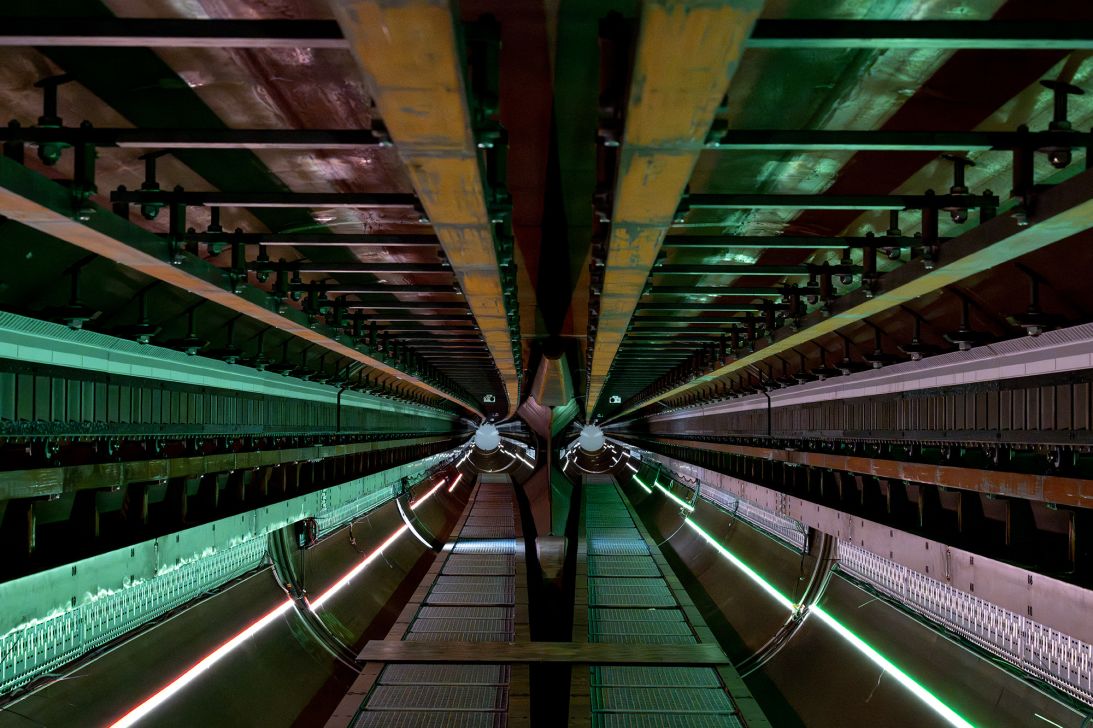
So who is continuing with the hyperloop dream? The European Union, for a start. Europe’s Hyperloop Development Program (HDP) is a public-private partnership backed by EU funding and the private sector.
HDP’s vision is to have the first set of commercially viable hyperloop lines open by 2035-40, followed by a route network by 2050. It estimates that a 15,000-mile network linking 130 of Europe’s major cities could shift 66% of short-haul flight passengers to hyperloop by 2050, saving between 113 million and 242 million tons of carbon dioxide emissions.
Core network hubs would be scattered across the continent from London to Berlin, Madrid to Belgrade, and Sofia to Athens, while loops would serve the Iberian Peninsula, the Baltic States and Scandinavia, the Balkans and Central and Eastern Europe. The cost? A cool 981 billion euros, or $1.1 trillion, according to HDP estimates.
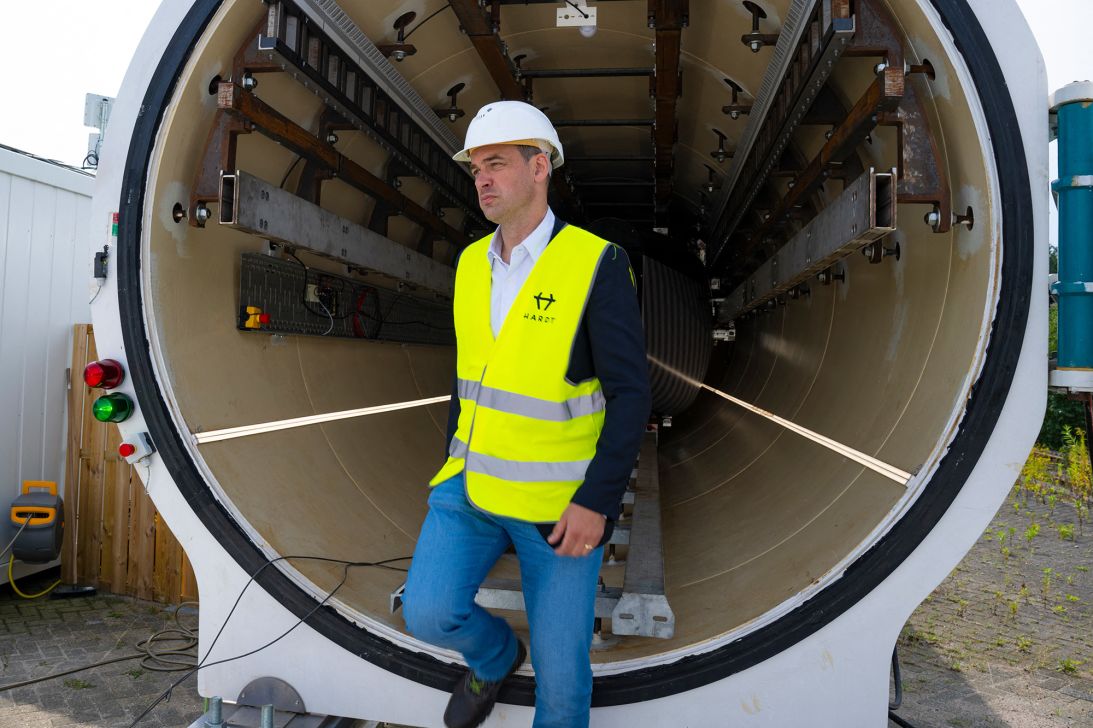
That doesn’t include the pods, which would be supplied by external companies like Hardt Hyperloop, whose proposed 80-foot pods would carry up to 40 passengers, operating just seconds apart on point-to-point routes such as London to Stockholm. “Off-ramps” would allow pods to serve various other destinations such as Amsterdam and Hamburg along the core route. It claims that this could carry up to 20,000 passengers per hour in each direction.
Is it just fantasy? In September 2025, Hardt announced that it had successfully developed “track switching” — allowing pods to transition easily between tubes to reach different destinations. It’s an operational necessity that has long been regarded as a “tech killer” for hyperloop, so a functioning system would overcome one of the major obstacles for the technology.
In recent months the company has also improved its test vehicle, boosting thrust by 50% and reducing bogie weight by 45% to accelerate from zero to 53mph in around 450 feet. This makes it the first company in the world to make verifiable progress on bringing hyperloop to life.
“We’ve proved we can do it and make it scalable,” says van de Pas. “The next step is to develop a longer integrated test track where everything — switches, stations, docking-undocking, power systems, et cetera — can be validated.”
Meanwhile, those behind the EU-backed HDP project are hoping to have a full-scale test track of up to 3 miles operational by the end of 2029, followed by a 20-30 mile twin-tube “Living Lab” which would replicate all aspects of day-to-day operation and public service, slated to be up and running by 2034.
Elsewhere, Hyperloop Italia is investing in a demonstration line between Venice and Padua costing up to €800 million ($929 million) which could be ready by 2029, while Germany, Spain, India and China are also investigating trial routes to establish the viability of the technology.
European Commission President Ursula von der Leyen added support at the highest level in September 2024, in her mission letter to incoming sustainable transport and tourism commissioner, Apostolos Tzitzikostas. “I… want Europe to take the lead on the innovation and transportation of the future,” she wrote, asking him to “propose a strategy for the promotion and development of cutting-edge technologies such as hyperloop technologies, including a timetable and an investment strategy.”
Tzitzikostas added in an EU hearing two months later: “I want the European Union to be the place where new ideas are developed, tested and rapidly brought to the market,” citing Hyperloop among the ideas to prioritize.
While interest in the United States may have waned, the EU sees hyperloop as a strategic technology where it can become a world leader with positive implications for the continent’s economy and autonomy from China and the USA.
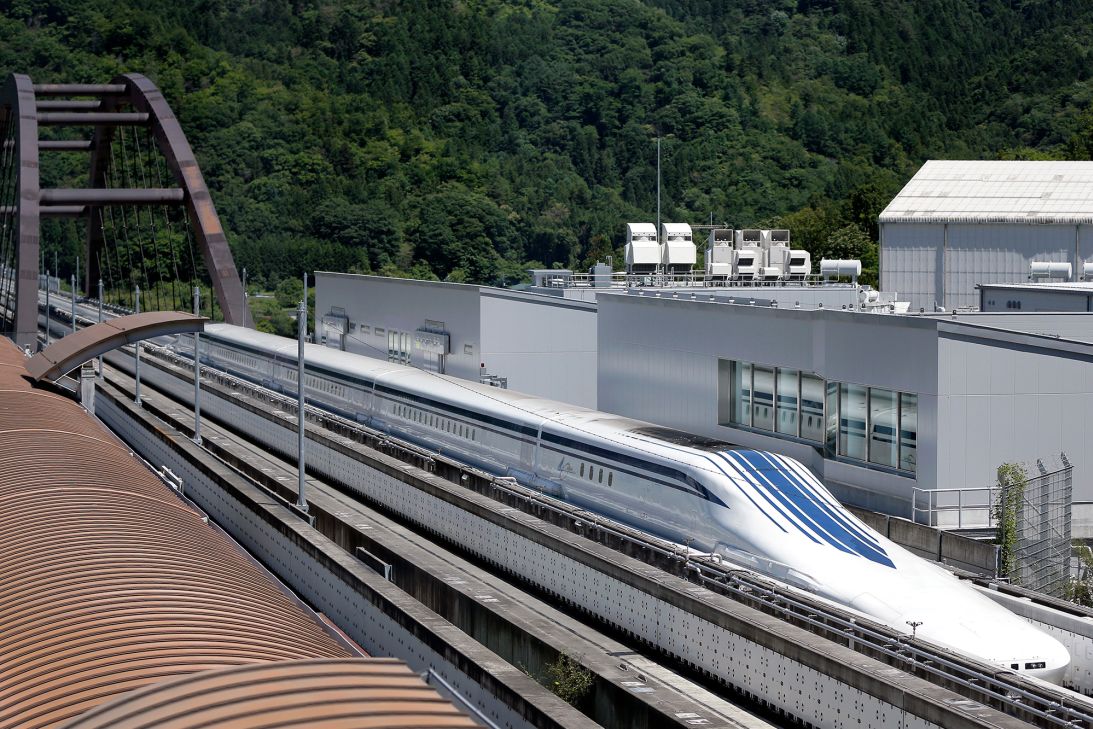
Hyperloop isn’t the only super-fast rail tech in development. Maglev — short for magnetic levitation — is one technology that uses high powered magnets to move vehicles without making contact with the ground. Vehicles travel along a guideway using magnets to create both lift and propulsion, hugely reducing friction and reaching speeds of up to 375 mph.
Like hyperloop, this isn’t a new idea. The maglev principle was mooted in the 1910s, but it wasn’t until the late 1940s that British engineer Eric Laithwaite was able to develop the first working model of a linear induction motor. LIMs are effectively a conventional rotary motor cut open and unrolled to generate linear motion — and an essential part of maglev technology.
Unlike hyperloop, maglev technology is already in service, primarily in Asia. Japan has been a world leader for more than 50 years, setting numerous world records. The Central Japan Railway Company’s current experimental train, L0, holds the world record for a passenger train at 375mph on the Yamanashi Maglev Test Line west of Tokyo. When running commercially, it will operate at up to 314 mph.
L0 relies on super-conducting alloy coils cooled to an astonishing -452 degrees Fahrenheit, or -267 Celsius. The magnetic coils are used for both propulsion and navigation, lifting the train off its wheels and firing it along the guideway with incredible precision and acceleration.
The Yamanashi test center forms part of the Chuo Shinkansen, a new 272-mile railway being built between Tokyo, Nagoya and Osaka. Greenlit in 2011, the first phase from Tokyo to Nagoya was originally planned to open in 2027, but construction problems and massive cost overruns have pushed that back to 2034 at the earliest. The extension to Osaka via Nara should follow five years later.
Difficulties over purchasing land and staggering costs — the project is expected to cost more than $80 billion — have long made the Chuo Shinkansen controversial, but it will reduce journey times between Tokyo and Nagoya from 87 minutes to 40, and slash the 319-mile Tokyo-Osaka journey from 2.5 hours to 67 minutes.

China is the other main player when it comes to maglev technology (it also has a hyperloop-focused company). The country sees maglev as complementary to its regular high-speed rail network, with the potential to outpace air travel on the busiest inter-city corridors such as Beijing-Shanghai.
While maglevs have been proposed over many years in the US, UK, Italy, Germany, Australia, Switzerland, India, Iran, Taiwan and Hong Kong, only a few short-distance lines have ever come to fruition, largely thanks to high construction costs, energy costs, lack of connectivity with existing rail networks, inflexibility and opposition to intrusive elevated tracks marching across the landscape.
And therein lies the problem for these alternative technologies. While they may be faster on paper, they simply cannot yet match current rail networks’ unbeatable combination of high average speeds, huge people-moving capacity, cost, compatibility with existing tracks and city-center hubs.
However, if Europe continues to push the boundaries of hyperloop tech and Japan and China complete their maglev lines over the next two decades, flying without wings could become an everyday reality for millions of travelers around the world.


