IRAN— The ongoing conflict involving Iran is rapidly reshaping global aviation networks, forcing airlines to redraw long-established flight paths and rethink hub strategies. Major Gulf carriers such as Emirates (EK), Qatar Airways (QR), and Etihad Airways (EY) now face unprecedented operational disruptions due to repeated airspace closures across the Persian Gulf.
Key aviation hubs, including Dubai (DXB), Doha (DOH), and Abu Dhabi (AUH) have traditionally served as critical transit points connecting Europe and North America with Asia and Australia. However, ongoing restrictions and safety concerns have reduced flight frequencies, increased travel times, and driven airfares sharply higher.
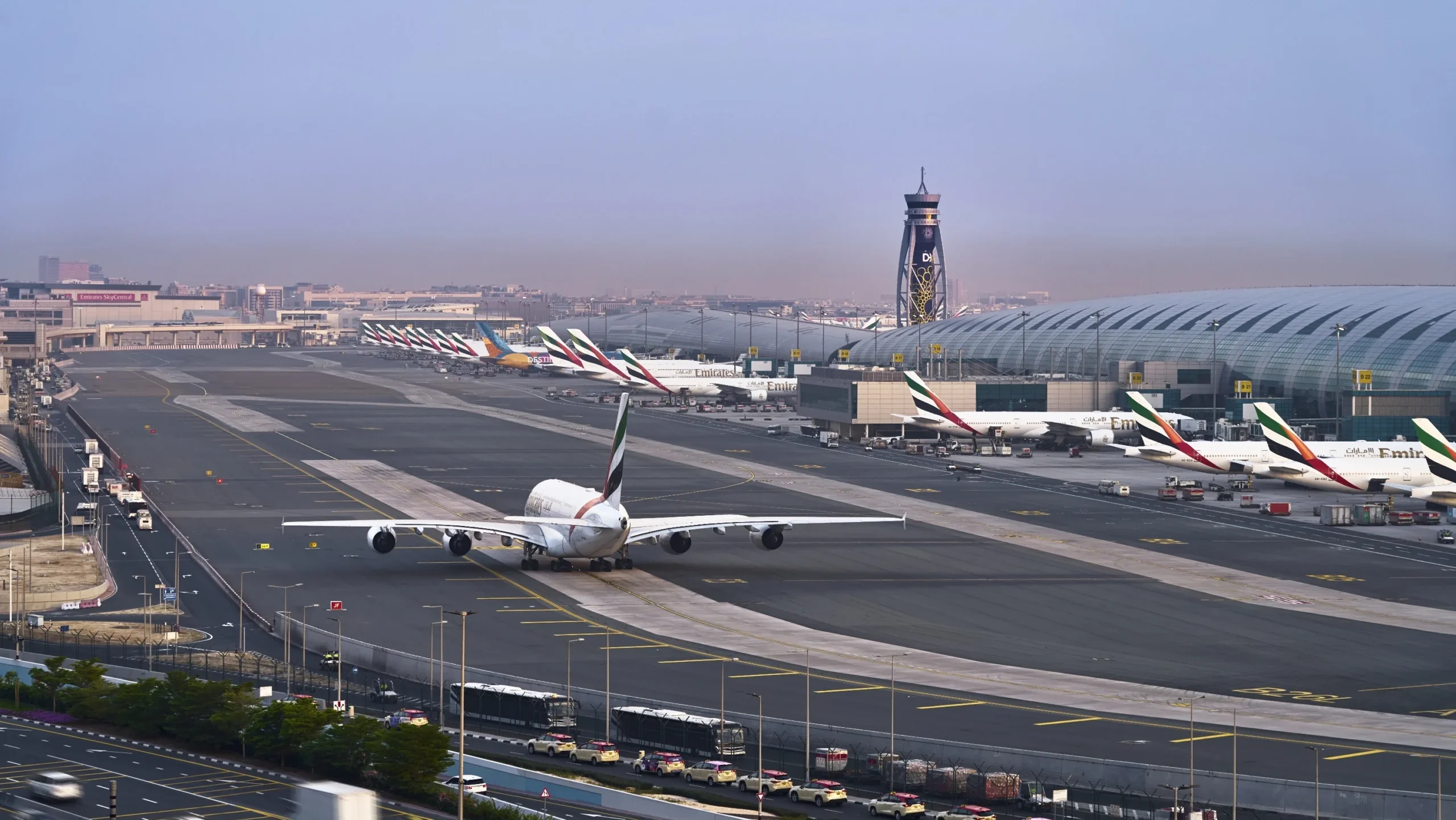
Airline Disruptions Rise in the Middle East
The conflict has severely impacted airline operations across the Middle East, particularly for carriers that rely on hub-and-spoke models. Qatar Airways has experienced the most disruption, canceling nearly 89 percent of its scheduled flights over three weeks.
Emirates and Etihad Airways have also reduced operations significantly, canceling large portions of their schedules as regional airspace conditions remain volatile.
Smaller carriers such as Gulf Air, Flydubai, and Kuwait Airways are facing similar challenges, further tightening capacity across the region.
Airlines now operate limited flights through restricted corridors approved by aviation authorities, which require extensive planning and regulatory clearance. These constraints have reduced flexibility and created uncertainty for both airlines and passengers.
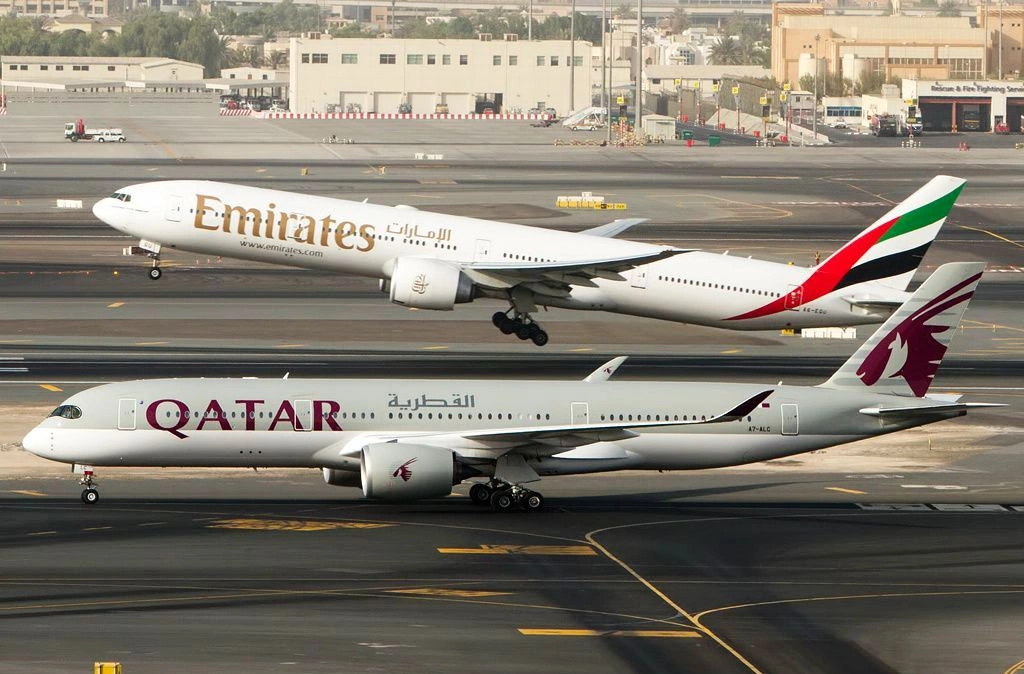
Global Routes Shift Amid Iran War
With Gulf hubs constrained, airlines and travelers are rapidly shifting to alternative connection points. Passengers traveling between North America, Europe, and Asia increasingly rely on routes through East Asia and Europe instead of the Middle East.
Major hubs such as Singapore (SIN), Tokyo (HND), and London (LHR) are absorbing growing transit demand, CN Traveler reported. Airlines, including Lufthansa and British Airways, have already increased capacity on routes linking Europe to Asia.
Carriers are also deploying larger aircraft and adding frequencies where possible, although global capacity remains limited. The aviation network was not designed to absorb such a large disruption, which has created bottlenecks at major international gateways.
Fares have surged as a result of constrained supply and rising demand. Business class tickets on key long-haul routes have increased dramatically, with some itineraries more than doubling in price compared to pre-conflict levels.
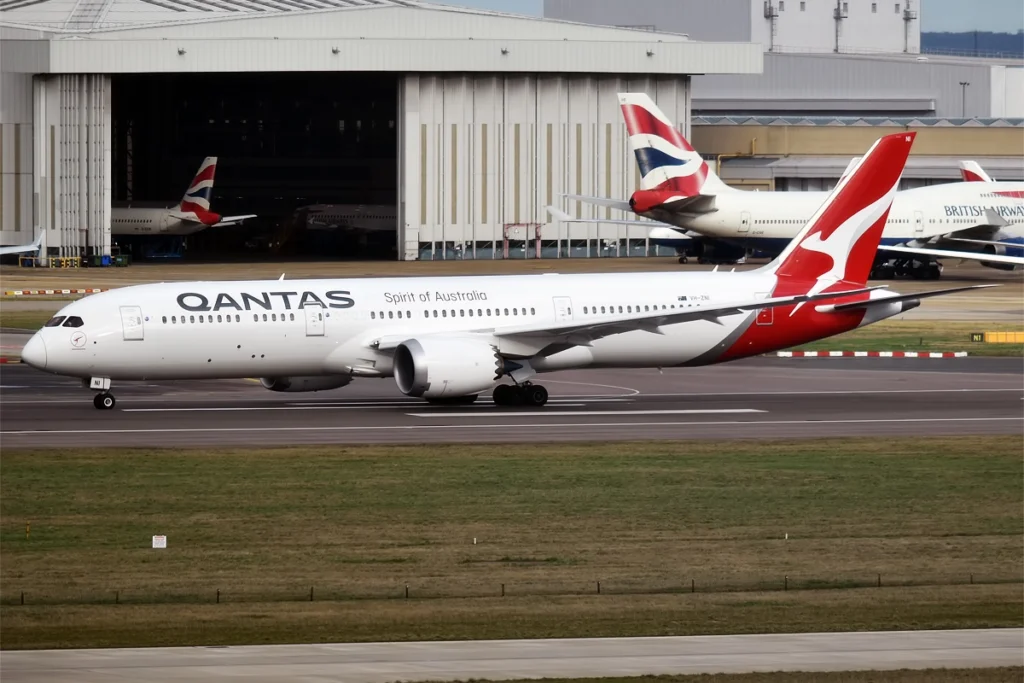
Longer Flight Paths for Airlines
Airspace closures have forced airlines to adopt longer and more complex routing strategies. Flights now avoid conflict zones by detouring over the Caucasus region or flying significantly farther south, increasing fuel consumption and travel time.
These changes have made some nonstop routes unviable, particularly on ultra-long-haul sectors. Air India (AI) has introduced technical stops in European cities such as Rome (FCO) and Vienna (VIE) on flights to North America due to extended routing constraints.
Similarly, Qantas (QF) has modified its Perth to London service to include a stop in Singapore, enabling better operational efficiency and passenger capacity. These adjustments have extended journey times by several hours while increasing operational complexity.
Despite these disruptions, some long-haul routes remain operational without major changes. Airlines such as American Airlines and United Airlines continue to operate select nonstop services between the United States and India using long-range aircraft.
Stay tuned with us. Further, follow us on social media for the latest updates.
Join us on Telegram Group for the Latest Aviation Updates. Subsequently, follow us on Google News


