Can Hokkaido’s annual outdoor art event charm a Tohoku girl who’s always been lukewarm on winter travel?
“You’ve gotta be crazy to go out of your way to take a trip somewhere at the coldest time of the year just to look at snow!”
This has long been the deeply held belief of our Japanese-language reporter Saya Togashi. She didn’t arrive at this maxim as a result of growing up in one of Japan’s more temperate zones, either. Saya was born and raised in the northeastern Tohoku region, the second-coldest part of the country. Over the years she’s gotten so accustomed to snowscapes that they’ve lost a lot of their romantic appeal in her eyes, while the unpleasant aspects of trying to travel in winter (bulkier clothing, heavier suitcases, the risk of severe weather wiping out your day’s sightseeing itinerary, stopped trains, and so on) remain as unattractive as ever to her.
As a result, even though she’s taken several trips to Japan’s coldest prefecture of all, Hokkaido, she’s always gone in spring, summer, or fall. This year, though, Saya finally made her first-ever journey to Hokkaido in winter, and, also contrary to her usual travel policy, she did go there primarily to look at snow. But she wasn’t there to look at snow piled up on a mountainside, blanketing a forest, or in any other form she’s more than had her fill of in her hometown. Instead, she was there to see the amazing snow sculptures of the Sapporo Snow Festival!
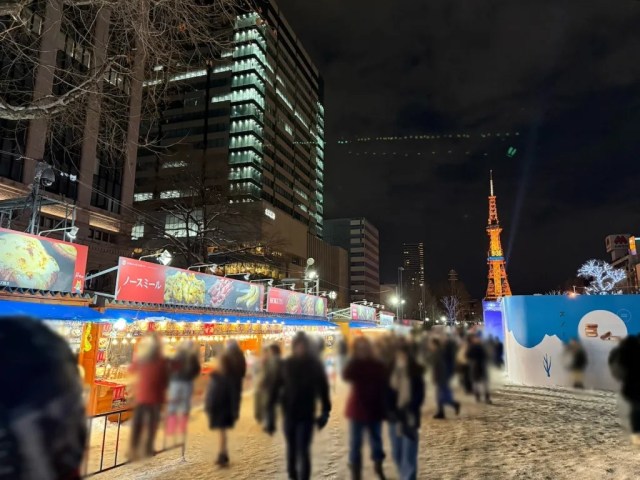
Held annually in Hokkaido’s prefectural capital city, the festival attracts some two million visitors from across Japan and around the world. This year’s event took place from February 4 to 11, and, as always, the biggest and boldest creations were on display in Odori Park, which stretches for several blocks in the Sapporo city center.
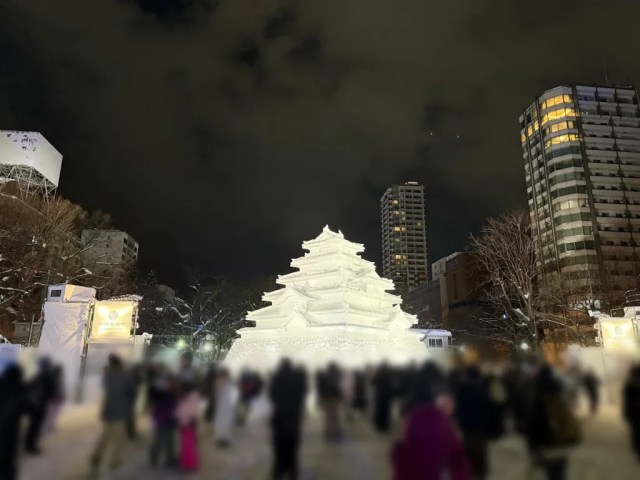
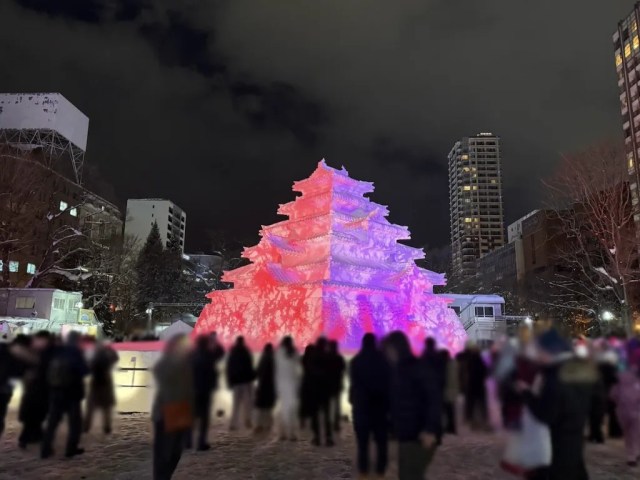
If you can work out the timing, Saya recommends aiming for a late-night visit to the venue. The crowds are bigger during the day, which makes the park harder to navigates and also can cause difficulties if you’re trying to get unblocked lines of sight for your photos. After sundown, not only is the park less congested and the atmosphere more relaxed, the sculptures, being made of snow, stand out in extremely aesthetic contrast to the black of the night sky.
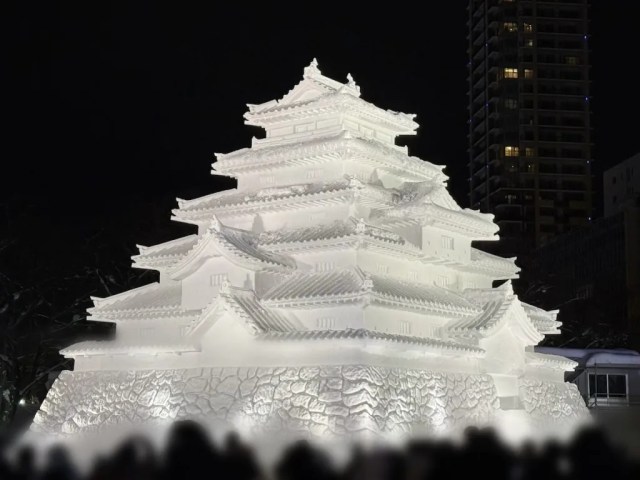
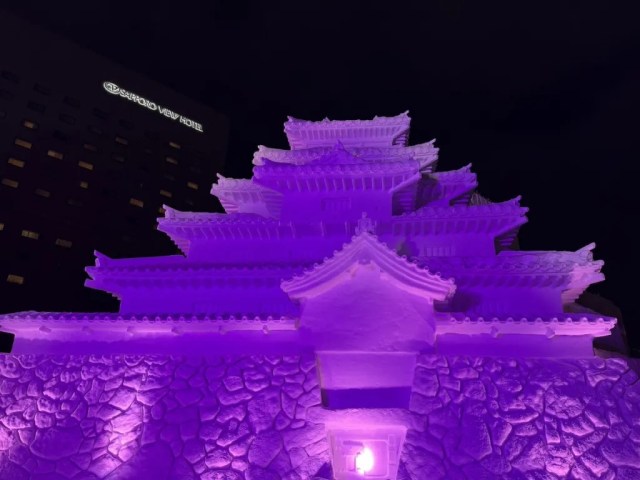
This is also in part thanks to Odori Park being originally designed as a firebreak by Sapporo’s urban planners, so there are few buildings or other permanent structures on the grounds. In winter, the trees that line the central grassy areas shed their leaves too, leaving little to no visual clutter as you gaze up to admire the Snow Festival’s installations. For Saya, one of this year’s standouts was the Japanese Ground Self-Defense Forces recreation of Tsuruga Castle, also known as Aizuwakamatsu Castle.
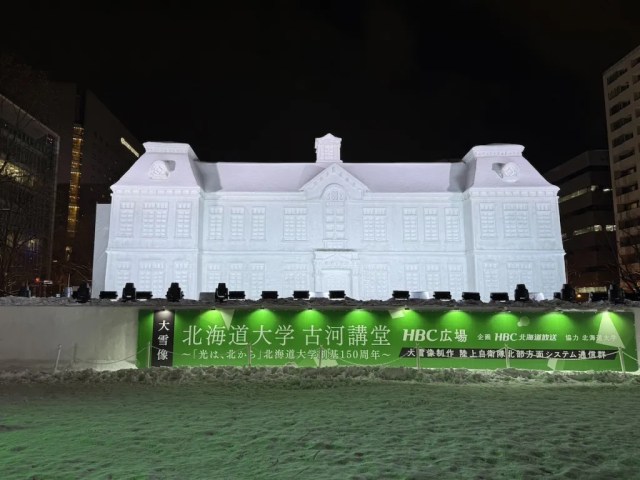
A recreation of Hokkaido University’s Furukawa Hall, originally built in 1909 to house the school’s forestry classes, was also a part of this year’s frozen architecture…
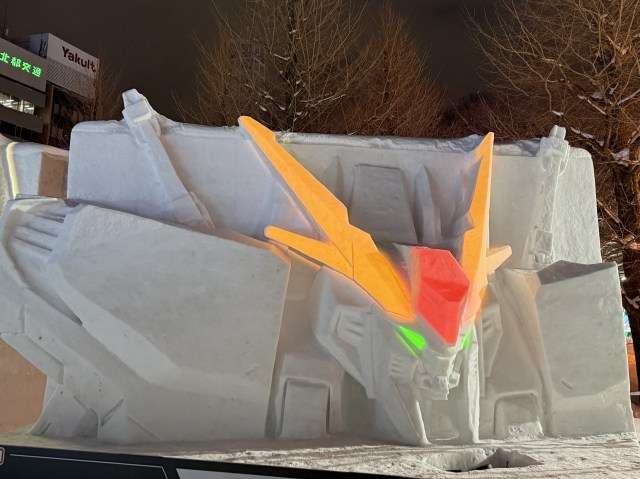
…but the Sapporo Snow Festival doesn’t limit entries to representation of the real world, and artists’ are allowed to let their imaginations run wild and build things like snowy Gundam anime mecha…
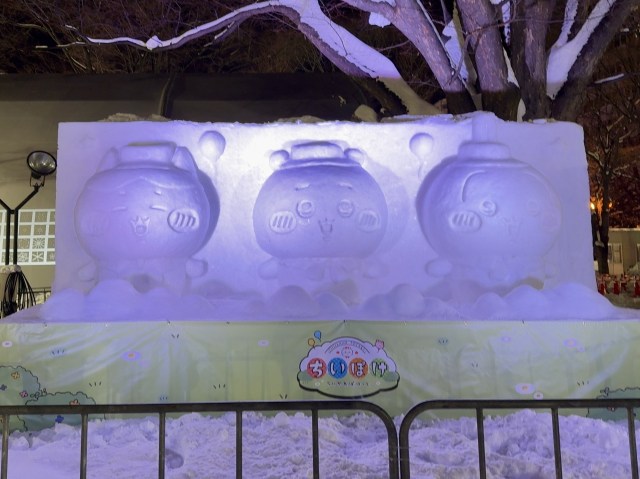
…adorable Chiikawa characters…
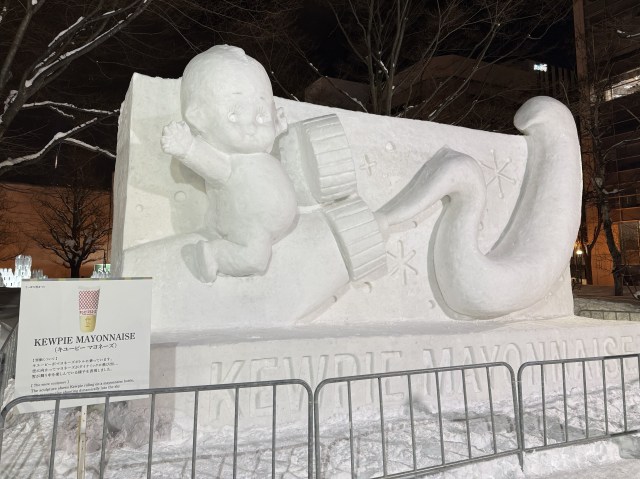
…or Kewpie mayonnaise mascots.
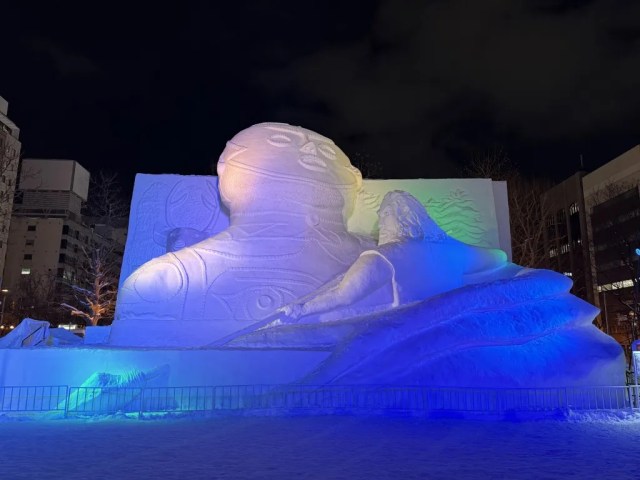
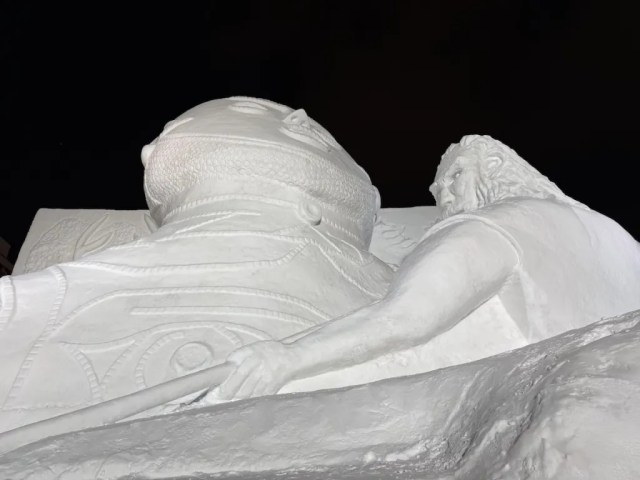
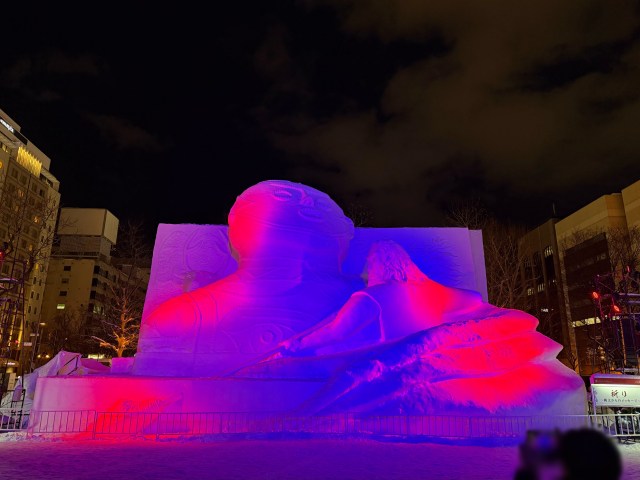
One of this year’s most artistic entries was Prayer: Message from the Jomon Era, it depicts the Chuku-dogu, a clay figure discovered in Hokkaido in 1975 and believed to be from the late Jomon period of Japanese history, making it roughly 3,500 years old.
▼ The ice sculpture is 13 meters (42.7 feet) tall and 20 meters wide
Most of the time, the ice sculptures shine in pure white, but some have bouts of colored lighting, and the snow Tsuruga Castle even had a periodic projection mapping show with accompanying music.
In terms of access and amenities, Otsu Park is right in the middle of Sapporo, with plenty of easy public transportation access. This year, the displays were lit up until 10 p.m. (Saya was there until roughly that time), so there was plenty of time to stop be even after dinner, and while the official Snow Festival sponsor booths were closed when Saya got there, there were still independent snack stands up and running.
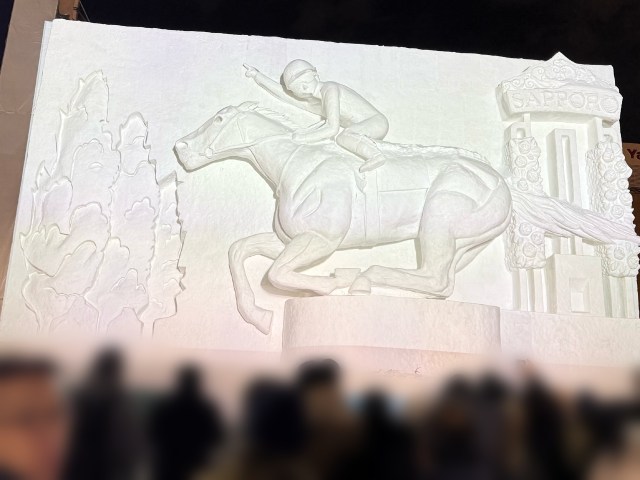
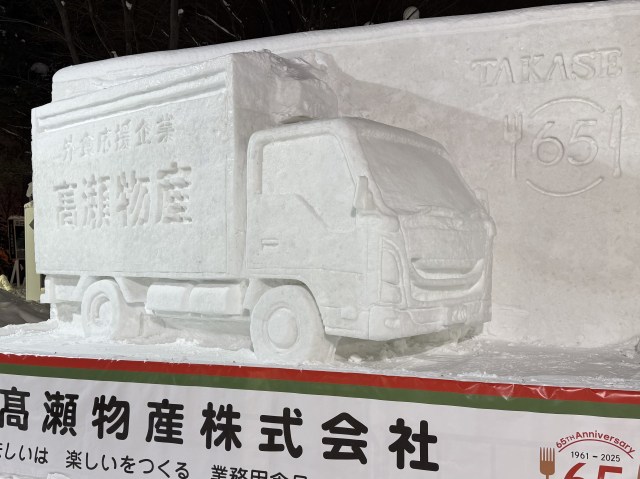
The big concern with doing a nighttime Sapporo Snow Festival visit, therefore, becomes the temperature. Not that Sapporo is anywhere close to balmy on a winter’s day, but things get chillier still once the sun goes down, so a warm coat, hat, gloves, and scarf are highly recommended, and a bottle of hot tea is something else you might want to make sure you’re equipped with before you arrive.
▼ Frost forming on Saya’s hair
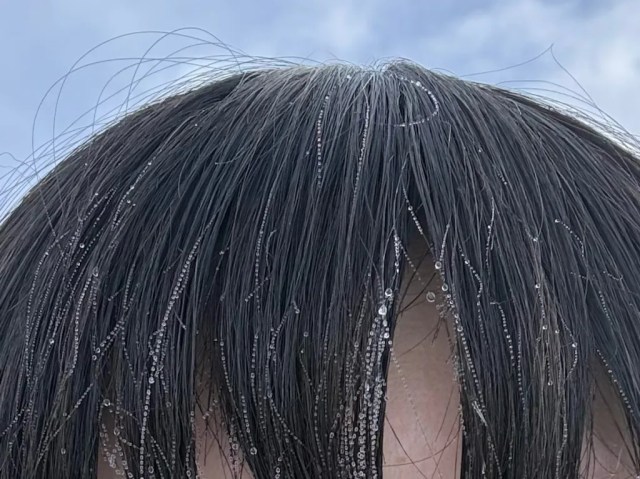
Still, since the thinner crowds at night make it easier to walk around, Saya was able to keep moving, and between her warm clothes and the body heat she generated, she didn’t feel uncomfortably cold unless she’d been standing still for a while.
So while Saya hasn’t completely abandoned her position that it’s kind of crazy to take a trip just to look at snow, after finally making her first winter trip to Hokkaido, she can understand why so many people choose this time of year for their Sapporo visit, and for these snow sculptures, she thinks it’s not only a logical choice, but, should you choose to make it too, one you’ll always fondly remember.
Photos ©SoraNews24
● Want to hear about SoraNews24’s latest articles as soon as they’re published? Follow us on Facebook and Twitter!
[ Read in Japanese ]


