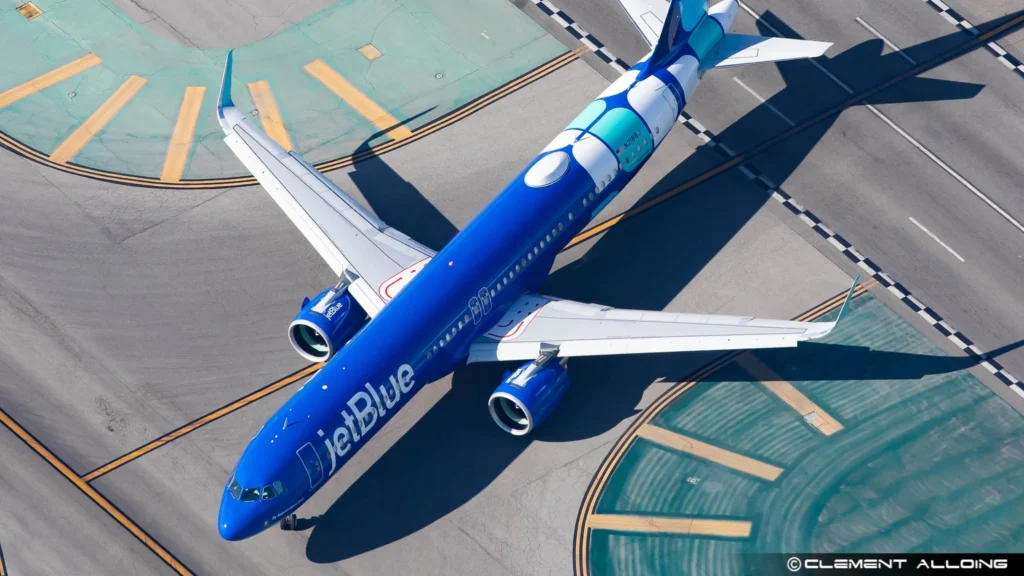
NEW YORK- JetBlue Airways (B6) flight 882 from Hewanorra International Airport (UVF) in St. Lucia to New York John F. Kennedy International Airport (JFK) was grounded overnight on Friday after a birdstrike forced the airline to delay the service until 11 a.m. the following morning. JetBlue (B6) confirmed it would not provide hotel accommodation for affected passengers.
The airline cited the bird strike as an uncontrollable event, placing it outside the scope of its customer care obligations. Passengers stranded overnight in the Caribbean were directed to seek coverage through personal travel insurance or credit card trip delay benefits instead.
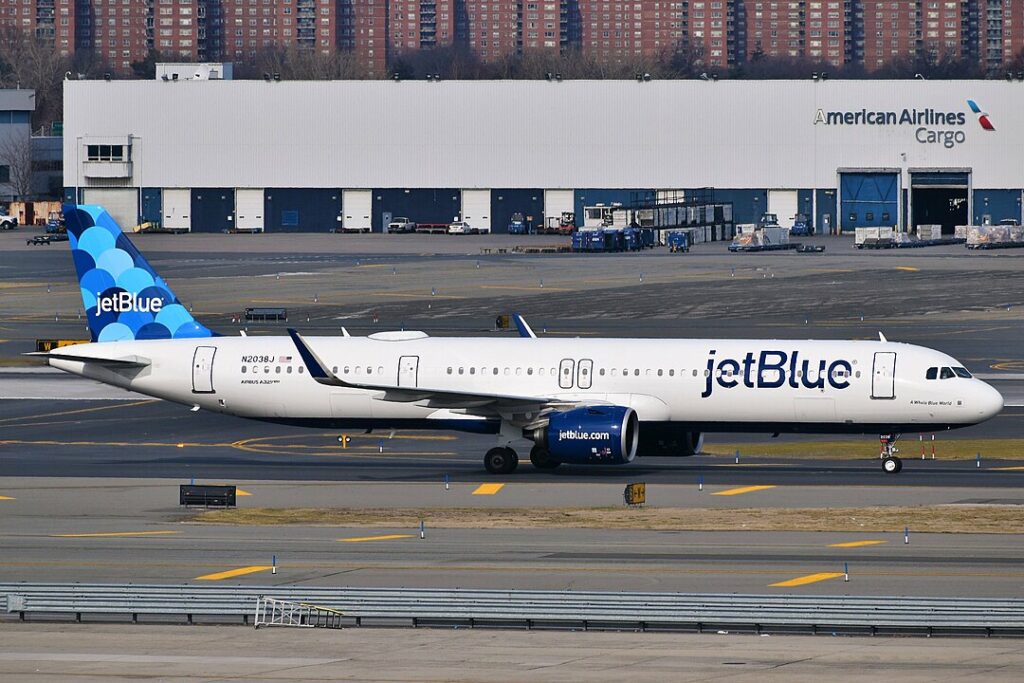
JetBlue Passengers Denied Hotel in St.Lucia
JetBlue classifies a birdstrike as an extraordinary circumstance, not a controllable delay.
Under the airline’s policy, controllable causes such as mechanical failures resulting from poor maintenance or internal workforce planning errors trigger compensation and hotel coverage. A birdstrike does not meet that threshold.
Legally, the airline’s position is sound. A birdstrike is not evidence of maintenance negligence. If a crew times out following a birdstrike, the airline does not treat that as a staffing failure on its part.
The sequence of events originates externally, and JetBlue argues it cannot be held responsible for nature-driven disruptions.
This stance is also consistent with rulings at the international level. The European Court of Justice has confirmed that even under EU Regulation 261/2004, European carriers are not required to compensate passengers when a birdstrike causes a delay or cancellation.
The ruling classifies birdstrikes as extraordinary circumstances beyond an airline’s reasonable control, ViewfromtheWing reported.
What Passengers Can Do When an Airline Won’t Cover Costs
Passengers holding travel insurance policies that include trip delay coverage are in the strongest position.
Depending on the policy terms, overnight accommodation, meals, and incidental expenses may all qualify for reimbursement after a documented delay of a specified number of hours.
Credit cards with built-in travel protections offer a second avenue. Several premium travel credit cards include trip delay benefits that activate automatically when a cardholder purchases a ticket using that card. Passengers should review their cardholder agreement or contact their card issuer directly to confirm eligibility and the claims process.
For passengers without either option, the situation is considerably harder. JetBlue (B6) has no contractual or legal obligation to provide a hotel in this scenario, and the airline’s financial position gives it little incentive to absorb discretionary costs.
The airline has been working to reduce operating expenses and recently moved to introduce higher bag fees, signaling a broader push to limit spending that is not operationally mandatory.
The Broader Question of Passenger Expectations
The incident highlights a gap between what passengers expect and what airlines are legally required to deliver.
A passenger purchases a ticket with the expectation of arriving at the stated destination on the stated date. When a flight does not operate, regardless of the cause, the passenger bears the immediate inconvenience.
Airlines are not insurers, and the legal framework in most jurisdictions draws a clear line between controllable and uncontrollable disruptions.
Birdstrikes sit firmly in the latter category. That distinction, while legally defensible, offers little comfort to a traveler spending an unplanned night in a foreign country at their own expense.
The practical takeaway is straightforward: travel insurance and credit card trip protections exist precisely for situations like this. Passengers who rely solely on airline goodwill during extraordinary events often find that goodwill has hard limits.
Stay tuned with us. Further, follow us on social media for the latest updates.
Join us on Telegram Group for the Latest Aviation Updates. Subsequently, follow us on Google News