That famous JFK controller is at it again, though I find something about this interaction to be sort of funny…
JFK ATC & British Airways pilot spar over terminology
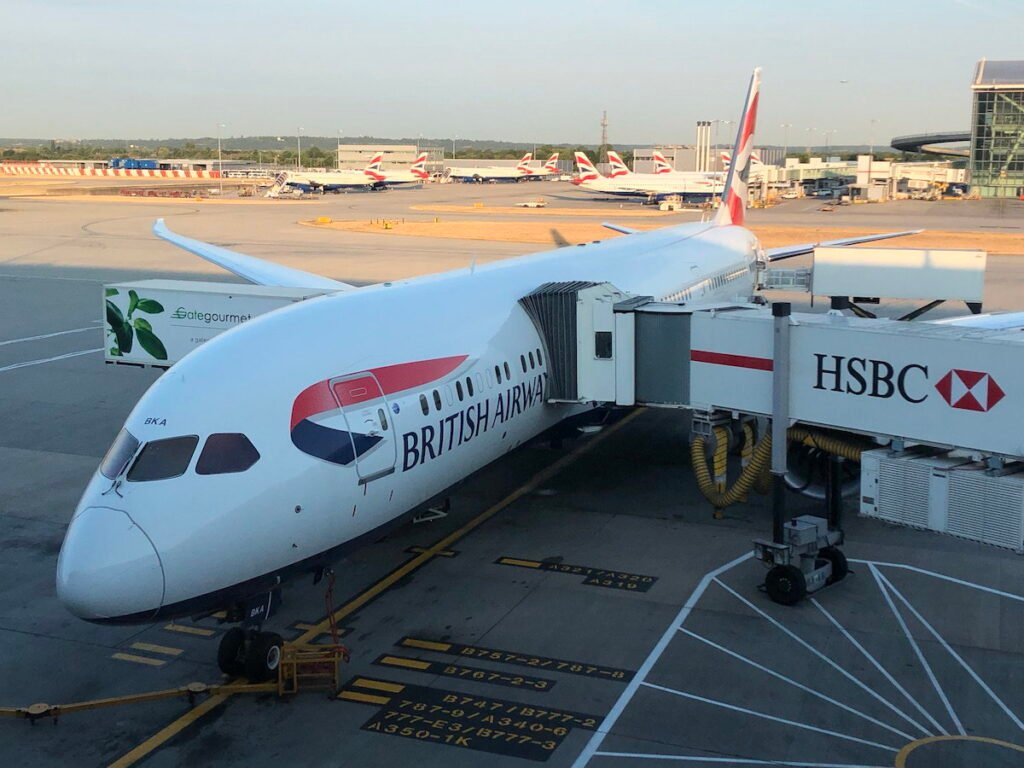
YouTube channel You can see ATC has the audio and a visualization of an incident that happened around 11:30PM on May 9, 2026, involving a New York Kennedy (JFK) air traffic controller, and the pilots of a British Airways Boeing 787-10, which was bound for London Heathrow (LHR).
Visibility was limited on this particular night, and as the British Airways plane was taxiing to the runway, the RVR (Runway Visual Range) was 1,000 feet. This caused the British Airways pilot to ask if LVO was in force (Low Visibility Operations), which is where things went downhill:
British Airways pilot: “Kennedy, Speedbird 18A heavy, are you declaring LVOs?”
British Airways pilot: “Kennedy, from Speedbird 18A heavy, are you declaring LVOs?”
JFK ATC: “I’m not sure… I’m not… I’m not… I don’t understand the question, Speedbird 18A heavy.”
British Airways pilot: “Roger, you just said RVR 1,000 feet. Are you declaring low visibility operations or not?”
JFK ATC: “I’m not declaring anything, no.”
British Airways pilot: “Roger, but you’ve given 1,000 feet RVR, correct?”
JFK ATC: “That’s correct.”
British Airways pilot: “Roger, that means that you have just said that you have low visibility. So please assure us that you have got LVOs in force or we cannot depart in less than 1,000 feet of visibility.”
JFK ATC: “British Airways 18A heavy, I do not understand what you’re saying.”
British Airways pilot: “Roger, it is very simple, sir. You have declared RVR of 1,000 feet. That means your visibility is low. LVO is the standard ICAO terminology. Have you got low visibility procedures in force or not?”
JFK ATC: “No, sir.”
When it was the British Airways plane’s turn to take off, they still didn’t have sufficient RVR, so they had to taxi off the runway and wait for a while longer. Eventually visibility improved, and the plane was able to take off. That being said, the confusion over feet vs. meters, plus the number of left turns needing to be made, makes for some good listening as well.
Why were ATC & the pilot talking past one another?
On the one hand, there’s nothing funny about two professionals who are fluent in the same language essentially talking past one another. This seems like very poor problem solving on the part of both parties, since they basically just keep saying the same thing over and over, rather than trying to find another way to get on the same page.
On the other hand, there is a certain level of humor to the very serious British Airways pilot (who desperately needs a windscreen on his mic) and the JFK controller who would be hard pressed to act like he cares less.
If you look at the comments on this interaction, they’re mostly in support of the British Airways pilot, and commending him for his focus on safety. That generally seems like the right take, and one might logically wonder “well if LVO is an ICAO term, how does the controller not have any clue what that is?”
Here’s the best explanation I can find for the confusion that’s in support of the controller, just to present a different perspective:
ICAO sets recommendations but does not have regulatory or policymaking authority. LVO is not in FAA lexicon. SMGCS is the term used on taxi charts when RVR is below 1200 ft. There is no requirement in any regulation or FAA-published guidance to state that “LVO is in force”. 7110.65 directs the protection of ILS critical areas below 800-2. An advisory circular guides airports to implement SMGCS procedures below 1200 ft RVR. These actions are required of ATC and airports, so unless they are routinely violating established procedure, I don’t see how adding the sentence “LVO in effect” to the ATIS increases the level of safety in any meaningful way. You simply assume you’re able to use published CAT II/III mins and lower-than-standard takeoff mins (if appropriately authorized) unless explicitly informed otherwise by ATC/NOTAMs/ATIS.
Now, people can argue about whether the JFK controller should know the term, but I suspect this is the correct take in terms of the reality of why this played out the way it did. This particular JFK controller is notorious for using his own little phrases, and if you don’t happen to know what those are, that’s on you. And ICAO? As far as he’s concerned, what’s that? 😉
Bottom line
A JFK air traffic controller and British Airways 787 pilot had an unusual exchange, when the pilot asked for assurance that low visibility operations were in force. The controller had no clue what that is, so just kept saying “no.” However, that didn’t stop the pilot from asking the same question over and over.
What do you make of this JFK ATC interaction?


