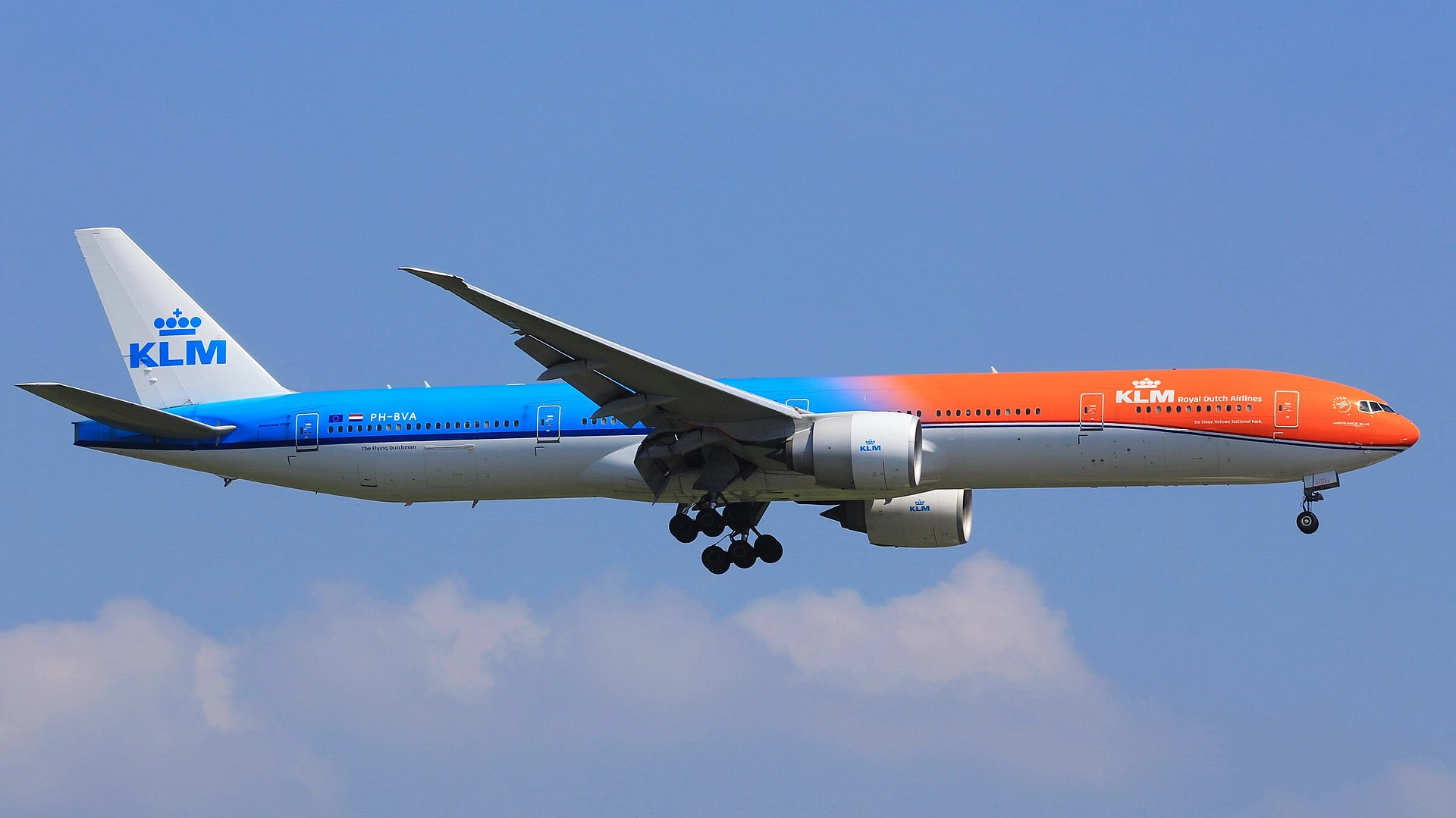
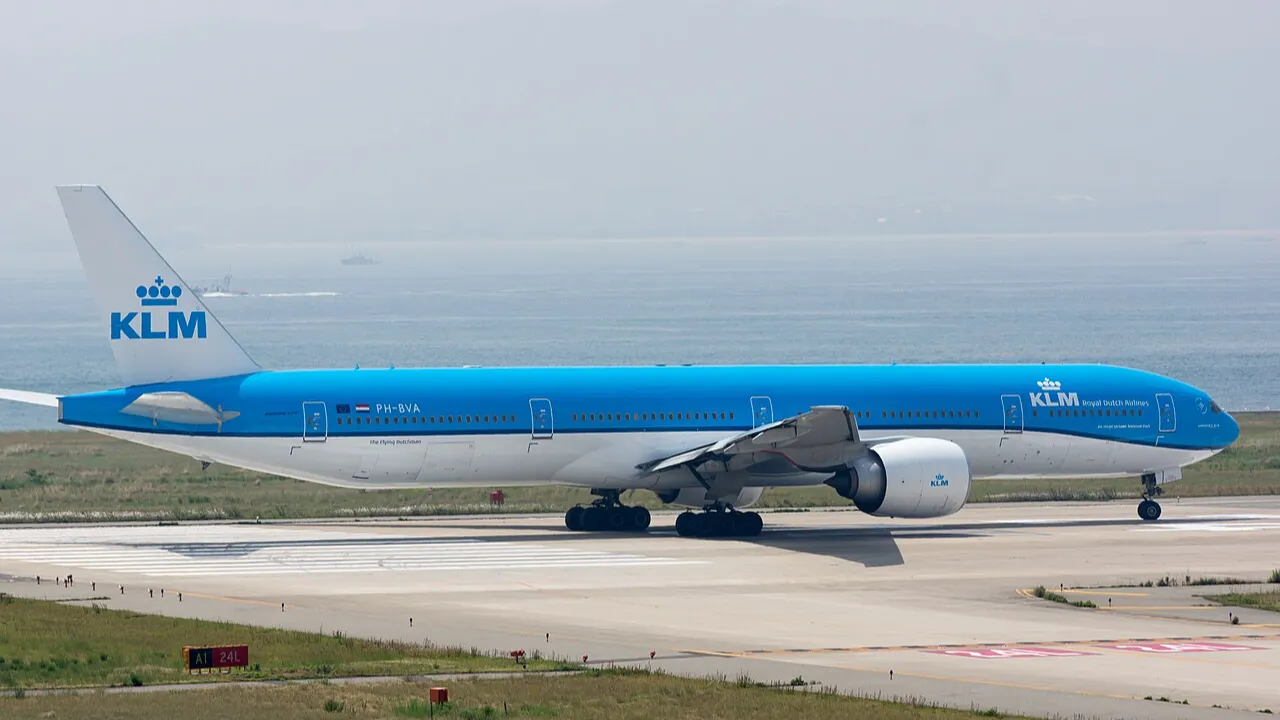
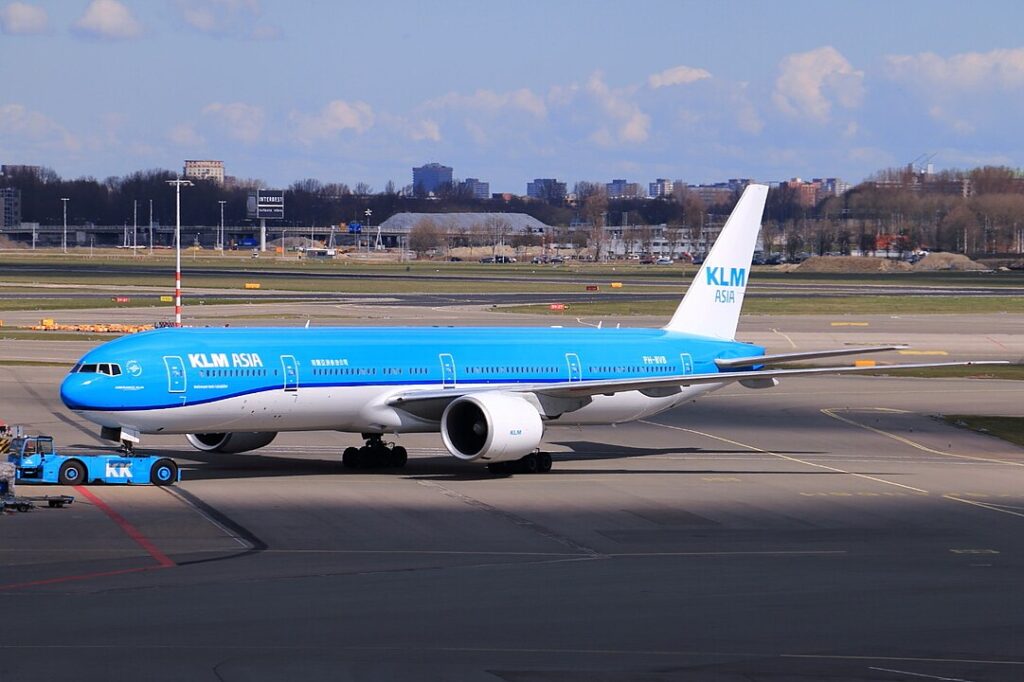
PARAMARIBO— A KLM (KL) Boeing 777-300 flying from Amsterdam Schiphol Airport (AMS) to Paramaribo (PBM) faced an unusual operational delay after being forced to divert to Cayenne (CAY) in French Guiana due to the unavailability of Air Traffic Control (ATC) services in Suriname.
The wide-body aircraft, operating Flight as KL713, was nearing its destination when the crew halted descent at Flight Level 180 (FL180) and entered a holding pattern at approximately 13:35 local time.

https://commons.wikimedia.org/wiki/File:KLM_Royal_Dutch_Airlines,_B777-300,_PH-BVK_(20434222134).jpg
KLM 777 Diverted Amid ATC Shortage at Paramaribo
The incident, which occurred during descent on Sunday (October 19, 2025), briefly disrupted regional air traffic and prompted local authorities to address a critical staffing shortage.
After circling for about 25 minutes without ATC communication, the pilots opted to divert. The aircraft landed safely in Cayenne roughly one hour later, highlighting the operational challenges faced when essential aviation services become temporarily unavailable.
The diversion stemmed from a sudden shortage of ATC controllers at Paramaribo’s Johan Adolf Pengel International Airport, reported The Aviation Herald.
According to Suriname’s Ministry of Transport, a series of unexpected sick leave reports left the control tower unable to manage normal operations. Officials stated that if the issue had not been resolved promptly, all inbound and outbound flights could have been grounded by late afternoon.
In response, authorities began calling in additional staff to restore safe airspace management. The ministry also confirmed that contingency measures were underway to prevent further disruptions.
For airlines operating long-haul routes into South America, such interruptions can cause costly delays and impact flight scheduling across multiple regions.
Safe Diversion and Delay
After its unscheduled stop in Cayenne, the KLM aircraft remained grounded for approximately 80 minutes while awaiting clearance to continue. It later departed for Paramaribo and arrived safely with an overall delay of about three hours.
Despite the inconvenience, all passengers disembarked without incident, and the airline has not reported any technical or safety issues related to the event.
The situation underscores the essential role of air traffic control in ensuring safe and efficient aviation operations.
Even short-term disruptions in ATC availability can lead to cascading effects across flight networks, especially for intercontinental routes such as Amsterdam–Paramaribo.
https://commons.wikimedia.org/wiki/File:KLM_Royal_Dutch_Airlines,_B777-300,_PH-BVA_(17567739560).jpg
Ministry Response
Suriname’s Transport Ministry acknowledged the severity of the staffing problem and pledged to strengthen coordination between aviation authorities and ATC personnel.
Officials added that efforts are being made to ensure adequate staffing levels and backup plans to prevent a repeat of the situation.
While such ATC shortages are rare, the incident serves as a reminder of the critical human element behind every flight.
Aviation experts have also noted that increasing air traffic in the region may require long-term investment in controller training and staffing resilience.
Bottom Line
The diversion of KLM Flight KL713 from Amsterdam to Paramaribo due to ATC unavailability highlights a key vulnerability in aviation infrastructure.
Though no safety risks occurred, the incident emphasized the dependence of global operations on well-coordinated air traffic management.
Authorities in Suriname have since taken corrective action, ensuring that flight movements at Paramaribo return to normal.
Stay tuned with us. Further, follow us on social media for the latest updates.
Join us on Telegram Group for the Latest Aviation Updates. Subsequently, follow us on Google News