DUBAI— KLM Royal Dutch Airlines (KL) has evacuated one of its Boeing 787 Dreamliner aircraft after it remained stranded for nearly two weeks at Dubai International Airport (DXB). The aircraft had been parked on the airport’s tarmac since February 28 after regional airspace disruptions linked to the Iran conflict forced the airline to suspend normal operations.
The aircraft, which was scheduled to operate a return flight to Amsterdam Airport Schiphol (AMS), stayed grounded due to ongoing security concerns and airspace closures across parts of the Middle East. After assessing the situation, the airline decided to reposition the aircraft without passengers to ensure operational safety.
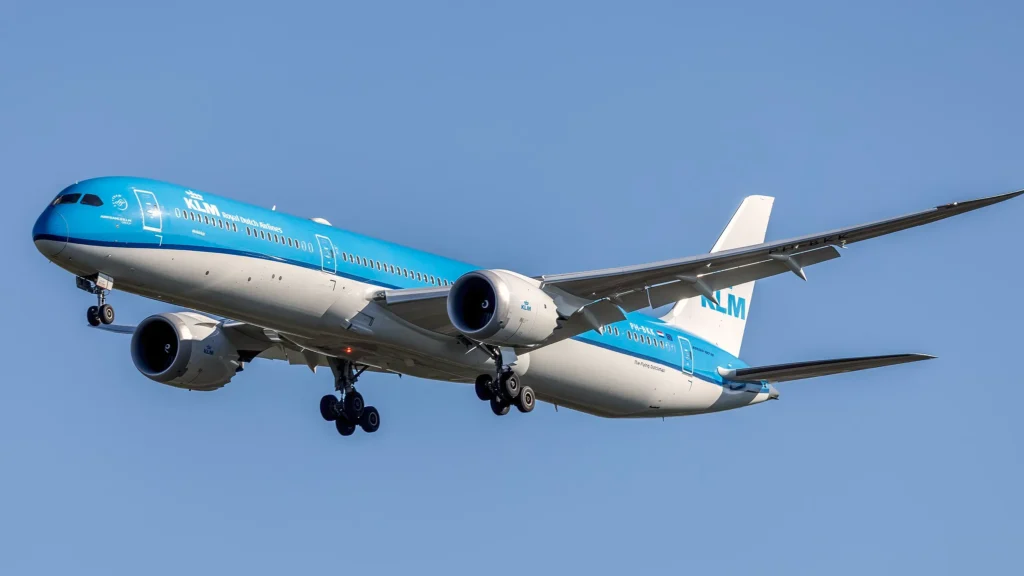
https://commons.wikimedia.org/wiki/File:KLM_Boeing_787-10_PH-BKK_IAD_VA1.jpg
KLM 787 Escapes Dubai
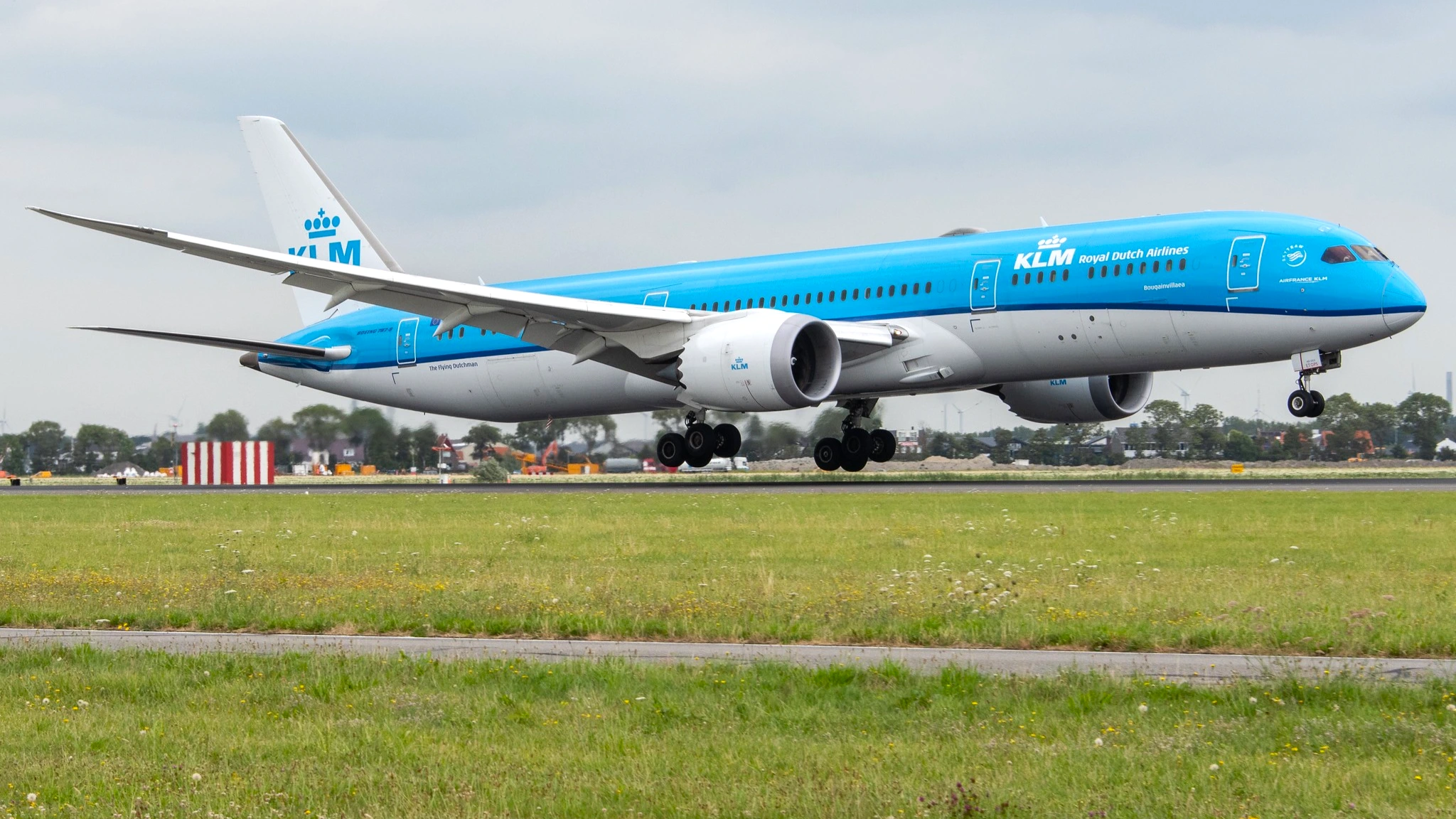
The Boeing 787-9, registered PH-BHH and approximately nine and a half years old, departed Dubai at around 3:00 pm local time on March 12, reported PYOK.
Instead of operating a normal commercial service, the airline assigned the aircraft a special positioning flight number to indicate that no passengers were onboard.
The aircraft quickly left the Persian Gulf region and flew west toward Saudi Arabia. The routing allowed the flight to avoid potential missile or drone threats that had periodically affected regional airspace during the conflict.
After crossing Saudi Arabia, the Dreamliner continued across Egypt before entering European airspace on its journey back to the Netherlands. Such positioning flights are common when airlines need to relocate aircraft without carrying passengers.

Aircraft Stranded for Two Weeks
The aircraft had arrived in Dubai in the early hours of February 28. It landed at approximately 10:30 am and was scheduled to depart shortly afterward for its return service to Amsterdam.
However, shortly after arrival, large portions of regional airspace were closed due to escalating military tensions. Airlines operating in the region began suspending or delaying flights while authorities monitored the security situation.
As the conflict intensified, several aircraft remained parked at regional airports awaiting clearance to depart safely. KLM’s Dreamliner remained grounded on the Dubai tarmac for 12 days before the airline approved its repositioning flight.
Before authorizing the departure, KLM said it carefully evaluated the safety conditions and implemented additional security measures. The airline explained that operating the aircraft with passengers during this period would not have been responsible given the circumstances.
Regional Flight Impact
Air traffic across the United Arab Emirates has gradually resumed despite intermittent security concerns. Several regional airlines have continued operating limited schedules while using designated safe air corridors.
Dubai-based carriers Emirates Airline (EK) and Flydubai (FZ) restarted flights within days of the conflict, initially focusing on repatriation services before gradually expanding operations. However, overall flight numbers remain below pre-conflict levels.
Data from aviation monitoring sources indicates that Emirates operated about 61 percent of its typical schedule to and from Dubai on March 12. Flydubai restored roughly 38 percent of its normal operations, while Etihad Airways (EY) in Abu Dhabi operated only a small portion of its usual flights.
KLM has taken a more cautious approach and has temporarily suspended flights to Dubai. The airline currently plans to keep the route paused until at least March 28 while it continues monitoring security developments in the region.
Several other European airlines have also reduced or suspended services to parts of the Middle East during the same period. Airlines, including British Airways (BA), Lufthansa (LH), and SWISS (LX), have adjusted their schedules as they evaluate the evolving security environment.
Stay tuned with us. Further, follow us on social media for the latest updates.
Join us on Telegram Group for the Latest Aviation Updates. Subsequently, follow us on Google News