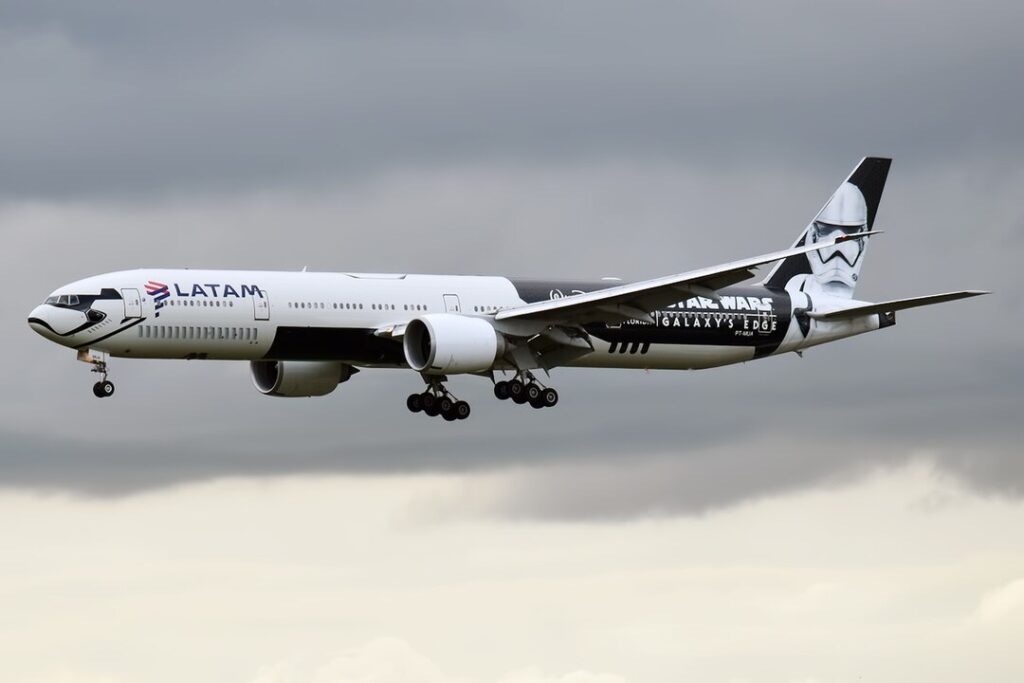
SAO PAULO— Aviation investigators have launched a formal inquiry into a high-speed rejected takeoff involving a LATAM Brasil Boeing 777-300 at Guarulhos International Airport (GRU). The incident occurred on the evening of February 15 as the aircraft prepared for a transatlantic flight to Lisbon (LIS), with 414 passengers on board.
The Boeing 777, registration PT-MUH, began its takeoff roll after a 90-minute delay, reaching a ground speed of approximately 174 knots before the pilots suddenly rejected the takeoff. The plane’s front wheels had already lifted off the runway, creating a scenario that is rare and considered potentially dangerous in aviation operations.
LATAM’s V1 Speed Concerns
Flight LA-8146 had pushed back from Terminal 3 and taxied to Runway 10L before clearance for takeoff. Spotters recorded the front landing gear lifting as the aircraft accelerated, only for the pilots to halt the takeoff abruptly.
Emergency services responded immediately once the aircraft stopped on a taxiway. All tires were damaged from the high-speed braking, and the plane was removed from service. Passengers were safely deplaned and transported to the terminal on coaches.
Investigators are closely examining whether the rejected takeoff occurred after the aircraft had passed V1 speed, which is the decision speed beyond which a takeoff is generally considered committed.
At V1, continuing the takeoff is usually safer than attempting to stop on the remaining runway, PYOK reported.
The aircraft’s weight and other factors, including temperature and runway conditions, influence the V1 calculation.
Preliminary tracking data shows the plane’s ground speed matched typical maximum V1 speeds, suggesting the decision to abort may have occurred at a critical juncture.

LATAM Airlines Brazil confirmed the aborted takeoff, stating that the procedure followed established safety protocols. A spokesperson emphasized that the airline provided full assistance to passengers, who were rebooked on subsequent flights or accommodated in hotels.
The airline reiterated that safety remains the top priority in all operations. Aviation experts note that such incidents underscore the importance of strict adherence to weight calculations and takeoff speeds, particularly after past events involving misentered data affecting flight safety.
A similar Boeing 777 incident occurred in July 2024 at Milan Malpensa Airport, where a tailstrike resulted from incorrect takeoff speed calculations.
Analysts suggest that accurate input of zero fuel weight versus actual fuel weight is critical to prevent high-speed rejected takeoffs and runway overruns.

Bottom Line
The ongoing investigation at Sao Paulo aims to determine the exact sequence of decisions made by the flight crew.
Regulators and safety authorities will assess whether all procedures were correctly followed and if additional safety measures are needed to prevent future occurrences.
Stay tuned with us. Further, follow us on social media for the latest updates.
Join us on Telegram Group for the Latest Aviation Updates. Subsequently, follow us on Google News


