Porter Airlines (PD) has rapidly expanded its domestic presence since it started operations with E195-E2 aircraft and broadened its network approach. In June 2025, its 20 busiest domestic routes confirm the trend, with a clear emphasis on high-priority city pairs, especially to and from Toronto Pearson (YYZ).
These busiest routes are ordered by monthly flights (two ways), total seats available, and available seat miles (ASMs), and the resultant ranking presents a snapshot of Porter’s current domestic market priorities.
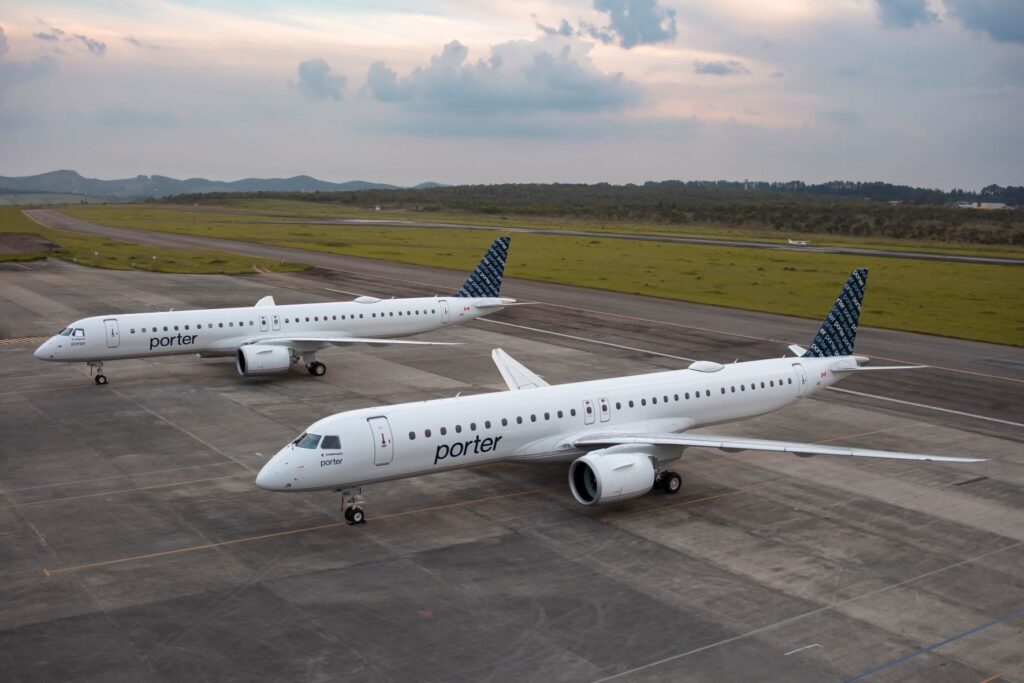
Toronto Pearson at the Core
Toronto Pearson (YYZ) is the primary hub of Porter’s operation, showing up on 14 of the 20 busiest domestic routes.
While the airline maintains some regional flying out of Billy Bishop Toronto City Airport (YTZ), the E195-E2 operations out of Pearson have shifted the network’s emphasis to more long-haul markets.
Key transcontinental and medium-haul city-to-city pairs such as Toronto–Vancouver, Toronto–Calgary, and Toronto–Halifax now dominate the schedule, all operated with more-capacity jets suitable for longer legs. Porter is clearly establishing itself as a full-service competitor to Air Canada and WestJet on core trunk routes.
Busiest Routes by Flights
Porter Airlines’ busiest route by flights is Toronto–Vancouver, with 278 total flights in June 2025. The cross-country link is the carrier’s busiest single route by all three categories — flights, seats, and ASMs — suggesting the strategic importance of Western Canada to Porter’s long-haul domestic strategy.
Ranking closely behind are Toronto–Halifax with 239, Toronto–Montreal with 238, and Toronto–Ottawa with 233 monthly flights. These four are Porter’s core domestic routes and show a mix of long-haul and high-frequency short-haul routes.
Toronto–Calgary and Toronto–Edmonton round out the top six with 232 flights each. This is part of Porter’s network transition to prioritize frequency on key national routes.
Other routes with high frequencies are:
- Edmonton–Ottawa: 120 flights
- Halifax–Ottawa: 120 flights
- Ottawa–Vancouver: 120 flights
- Ottawa–Calgary: 112 flights
These routes emphasize the airline’s growing point-to-point model out of Ottawa, which is given secondary hub status in the network.
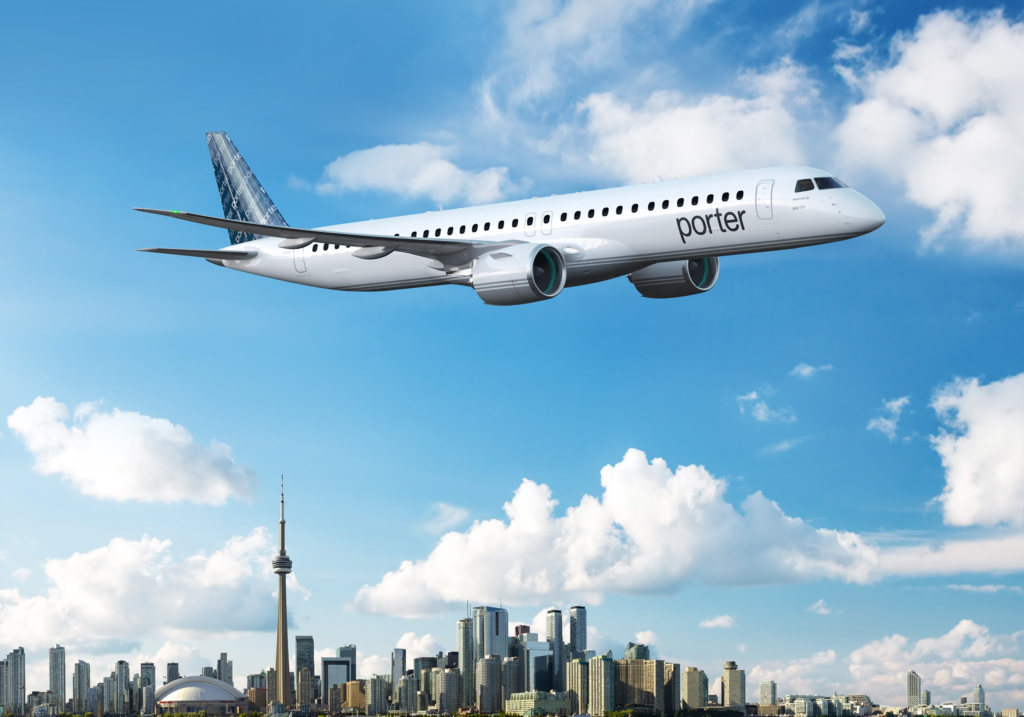
Busiest Routes by Seats
Toronto–Vancouver remains number one for a third consecutive month with 36,696 seats offered in June. This volume, along with the high flight frequency, underscores Porter’s competitive presence against WestJet and Air Canada on one of Canada’s most important air routes.
Toronto–Halifax ranks second at 31,548 seats, with Toronto–Montreal a close third at 31,416. While shorter in sector length, the lofty seat number on Toronto–Montreal reflects frequency strength and daily consistency of use.
Toronto–Calgary and Toronto–Edmonton each had 30,624 seats, tied fifth, with Porter presumably running its maximum E2 capacity on nearly every flight. This same seat number with the same flights reflects standard aircraft deployment.
Other high seat volume markets include:
- Edmonton–Ottawa: 15,840 seats
- Halifax–Ottawa: 15,840 seats
- Ottawa–Vancouver: 15,840 seats
- Ottawa–Calgary: 14,784 seats
- Winnipeg–Toronto: 14,652 seats
These routes support Porter’s enhanced hub function for Ottawa, as it provides a decent substitute to Pearson for connections in Eastern Canada and a few Western markets.
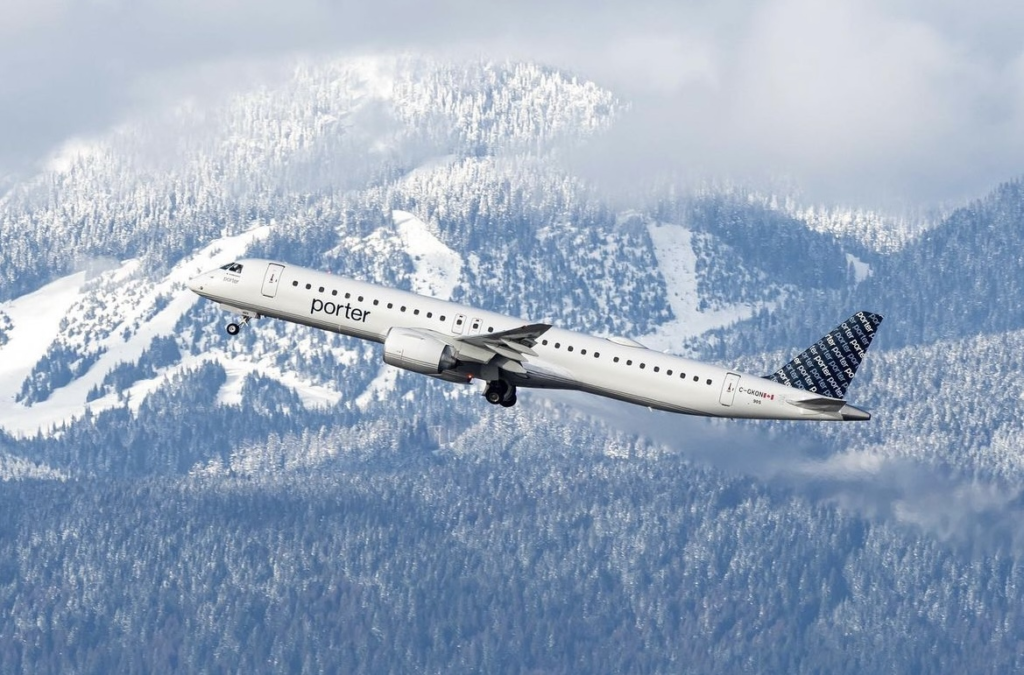
Busiest Routes by ASMs
Toronto–Vancouver is well ahead with 76.5 million available seat miles in June. This is consistent with the route’s position of leadership in flights and seats, and is due to both high aircraft utilization and long distances.
Toronto–Calgary and Toronto–Edmonton are tied with 51.3 million ASMs each, followed by Ottawa–Vancouver with 35.1 million and Victoria–Toronto with 27.1 million. These figures reflect the long-haul nature of Porter’s expansion and the utilization of its new E195-E2s in more remote markets.
Toronto–Halifax is lower in ASMs (25.3 million) due to shorter distance, although it operates the second highest number of flights. Montreal–Vancouver has only 66 flights but possesses nearly 20 million ASMs due to higher sector length and heavy average seat deployment.
Other notable high-ASM routes are:
- Ottawa–Calgary: 26.5 million
- Montreal–Calgary: 14.8 million
- St. Johns–Toronto: 11.8 million
These statistics show that Porter is placing great investment in intercontinental and inter-provincial connections, both within its original Eastern Canadian base.

Strategy and Route Development
The busiest Porter Airlines routes in June reaffirm its bold shift from regional carrier to full-service national competitor. It now connects Eastern Canadian cities like Ottawa, Montreal, and Halifax to the western provinces directly, something the airline did not offer after it acquired jets.
While the airline’s historical advantage is the Ontario–Quebec corridor, new routes like Ottawa–Vancouver and Edmonton–Ottawa show diversification. Porter’s two-hub strategy — Toronto Pearson as its preferred hub and Ottawa as a satellite base — allows it to offer various nonstops to hubs.
The higher utilization of E195-E2 airplanes also delivers better seat-mile economics, and flights like Victoria–Toronto and Hamilton–Vancouver are feasible even with relatively low frequency.
| Rank | Route | Flights | Seats | ASMs |
| 1 | Vancouver (YVR) – Toronto (YYZ) | 278 | 36696 | 76511160 |
| 2 | Halifax (YHZ) – Toronto (YYZ) | 239 | 31548 | 25301496 |
| 3 | Montreal-Trudeau (YUL) – Toronto (YYZ) | 238 | 31416 | 9896040 |
| 4 | Ottawa (YOW) – Toronto (YYZ) | 233 | 30756 | 6950856 |
| 5 | Calgary (YYC) – Toronto (YYZ) | 232 | 30624 | 51325824 |
| 6 | Edmonton (YEG) – Toronto (YYZ) | 232 | 30624 | 51325824 |
| 7 | Edmonton (YEG) – Ottawa (YOW) | 120 | 15840 | 28131840 |
| 8 | Halifax (YHZ) – Ottawa (YOW) | 120 | 15840 | 9424800 |
| 9 | Ottawa (YOW) – Vancouver (YVR) | 120 | 15840 | 35069760 |
| 10 | Ottawa (YOW) – Calgary (YYC) | 112 | 14784 | 26522496 |
| 11 | Winnipeg (YWG) – Toronto (YYZ) | 111 | 14652 | 13714272 |
| 12 | Victoria (YYJ) – Toronto (YYZ) | 98 | 12936 | 27165600 |
| 13 | St. Johns (YYT) – Toronto (YYZ) | 68 | 8976 | 11875248 |
| 14 | Montreal-Trudeau (YUL) – Vancouver (YVR) | 66 | 8712 | 19994040 |
| 15 | Hamilton (YHM) – Vancouver (YVR) | 61 | 8052 | 16804524 |
| 16 | Montreal-Trudeau (YUL) – Calgary (YYC) | 60 | 7920 | 14834160 |
| 17 | Halifax (YHZ) – Montreal-Trudeau (YUL) | 60 | 7920 | 3967920 |
| 18 | Ottawa (YOW) – St. Johns (YYT) | 60 | 7920 | 8719920 |
| 19 | Ottawa (YOW) – Winnipeg (YWG) | 60 | 7920 | 8331840 |
| 20 | Saskatoon (YXE) – Toronto (YYZ) | 60 | 7920 | 10897920 |
Bottom Line
Porter Airlines’ top 20 busiest domestic routes in June 2025 reveal a revolutionary change in its network topology. Toronto Pearson is still at the center, but Ottawa and Halifax are also major cities in the expanded network.
The transcontinental networks of the carrier now directly compete with the country’s traditional carriers in capacity and frequency.
With new aircraft and greater reach, Porter is setting itself up for a long-term position in Canada’s national domestic market, backed by evidence pointing to its shift in scale and ambition.
Stay tuned with us. Further, follow us on social media for the latest updates.
Join us on Telegram Group for the Latest Aviation Updates. Subsequently, follow us on Google News.


