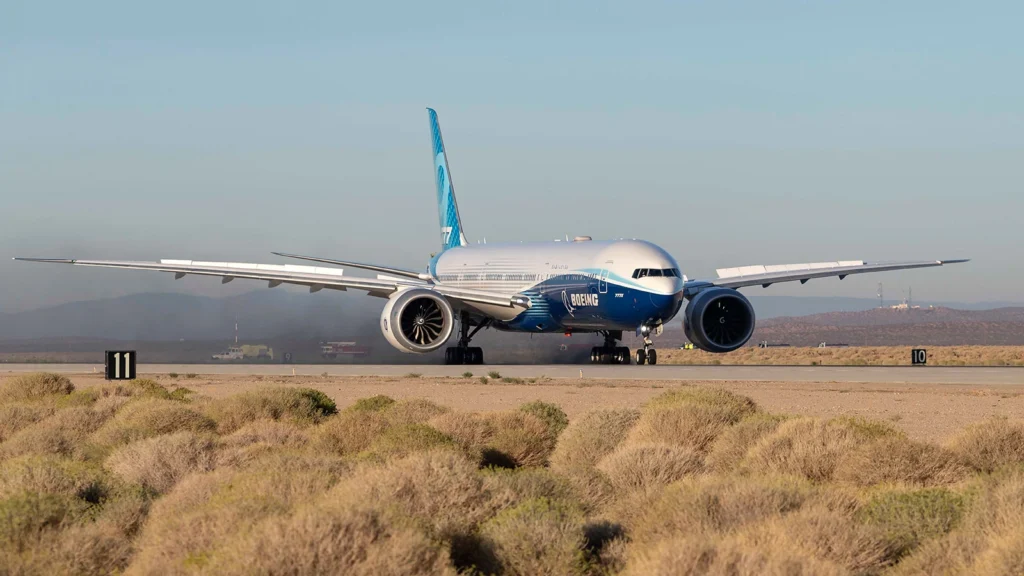
SYDNEY- Qantas (QF) helped develop the Boeing 777 but never ordered it, a decision later questioned by former CEO Alan Joyce.
The airline instead chose Airbus widebodies and enhanced Boeing 747 variants in 2000, shaping its long-haul operations for decades.
Why Qantas Never Ordered the Boeing 777
Boeing developed the 777 with input from eight major airlines, including All Nippon Airways, American Airlines, British Airways, Cathay Pacific, Delta Air Lines, Japan Airlines, United Airlines, and Qantas.
The aircraft was positioned between the Boeing 747 and 767 as a next-generation widebody.
Despite this involvement, Qantas never ordered the 777 or its later variant, the 777X. This stands out because the 777-200ER and 777-300ER became two of the most successful long-haul aircraft globally.
According to Simple Flying, this absence remains one of the most debated fleet decisions in modern aviation.
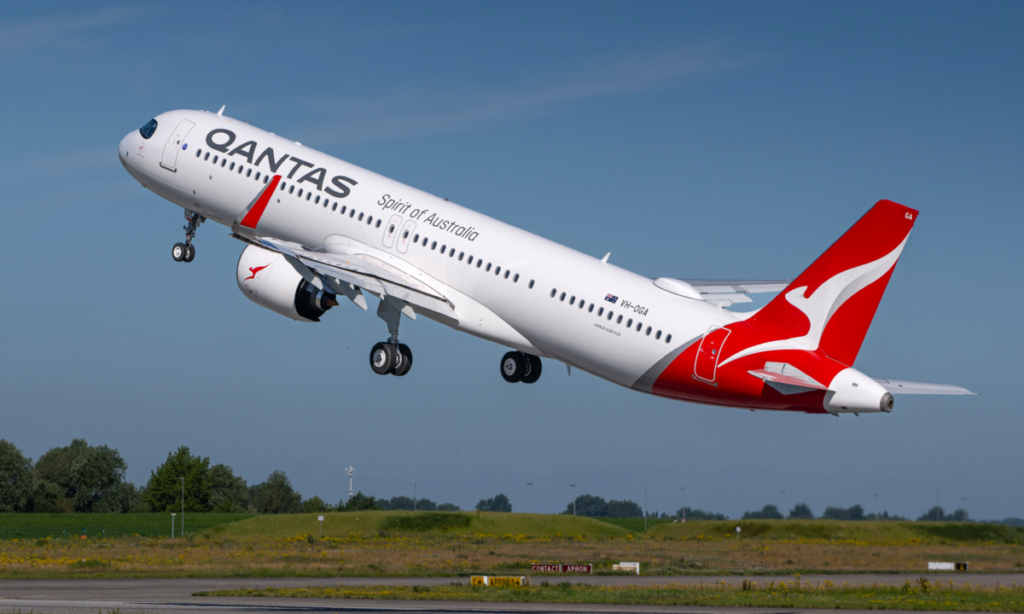
In 2000, under CEO James Strong, Qantas placed a major fleet order consisting of:
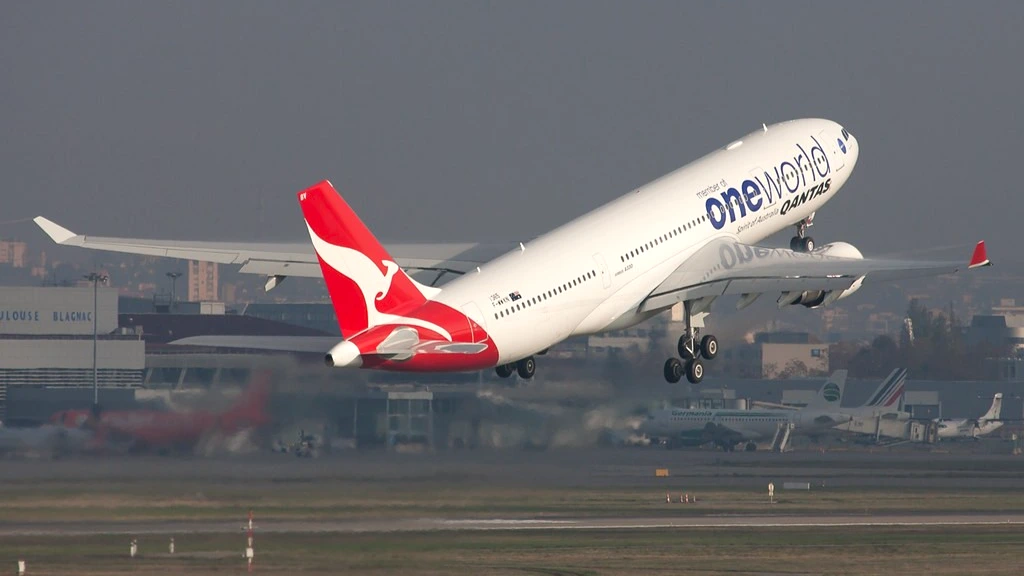
- 7 Airbus A330-200
- 6 Airbus A330-300
- 12 Airbus A380-800 (then called A3XX)
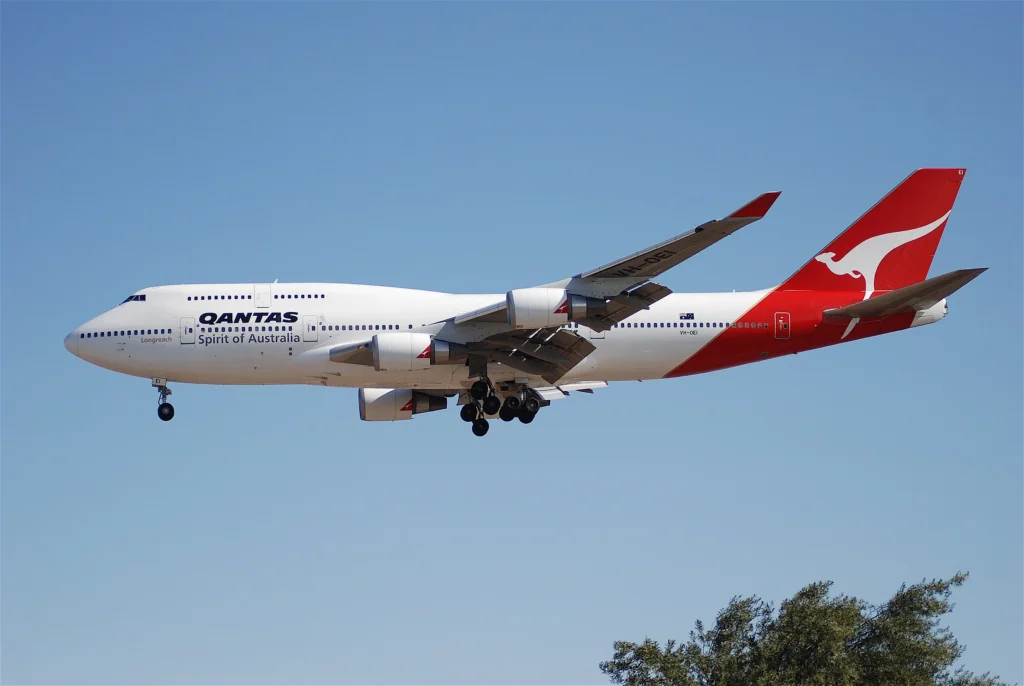
- 6 Boeing 747-400ER
Airbus secured a major breakthrough with this deal, while Qantas became the launch customer for the Boeing 747-400ER passenger variant.
At the time, Qantas operated a largely Boeing-based fleet, including 737, 747, and 767 aircraft. This order marked a strategic shift toward a mixed fleet.
Market Context and Timing of the Decision
In 2000, the Boeing 777 family consisted mainly of early variants such as the 777-200, 777-200ER, and 777-300. The now highly successful 777-300ER had only just been launched and remained unproven.
Its later success was driven by the GE90-115B engine, which exceeded fuel efficiency expectations and improved performance beyond initial projections. These advantages were not fully known at the time of Qantas’ decision.
Operational Needs and Domestic Expansion
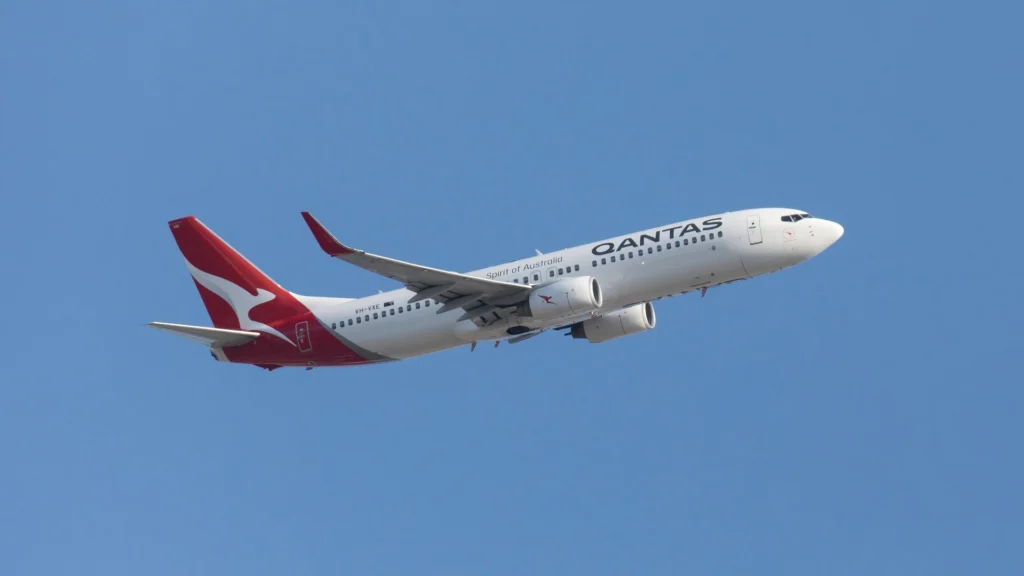
The collapse of Ansett Australia created an opportunity for Qantas to expand its domestic operations. The airline needed flexible aircraft for both domestic and regional Asian routes.
The Airbus A330-200 and A330-300 offered:
- Suitable capacity for medium-haul routes
- Better fuel efficiency compared to the 777-200ER
- Flexibility across domestic and international networks
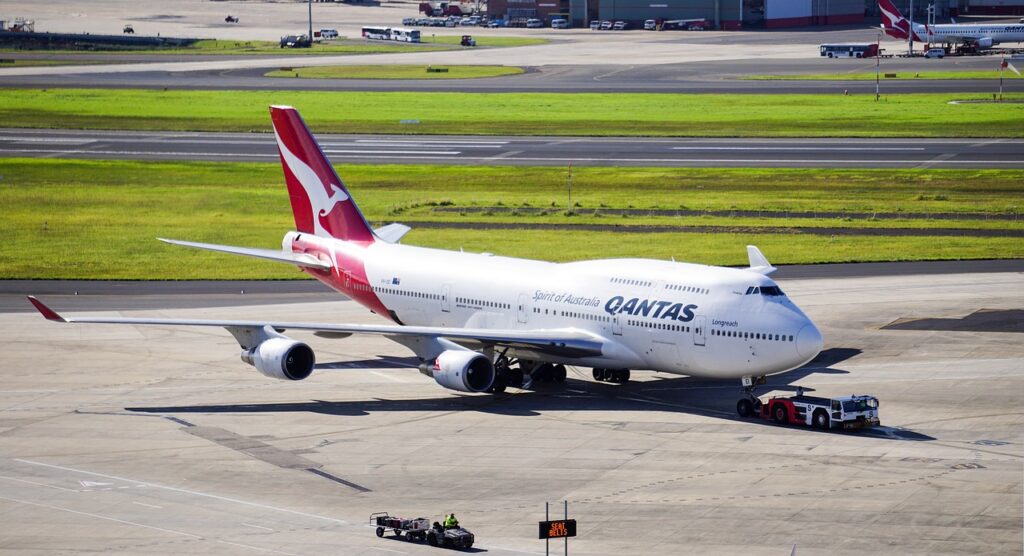
At the same time, Qantas continued to rely on Boeing 747 aircraft for high-capacity trunk routes such as Sydney to London, Hong Kong, Singapore, and Los Angeles.
Regulatory Constraints and ETOPS Challenges
The Boeing 777 entered service with ETOPS 180 approval from the Federal Aviation Administration. However, the Civil Aviation Safety Authority applied stricter rules.
ETOPS approvals in Australia required:
- Case-by-case certification
- Additional operational contingencies
- Higher compliance costs
These factors reduced the appeal of twin-engine aircraft like the 777 for ultra-long-haul routes at the time.
Aircraft Comparisons and Leadership Perspective
The choice between Airbus and Boeing involved clear trade-offs:
- The Airbus A330-300 was more fuel-efficient than the 777-200ER on shorter routes.
- The 777-200ER offered greater range but was less efficient for medium-haul operations.
- The 777-300ER later proved to be a strong replacement for the 747-400, offering similar capacity with better economics.
If Qantas had full visibility of the 777-300ER’s future performance, the decision might have differed. However, such data was unavailable in 2000.
Alan Joyce later expressed regret, stating he would have preferred ordering around two dozen 777-300ER aircraft instead of A380s and 747-400ERs. He also criticized the A380 for its high operating costs.
However, this view reflects hindsight. In 2000, the A380 aligned with Qantas’ strategy of operating high-capacity trunk routes, while the A330 addressed regional needs.

Why the Decision Still Delivered Value
Despite criticism, the decision produced measurable benefits:
- The A330 became a reliable and efficient workhorse for Qantas.
- The A380 supported premium demand on major international routes.
- The 747-400ER provided improved performance for long-haul operations at the time.
Additionally, the Airbus A330 family gained extended range improvements over time, further strengthening its value.
Competitive Landscape and Industry Outcomes
The Boeing 777-300ER gained market dominance partly due to weaknesses in competing aircraft such as the Airbus A340-600, which suffered from high weight and engine reliability issues.
Global orders reflect this shift:
- 777-300ER: 800+ orders
- A330-300: strong but slightly lower demand
- 777-200ER: declining relevance over time
This reinforces how aircraft success often depends on performance after entry into service.

Project Sunrise and the Final Decision Against Boeing
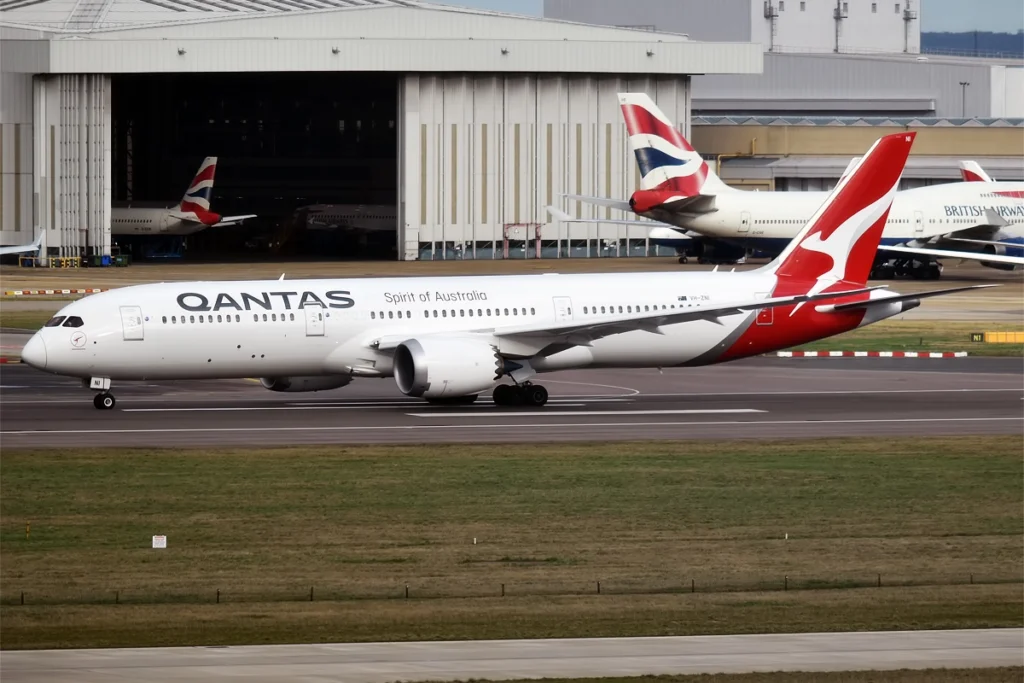
Qantas revisited Boeing during its ultra-long-haul Project Sunrise initiative. The airline evaluated the 777X against the Airbus A350-1000.
Ultimately, Qantas selected the Airbus A350-1000ULR for routes such as:
- Sydney to London
- Melbourne to New York
The airline also ordered standard A350-1000 aircraft, strengthening its Airbus relationship.
Singapore Airlines operates similar ultra-long-haul routes using the A350-900ULR, highlighting the growing importance of this aircraft category.
The 2000 fleet order reshaped Qantas’ supplier alignment. Airbus secured long-term dominance in the airline’s widebody fleet, later adding aircraft such as the A321XLR and A350.
Fleet commonality, pricing advantages, and operational flexibility reinforced Airbus’ position over time.
Conclusion
Qantas’ decision to skip the Boeing 777 appears unusual in hindsight but was grounded in the operational, regulatory, and market realities of 2000. The airline selected aircraft that matched its immediate needs and strategic direction.
The outcome demonstrates how fleet decisions depend on timing, available data, and long-term planning rather than future performance alone.
Stay tuned with us. Further, follow us on social media for the latest updates.
Join us on Telegram Group for the Latest Aviation Updates. Subsequently, follow us on Google News


