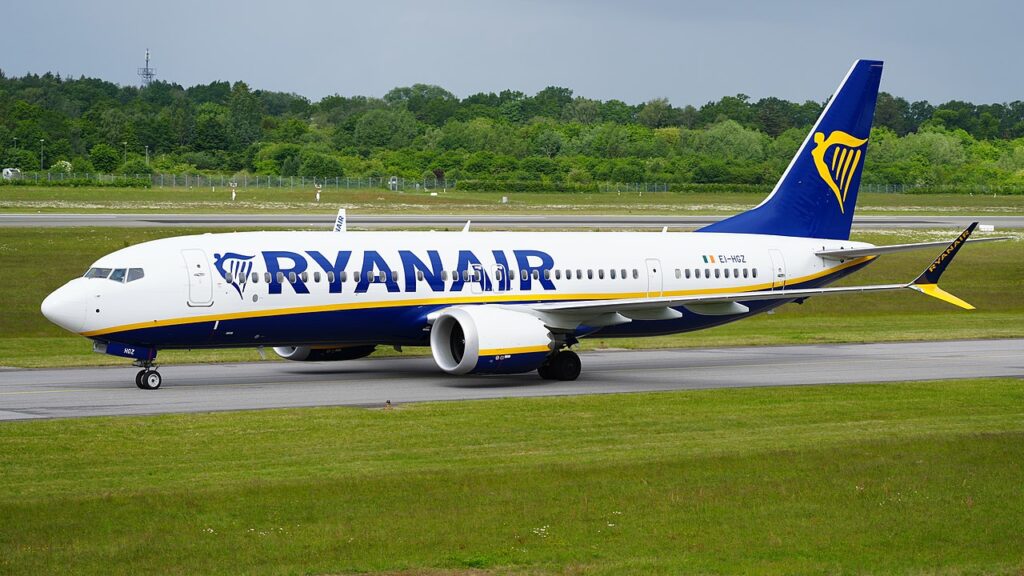
LONDON- Ryanair (FR) is facing scrutiny after a passenger alleged that a gate agent at London Stansted Airport (STN) threatened to remove him from a flight following a complaint about a political badge worn on duty.
The incident, which was shared publicly on social media, has intensified debate over whether airline staff should display political symbols while serving passengers.
Dispute at Stansted Over Political Symbol
Adrian Yalland, an Anglo-Irish barrister, stated that he encountered a Ryanair customer service agent at Stansted Airport wearing what he described as a pro-Hamas and intifada badge on his uniform. He claimed he raised concerns that such a symbol could make Jewish passengers feel uncomfortable and might associate the airline with a political stance.
According to Yalland’s account on X, the agent reacted aggressively and refused to engage in a discussion about the appropriateness of political badges in the workplace. Yalland further alleged that the staff member called him offensive names and threatened to have him removed from the flight.
The post quickly gained traction online, drawing responses from public commentators. Broadcaster Julia Hartley-Brewer criticized the airline, arguing that companies should not permit staff to promote political views while on duty, particularly those linked to extremist causes.
Reported by PYOK, the incident has added to ongoing concerns about political neutrality in customer-facing aviation roles.
Airline Policies on Political Pins and Uniform Standards
Airlines have increasingly faced scrutiny over employees wearing political or national symbols while in uniform. The issue has become particularly sensitive amid heightened tensions linked to the Israel and Gaza conflict.
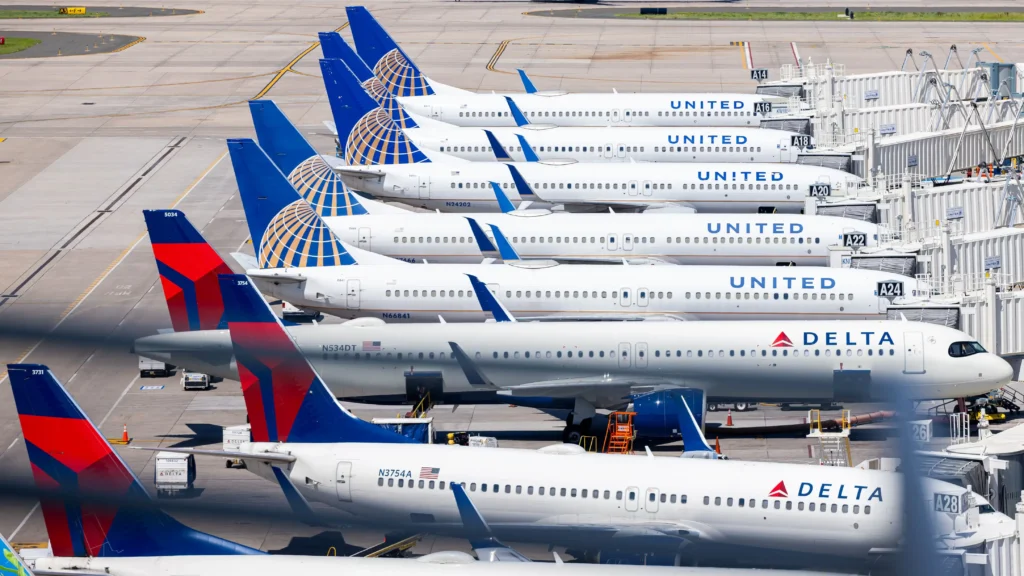
In 2024, Delta Air Lines (DL) came under criticism after a flight attendant wore a Palestine flag pin during a flight to Florida. Although the pin did not violate Delta’s grooming policy at the time, the airline later restricted flag pins to the United States flag only.
JetBlue Airways (B6) introduced a similar restriction after facing allegations of antisemitism connected to flag pins worn by crew members.
United Airlines (UA), headquartered in Chicago, took a different approach. The carrier maintained that employees could continue wearing flag pins representing languages they speak or places with which they have a personal connection. United declined to prohibit Palestine flag pins despite pressure from advocacy groups.
UK Context and Security Concerns
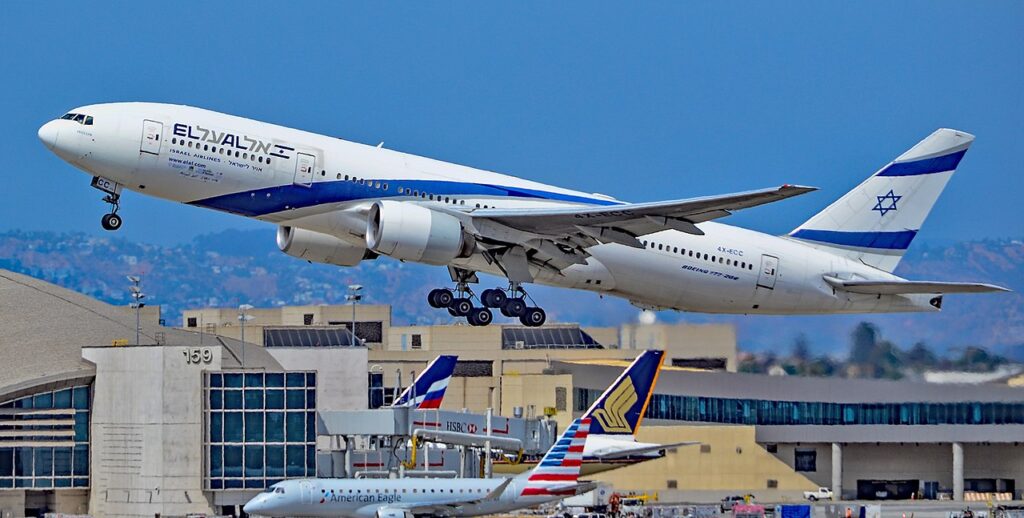
In the United Kingdom, political symbolism in aviation settings has also sparked controversy. A Jewish legal advocacy group accused Heathrow Airport (LHR) of permitting security staff to wear Palestine flag pins and watermelon symbols, alleging that Israeli passengers flying with El Al Israel Airlines (LY) experienced harassment.
The distinction between national symbols and symbols linked to proscribed organizations remains central to the debate. Hamas is designated as a terrorist organization by the United Kingdom and several other governments. Wearing a badge associated with such a group carries different legal and reputational implications than displaying a national flag.
Airlines generally maintain uniform policies designed to project neutrality and professionalism. However, enforcement and interpretation of those policies vary by carrier, creating inconsistencies across the industry.
Bottom Line
The Stansted incident highlights the operational risk airlines face when frontline employees display political messages. Customer perception, brand neutrality, and compliance with local laws are critical considerations for carriers operating in diverse markets.
As geopolitical tensions continue to influence public discourse, airlines may face increasing pressure to clarify or tighten uniform standards to avoid similar disputes.
Stay tuned with us. Further, follow us on social media for the latest updates.
Join us on Telegram Group for the Latest Aviation Updates. Subsequently, follow us on Google News