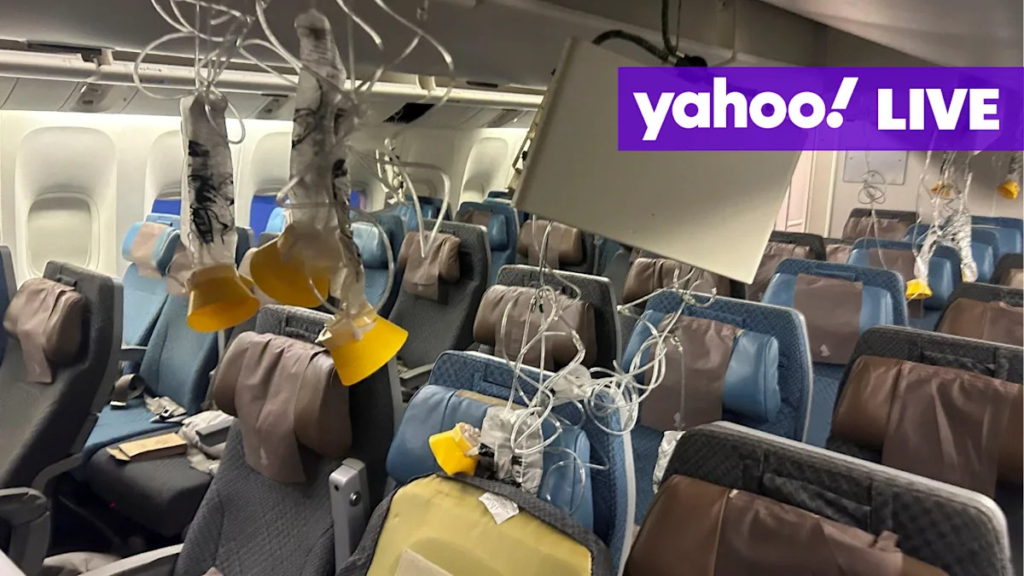

People look at the Singapore Airlines aircraft for flight SQ321 parked on the tarmac after an emergency landing at Suvarnabhumi International Airport, in Bangkok, Thailand, May 22, 2024. REUTERS/Athit Perawongmetha
(REUTERS / REUTERS)
A final investigation into Singapore Airlines Flight SQ321 found that storm clouds likely responsible for the severe turbulence in May 2024 may not have been detected by the aircraft’s on-board weather radar. The Transport Safety Investigation Bureau (TSIB) said it was inconclusive whether the radar malfunctioned, but noted the possibility could not be ruled out.
SQ321, flying from London to Singapore with 211 passengers and 18 crew, encountered severe turbulence over south-west Myanmar on 21 May 2024. One passenger died and 79 others were injured. The aircraft, a Boeing 777-300ER, later made an emergency landing in Bangkok.
According to the report, the pilots did not see clouds in their immediate flight path and the radar display did not show severe weather despite being set at maximum sensitivity. Within 17 seconds, the aircraft experienced sharp G-force changes, causing unbelted passengers and crew to be thrown into the air and then slammed back down. TSIB said the turbulence was likely caused by a rapidly developing cloud and a powerful updraft.
Other aircraft in the area saw widespread clouds and diverted using their own weather radars. TSIB said it could not explain why SQ321’s crew did not see the same conditions.
The same aircraft had recorded radar display issues before the incident, including one case six days earlier when storm clouds seen visually were not displayed. TSIB recommended better radar malfunction guidance, improved recording of cockpit display information, and mandatory display-recording systems for older aircraft. SIA said it has strengthened turbulence monitoring, radar troubleshooting guidance and reporting procedures.