The skies of the world are quickly becoming a different place than they were just a couple of decades ago. Until recently, the “Queen of the Skies” was the Boeing 747, which was the first and one of the greatest jumbo jets capable of ferrying several hundred people to a single destination in one flight. Now, passenger B747 numbers are dwindling, with zero examples in operation in regular service in America. But, there are still a handful of passenger Boeing 747s left in America, and they’re flying charter service for the last airline you’d expect.
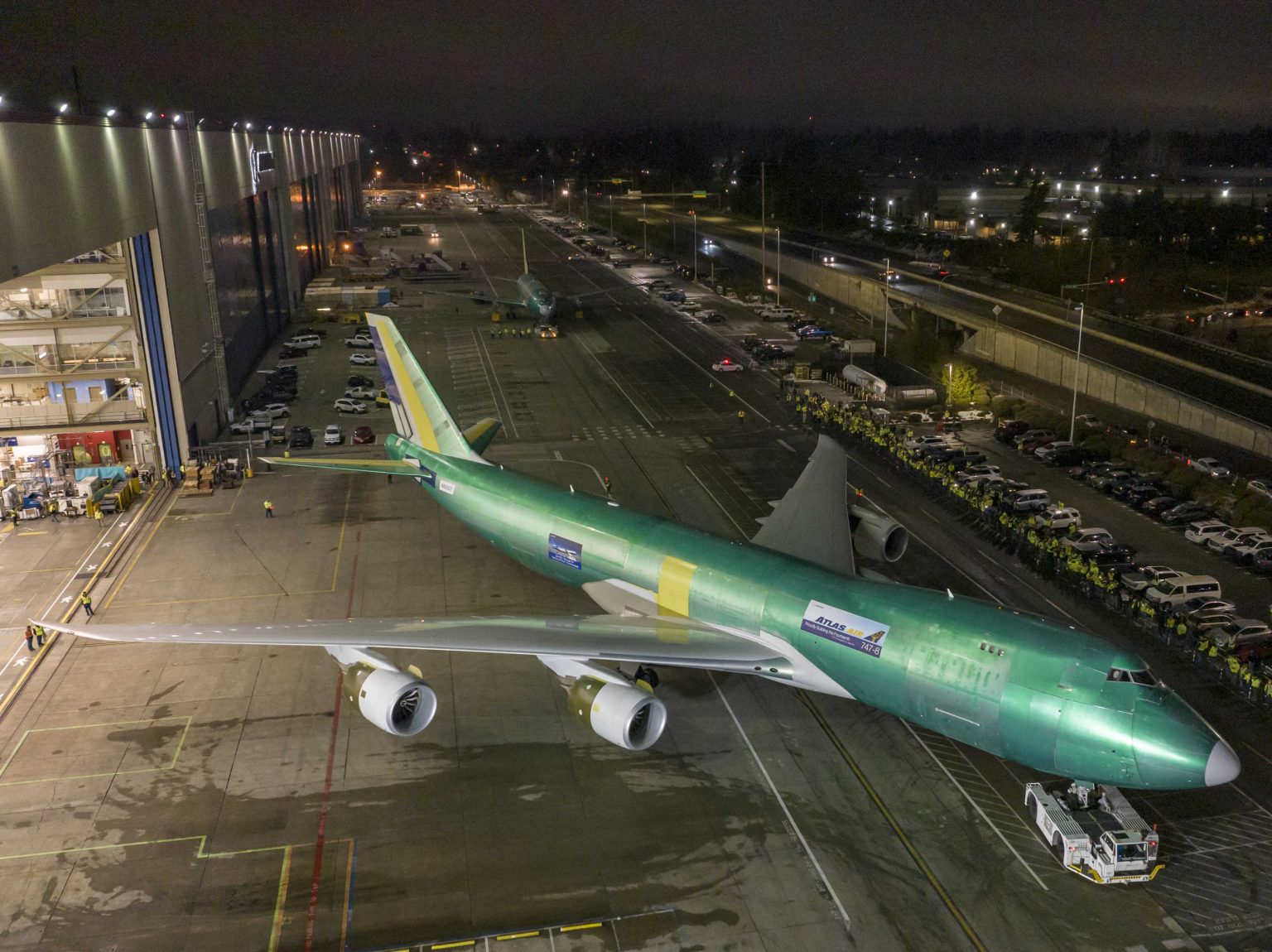
December 6, 2022, was a bittersweet day for aviation enthusiasts. That was the day when Boeing rolled the very last B747 out of its iconic production line in Everett, Washington. This last example of a worldwide icon was a Boeing 747-8 Freighter, registration N863GT. It went into service at Atlas Air soon after, where it’ll enjoy a career of hauling cargo for hopefully decades.


It’s been even longer since the last time there was a Boeing 747 operating scheduled revenue passenger service for a U.S. airline. Delta Air Lines was the final holdout keeping the Queen in the sky, and even though it flew its last Boeing 747 passenger flight on December 19, 2017. That flight saw an example of the majestic jet make one last run from Seoul to Detroit.
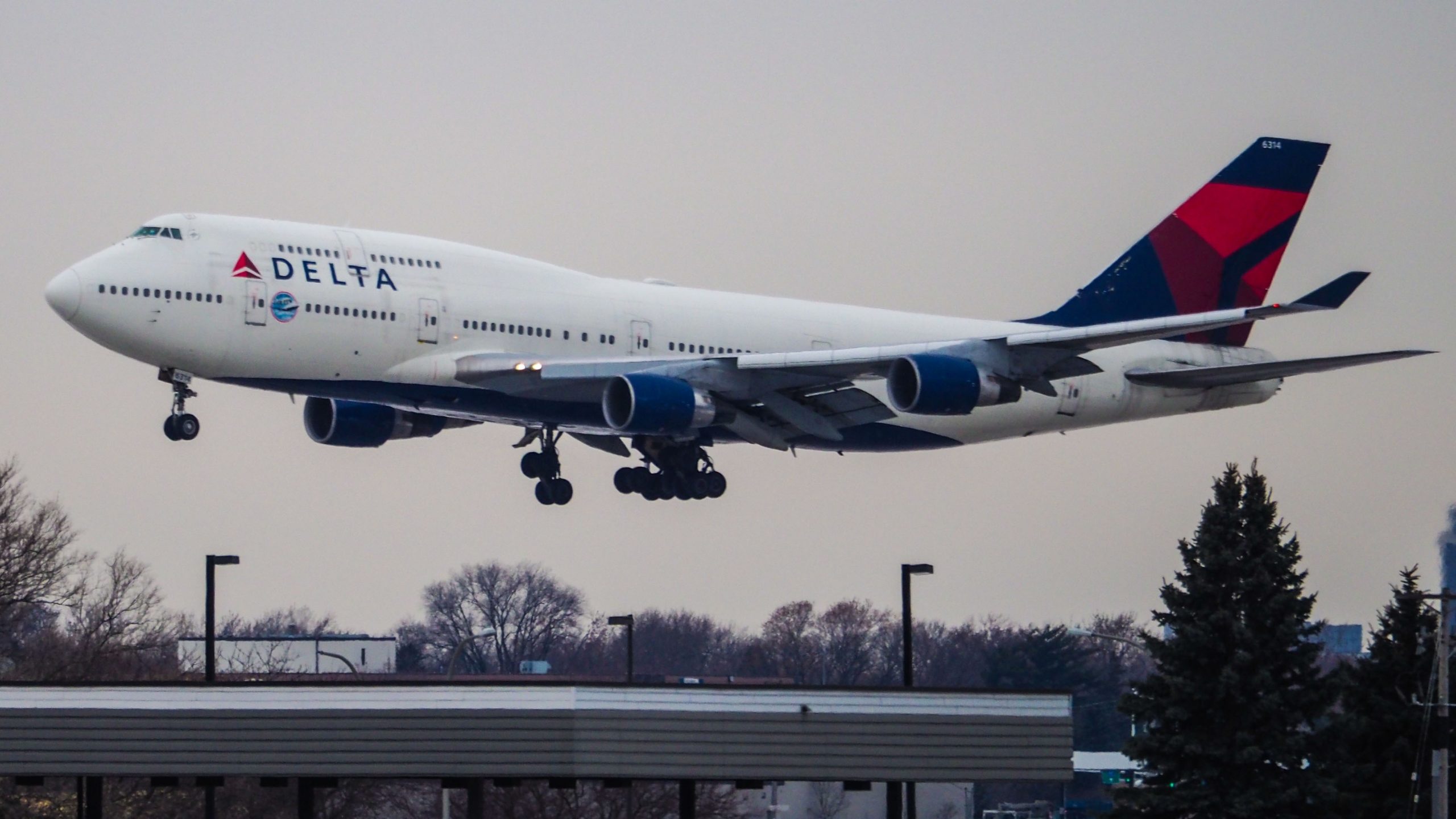
Delta then flew its last 747, registration N674US, on a farewell tour, where the jet got to visit the factory that built it 18 years prior. Then, the party was over before 2017 even ended. As the Seattle Times reported back then, Boeing 747 No. 6314 pushed back from a gate at Atlanta Hartsfield-Jackson International Airport one last time. Around four hours later, the aircraft reached its resting place, the Pinal Airpark in Arizona. Since then, the aircraft has been butchered up for parts, but the airframe is still mostly there as of October 2025.
The Boeing 747 once represented the pinnacle of aviation engineering, the wonder of flight, and helped usher in the era of affordable air travel that we have today. Now, planes like the Boeing 747 and the Airbus A380 represent how airlines used to run their businesses. While some international carriers still fly the type, the ol’ Queen is living on borrowed time. Yet, the draw and the wonder of the 747 haven’t really gone all of these years later. I still get excited every time I see one, and I don’t care that it’s a freighter.
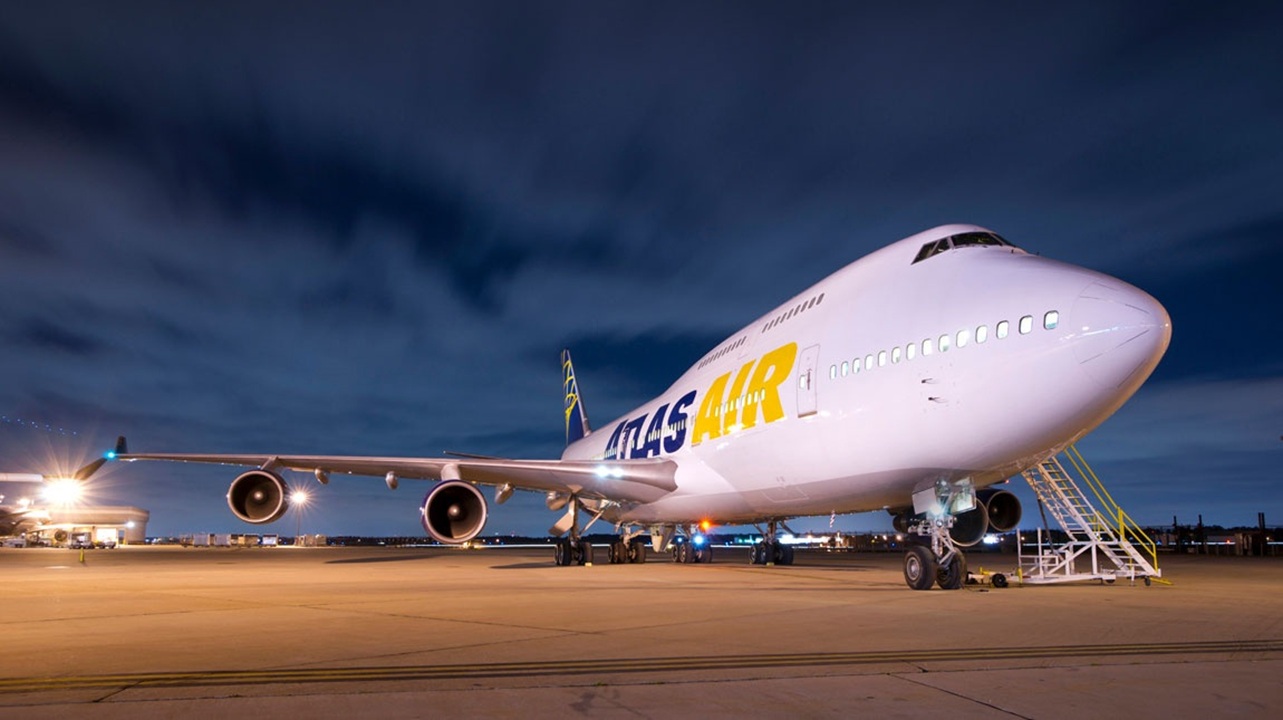
While you aren’t going to board a B747 on your next Delta or United flight, it is technically still possible that you could be lucky enough to fly aboard a 747 flown by an American airline. According to Simply Flying, Atlas Air, which is best known for its cargo services, is the last American airline maintaining a small fleet of Boeing 747-400s with passenger cabins for charter use.
Why The Boeing 747 Was The Queen
There’s a reason why the Boeing 747 is still mesmerizing some 58 years after the very first was built. The B747 changed the world of aviation, and that’s no hyperbole.

The Boeing 747 story started with the hit that came before, the Boeing 707. First flown in 1957, the legendary 707 wasn’t the first commercial jet, but it was one of the most successful. It was one of the jets that reshaped air travel and ushered in the Jet Age, which influenced pop culture and even car design.
The 707’s launch customer, Pan American World Airways, worked closely with Boeing on the aircraft’s development. The 707 was such a massive success that, soon enough, airlines expanded to the point where they felt they needed something bigger. In the eyes of Pan Am CEO Juan Trippe, he could lower fares on a per-seat basis if he could just fit more people into a single plane. Further, he believed that if there were fewer huge planes rather than lots of smaller ones, the big planes could ease airport congestion. Boeing had a similar idea during the conceptual stages of the 747.
There was another event that would thrust the jumbo jet from being just a concept to reality. In 1961, the United States Air Force began looking into a replacement for the Douglas C-133 Cargomaster. This proposed aircraft, the Cargo Experimental-Heavy Logistics System (CX-HLS), needed a fuselage large enough to carry the military’s largest cranes, missiles, radars, and other equipment. The CX-HLS would have cargo doors in the front and rear to allow for quick loading and unloading. Then there were the performance requirements. Fully loaded, the CX-HLS would weigh 600,000 pounds (around twice that of a Boeing 707), have the range to carry a 100,000-pound load 6,000 nautical miles, and be rugged enough to permit landing on rough fields.
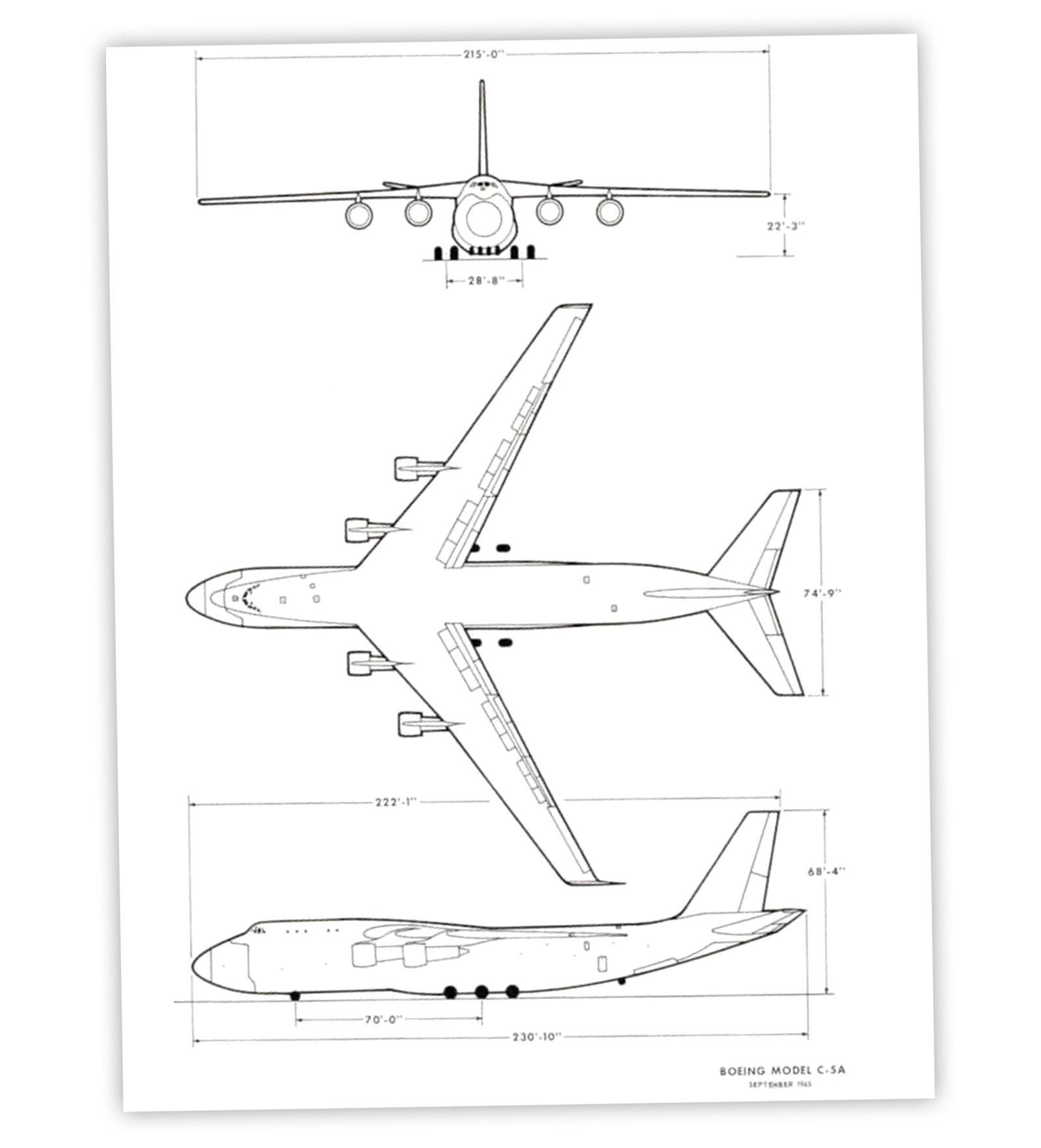
Boeing, Convair, Douglas, General Dynamics, Lockheed, and Martin Marietta all submitted bids on the project. Ultimately, Lockheed won the bid.
Boeing adapted the military heavy transport development into a project to build the aircraft that Juan Trippe was dreaming about. Not everything from the military project made it over, but the parts that did, namely the distinctive flight deck pod above the rest of the fuselage, did make it over to the B747 project. The engines that were being developed for the military transport, four 43,000-pound-thrust Pratt & Whitney JT9D-3 turbofans, also made it over.

Here’s what I wrote in my retrospective in 2022:
Just like with the 707, Pan American’s Juan Trippe had some say in the 747’s development. Targeting those aforementioned lower fares, Trippe asked for the new aircraft to carry twice what a 707 could. As the U.S. Centennial of Flight Commission notes, an early design for the 747 blew right past Trippe’s goal. This mammoth design called for two full-length decks with passengers seated in two aisles. Carrying more than 400 passengers, the Commission notes that the design called for a seating capacity three times that of the largest 707. However, concerns about emergency evacuation times and cargo capacity meant the design would be scaled back.
Instead, Boeing widened the fuselage cross-section, allowing a single deck with twin aisles and ten abreast seating. Then, additional space would be found in the hump above that deck. The new design allowed a seating capacity of 366 in a three-class configuration but alleviated the need for two full decks. Boeing agreed to deliver the first 747s to Pan American by the end of 1969. When that agreement was reached, the aircraft manufacturer had just 28 months to design and build the plane, from Boeing:
The 747 was the result of the work of some 50,000 Boeing people. Called “the Incredibles,” these were the construction workers, mechanics, engineers, secretaries, and administrators who made aviation history by building the 747 — the largest civilian airplane in the world — in roughly 16 months during the late 1960s.
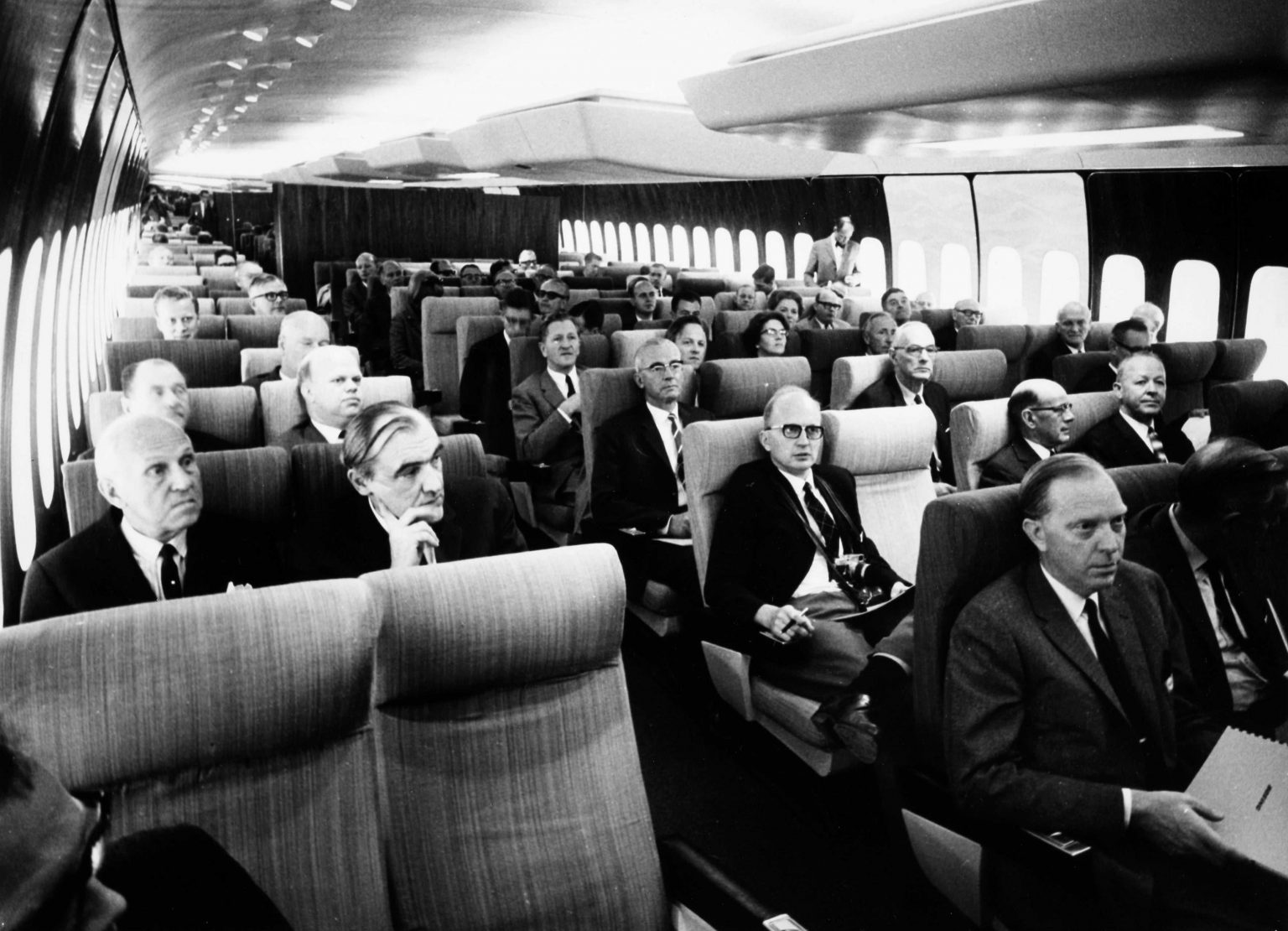
The Boeing 747 made its first flight right into the history books on February 9, 1969. The first would enter service with Pan Am only 11 months later. The B747 was the first commercial “jumbo jet” and, over time, would prove the concept of lowering ticket prices by cramming more butts into one plane.
The Boeing 747 might be the most iconic commercial airplane in history. Pilots waxed poetic about the 747’s abilities and engineering, passengers marveled at its size, beauty, and luxury, and the media was hooked. For decades, if you wanted to depict a plane in a movie, you chose the Boeing 747. If you wanted to produce an air disaster film, you would use a Boeing 747. Allegedly, over 300 films depict a 747 in some way or form. A goofy version even shows up in Soul Plane of all movies. The 747 earned the nickname “the Queen of the Skies,” and all evidence seems to point to the big enchantress earning it.
Unfortunately, the Boeing 747 was also built for a different era. In the 747’s prime, airlines worked on the “hub-and-spoke” model. In this model, airlines would operate flights from one city (a spoke) to a large, centralized airport in another city (a hub). From there, passengers may transfer to another plane to fly to another spoke.
This model allowed for the same number of destinations with fewer routes and fewer aircraft. Airline passengers from a variety of different cities would feed into the spoke airport, board an aircraft, and ride to the hub airport. The hub-and-spoke model favored larger aircraft as an airline could pile hundreds of people into one aircraft before flying it.
The downside of this model was that passengers often had to make a connection to reach their final destination. Also, if an airline built up a hub to the point where it was practically the only major airline operating from it, passengers had little choice but to pay that airline’s ticket prices.
Today, there’s more of an emphasis on non-stop flights. You can now fly non-stop between two destinations that might have required a stop at a hub in the past. The hubs aren’t gone, but point-to-point routes are highly competitive. As such, airlines don’t need to pile several hundred people into a single plane anymore when something like a Boeing 737 or an Airbus A320 will work fine. Thus, the last holdouts still operating 747s and A380s tend to operate them on longer routes with a high density of passengers.
This means that the Queen isn’t really needed for passengers anymore, and so many airlines have retired their A380s and 747s for smaller aircraft. If you’re like me and you’ve never flown in a 747, time is running out. Weirdly, it’s technically still possible to ride in a 747 without leaving America or without being in the White House.
The Cargo Airline That Can’t Get Enough Of The 747
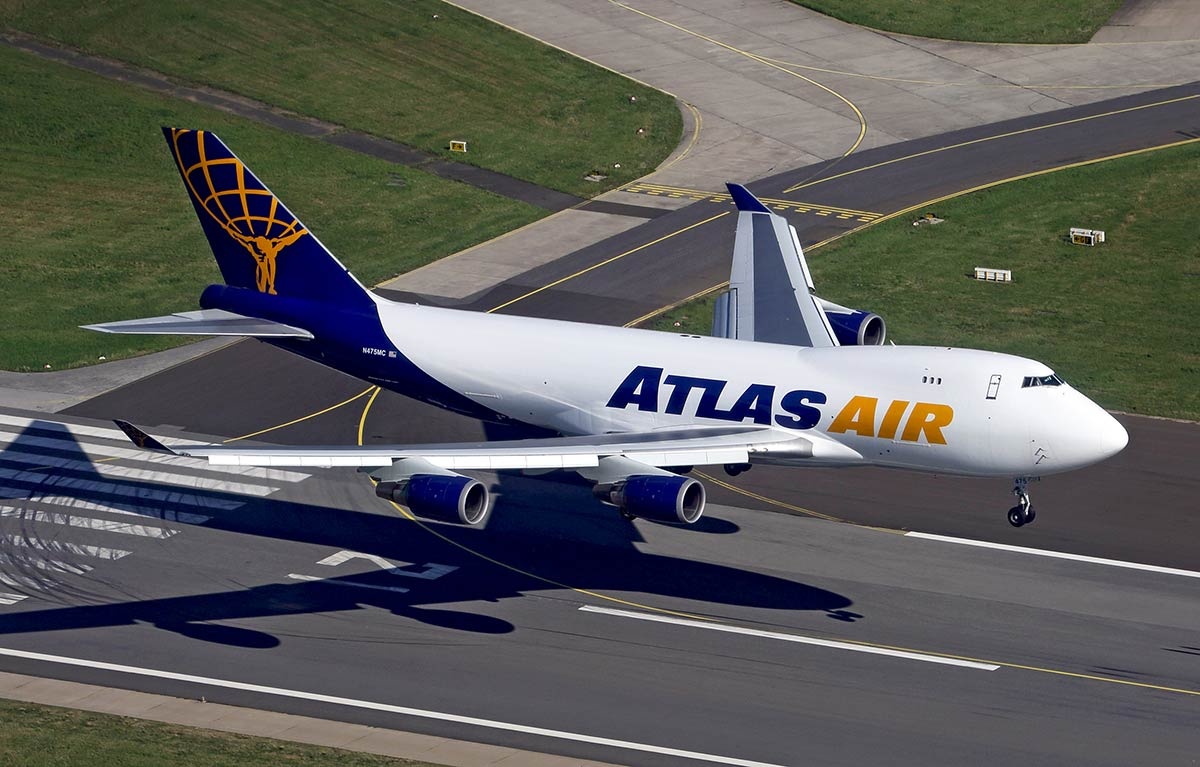
Atlas Air Inc. is nominally a cargo airline. If you’ve flown out of a major airport, you’d almost certainly seen a Boeing 747 freighter emblazoned with Atlas Air on its flanks. Atlas Air is currently the world’s largest operator of the 747, with more than 60 examples in its fleet.
Atlas Air was founded in 1992 by businessman Michael Chowdry and started with a single Boeing 747-200 passenger airliner that was converted into a freighter. The company’s business model involved leasing out its aircraft to other airlines on an aircraft, crew, maintenance, and insurance (ACMI) contract. Back then, Atlas Air says, airlines treated carrying cargo as an afterthought. So, an airline was able to shore up its cargo operations by leasing from Atlas Air. China Airlines was the first to do this, and this was so successful that Atlas picked up a second 747-200 converted freighter and then more customers.
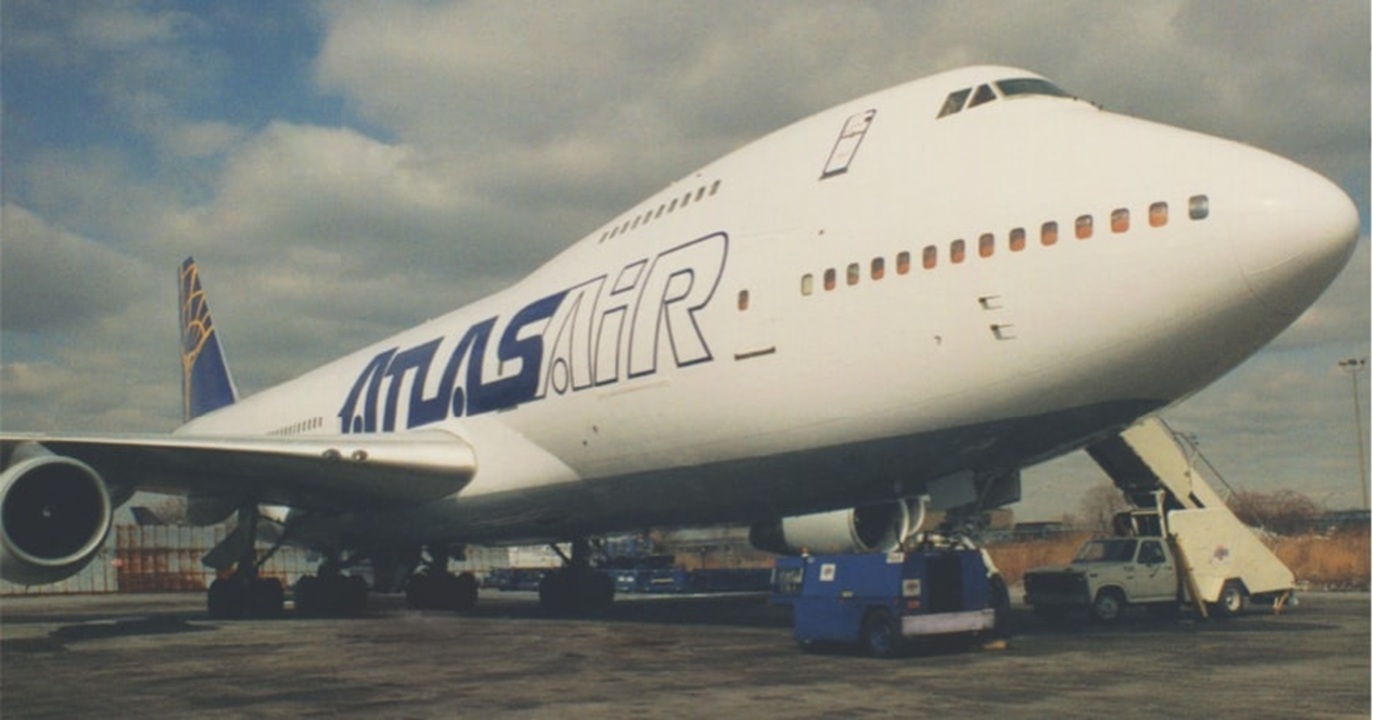
Atlas Air would further demonstrate its commitment to the 747 by ordering 10 new Boeing 747-400Fs in 1997 and another two more in 1998. Atlas Air is so obsessed with Boeing 747s that, when everyone else was ditching them, it was doubling down on the big widebodies. It was fitting, then, that the very last 747s built went to Atlas. Thanks to this airline and the many others who love this big hauler, aviation fans will see 747s in the sky for decades to come, even if they can’t actually take a ride in them. Atlas even operates Boeing’s unique 747-400 Large Cargo Freighters that carry 787 Dreamliner parts.
To be clear, the 747 isn’t the only steed in the Atlas fleet, as it also runs other widebodies like Boeing’s 767 and 777. It also has an order for 20 Airbus A350F for hauling cargo. But there’s a twist, as Atlas has also offered passenger charter services since 2010.
Atlas Air Begins Hauling Passengers
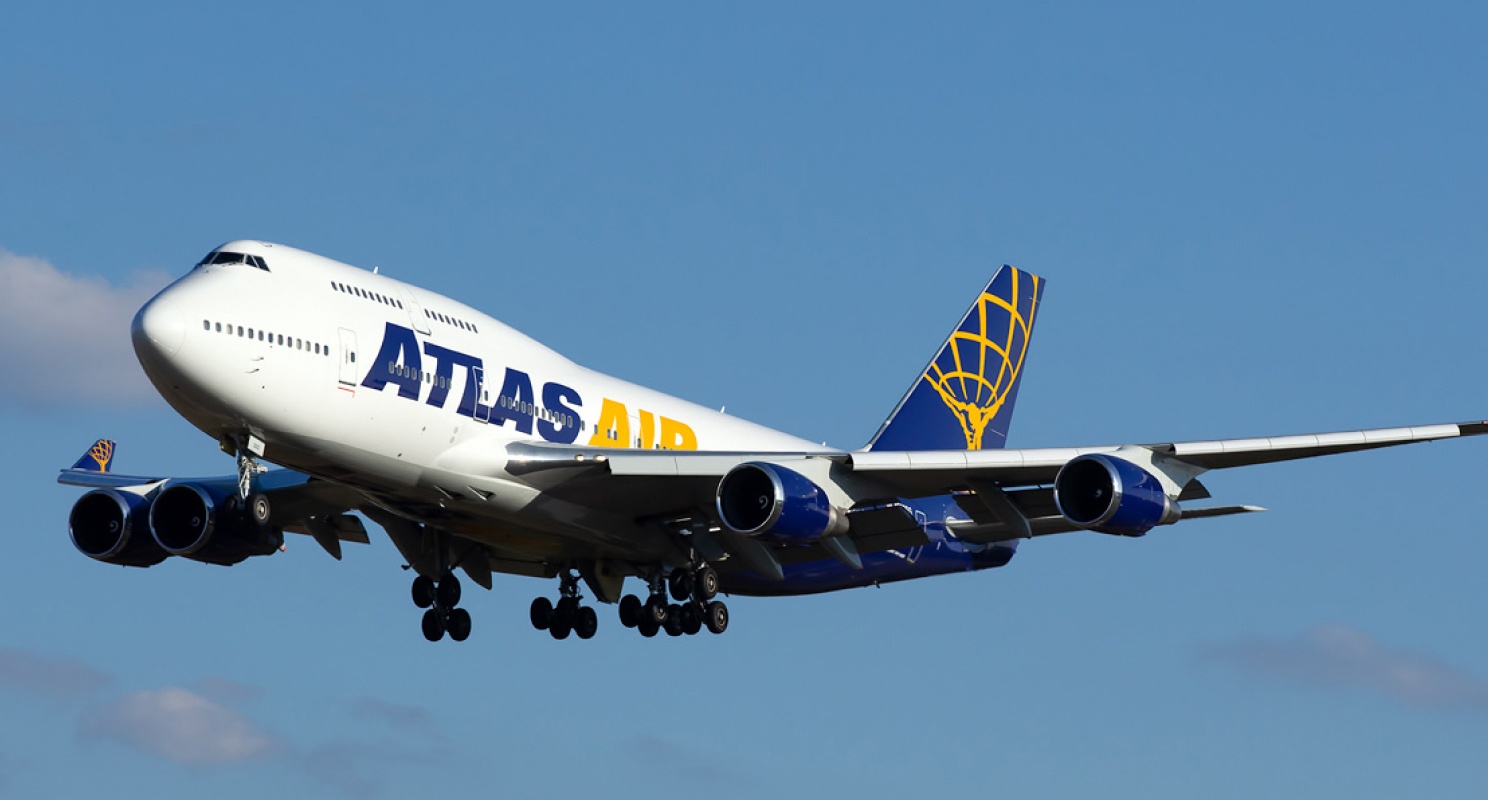
In 2009, the US-Africa Energy Association chose Atlas Air to operate charter services for Sonair Servico Aéreo SA., the subsidiary of the Sonangol Group, then Angola’s national petroleum company. Sonair purchased two customized Boeing 747-400s and had Atlas Air fly them for three weekly non-stop flights between Houston, Texas, and Luanda. Angola. The flights became known as the “Houston Express”, and the aircraft were flown in a three-class configuration with room for 189 passengers.
Later, Atlas Air would fly the Jacksonville Jaguars, the Miami Dolphins, and the Seattle Seahawks. The airline’s 747s are also used to transport members of the military and even train the crews who fly Air Force One. But Atlas Air says it’s happy to charter one of its five 747s out to wedding groups, sports teams, rock bands, or anyone else who wants a super big plane to fly somewhere.
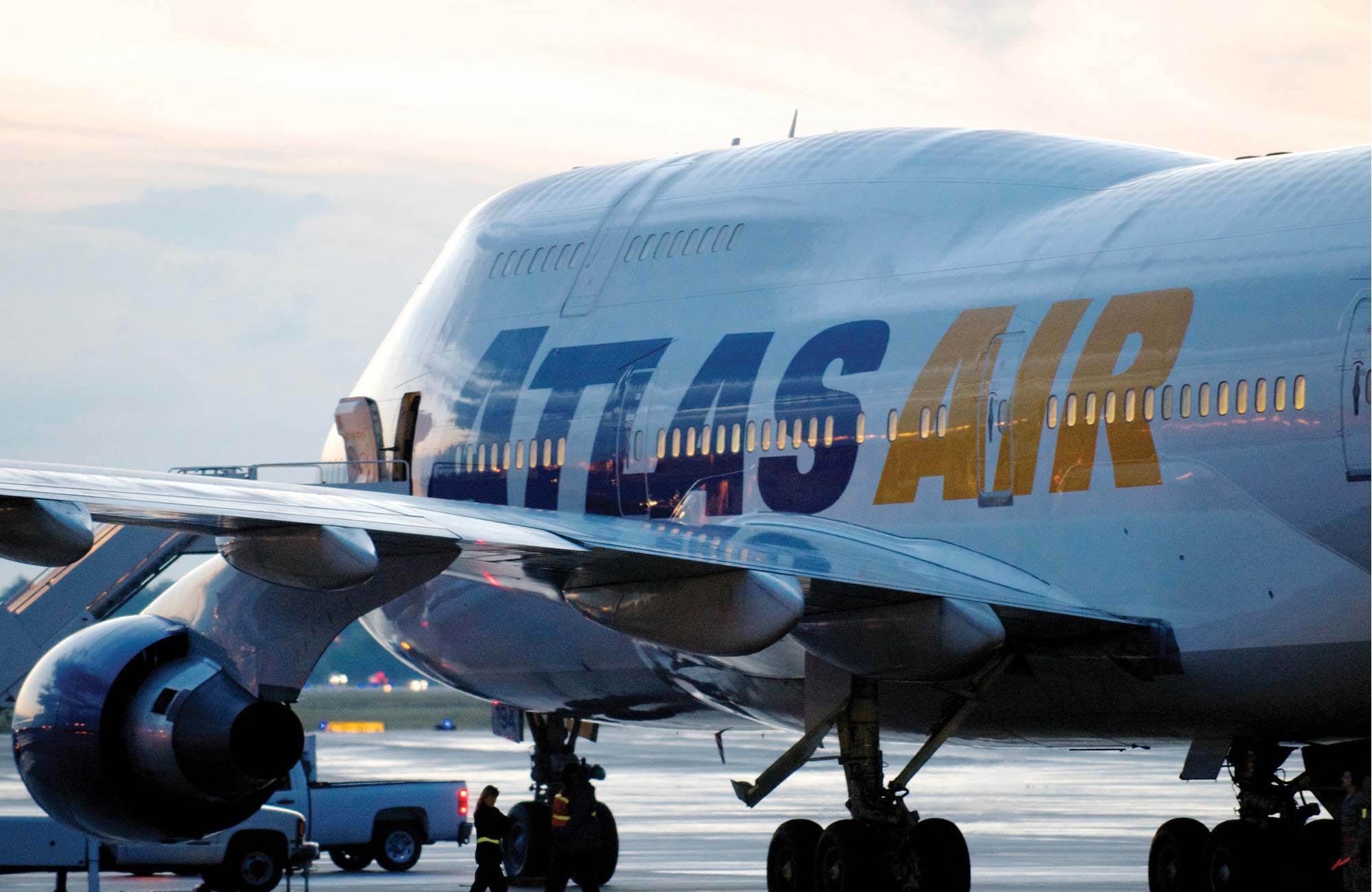
All of these Boeing 747s are of the 747-400 type and were built in the early years of the 2000s before Atlas had a passenger operation. Two examples, N263SG and N322SG, are in a luxury VIP configuration with 189 seats, most of which are business class. There’s a third VIP jet in the Atlas fleet, N480MC, in a High Density configuration that’s able to handle 374 passengers.
Finally, the two last 747-400s in the Atlas fleet, N481MC and N482MC, offer 453 seats in a standard three-class configuration. Atlas advertises some sweet features in its passenger 747s:
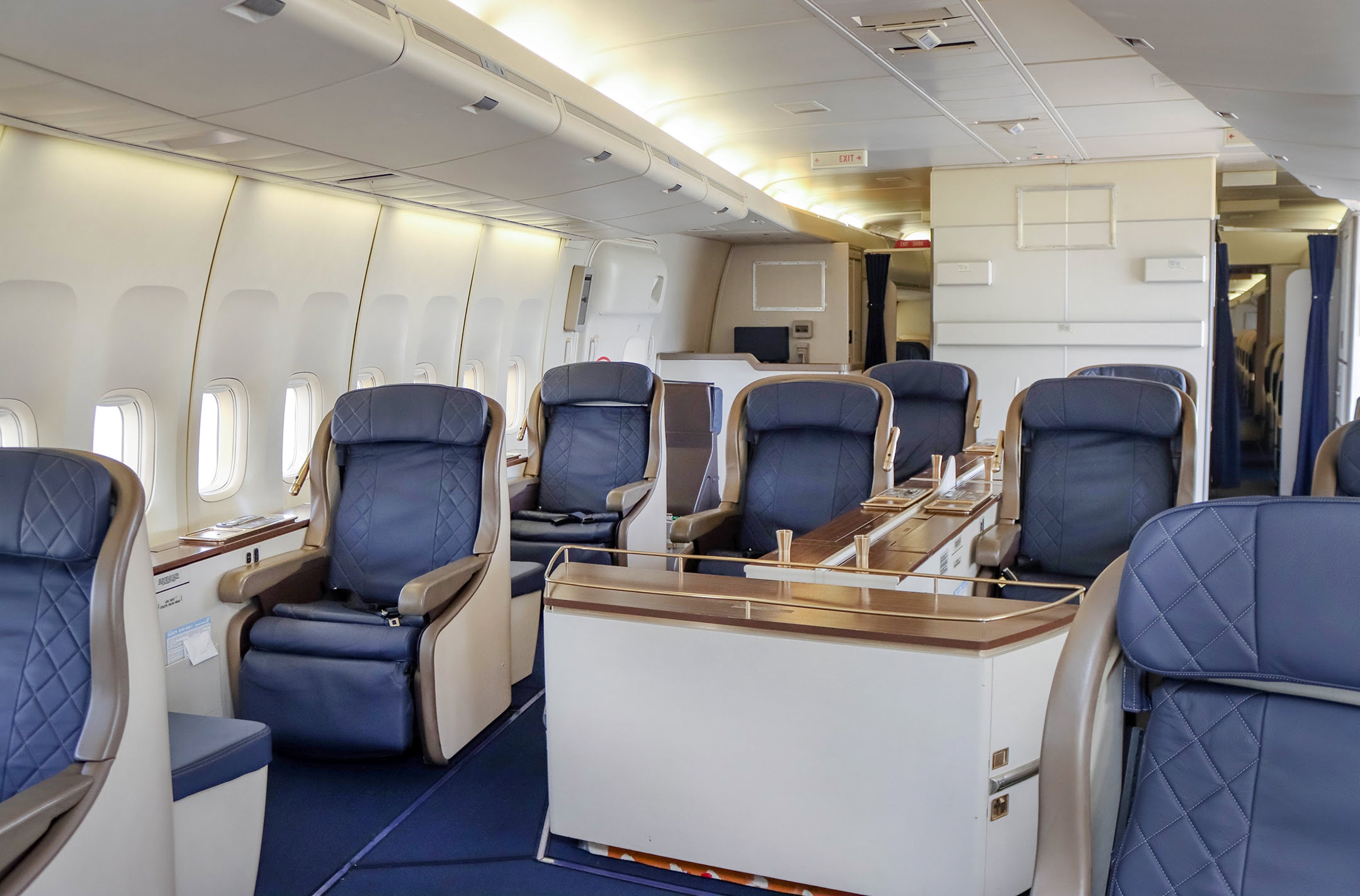
First Class seats for the ultimate in luxury and service.
Business Class seats for maximum privacy and comfort.
Economy class seats with a larger seat pitch than traditional carrier.
State-of-the-art in-flight WiFI entertainment system with in-seat power.
Range: 7,285 nautical miles.
Of course, these jets flew for other airlines before landing at Atlas. For example, Atlas VIP 747 N263SG was built in 1999 and delivered to All Nippon Airways. Then it fell into the hands of Oasis Hong Kong Airlines in 2007, where it flew for a year before ownership changed to Wells Fargo Bank Northwest in 2008. Atlas Air picked up the aircraft in 2010.

Another example is N482MC, which was delivered new to Virgin Atlantic in 2001. Virgin then flew the aircraft until January 2021, when Atlas Air picked it up. This jet features 14 first-class seats, 64 premium economy seats, and 375 economy seats. In other words, all five of these planes are sort of time capsules to what flying a commercial 747 was in the 2000s and 2010s. N482MC is mainly used by the United States Air Force to transport military personnel.
These planes don’t just sit around, either. N481MC was last seen flying today from the Philippines to Hawai’i. The 747s aren’t alone, either. If a 747 is a bit too girthy for your charter needs, Atlas Air also has five Boeing 767-300s with all-economy class configurations.
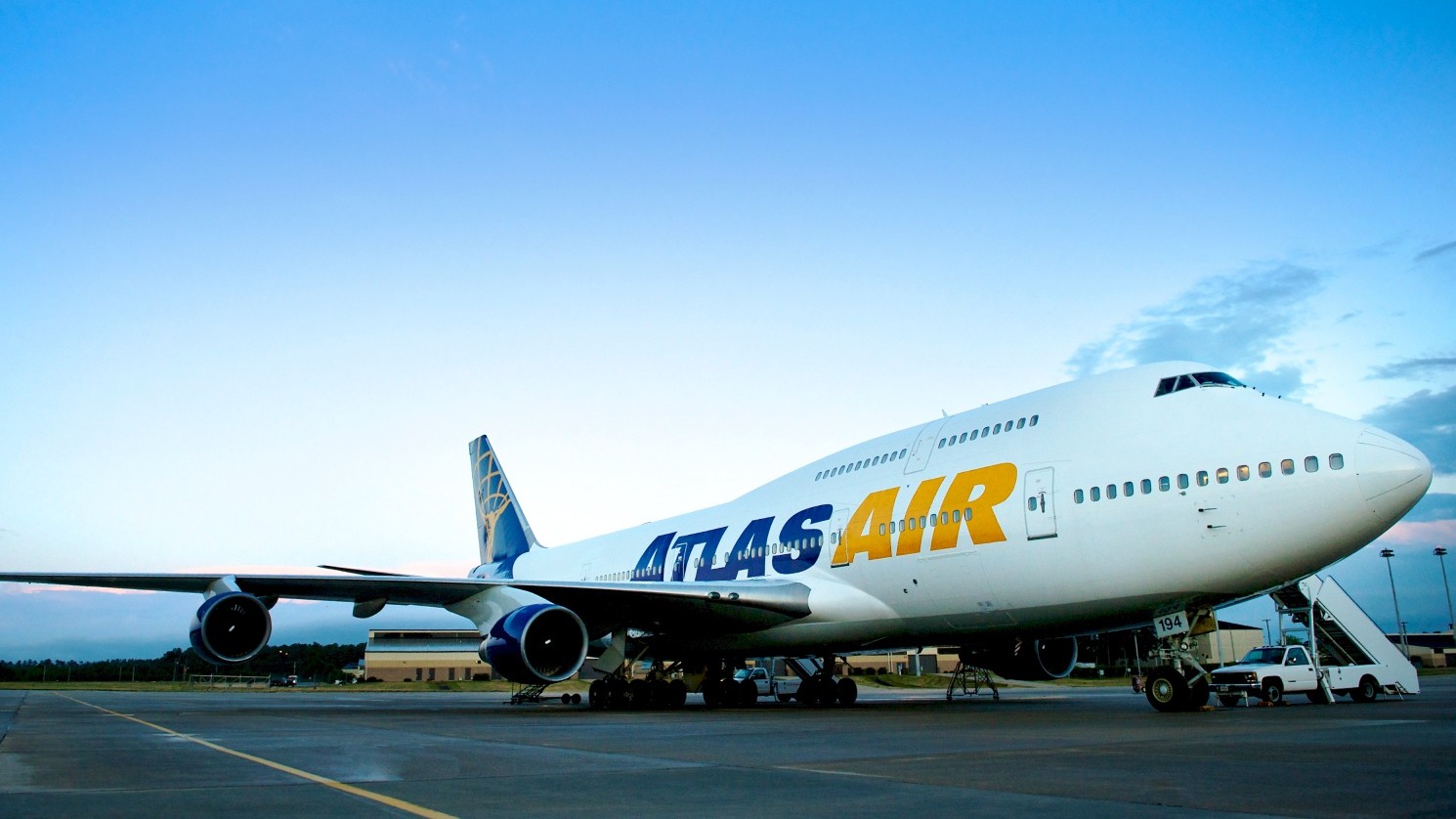
These planes are sort of an anachronism today. The Boeing 747-400 made its first flight on April 29, 1988, before going into service in 1989. Production of passenger models would continue until 2005. These gorgeous jets were 231′ 10″ long, had a maximum takeoff weight of 875,000 pounds, and thundered down the runway using four Pratt & Whitney PW4062 turbofans good for 63,300 pounds of thrust each. Other engine options included the General Electric CF6 or the Rolls-Royce RB211 with somewhat similar outputs.
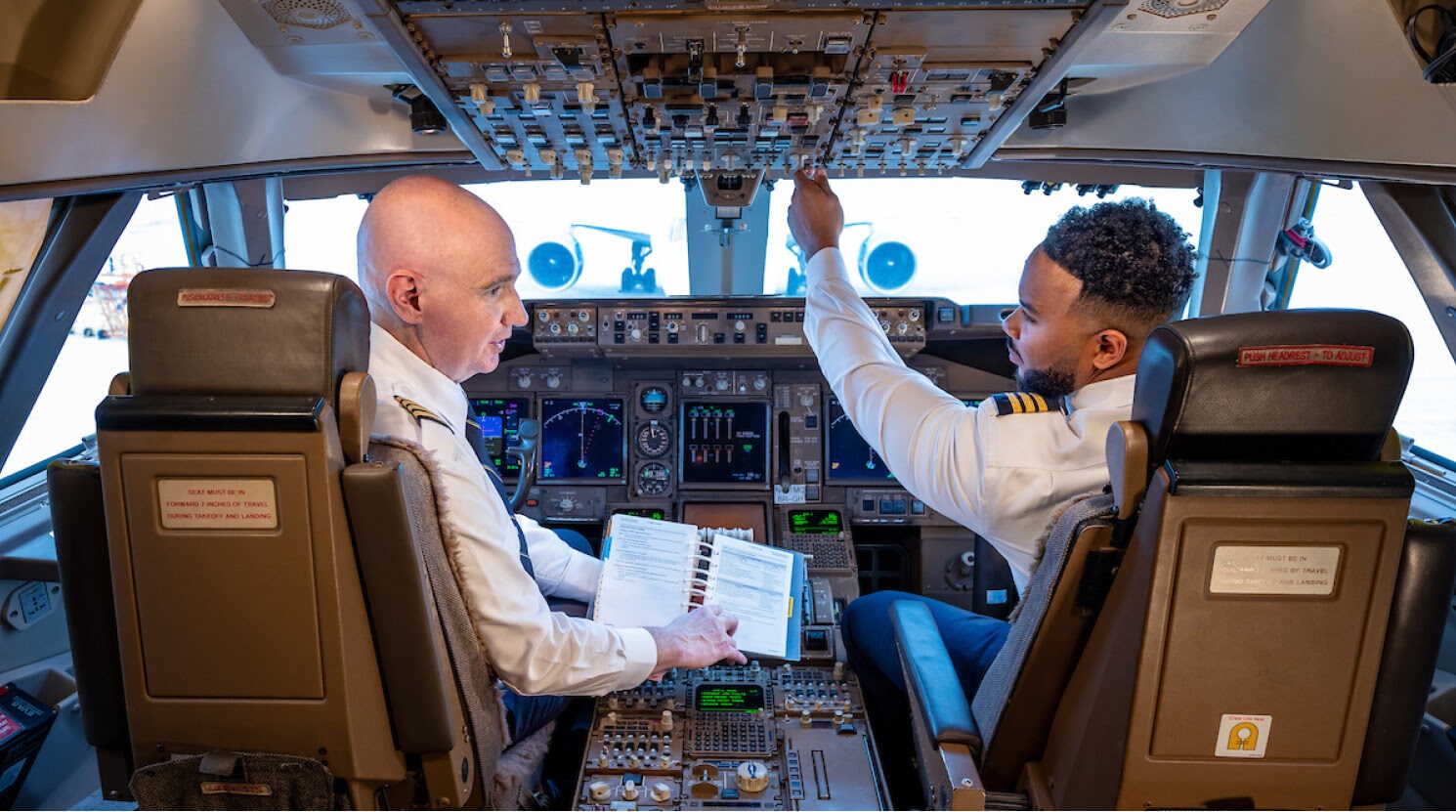
Inside, pilots enjoyed a flight deck featuring CRT screens for instrument displays and a Honeywell flight management computer. In a tight all-economy configuration, a 747-400 could haul up to 660 people like sardines.
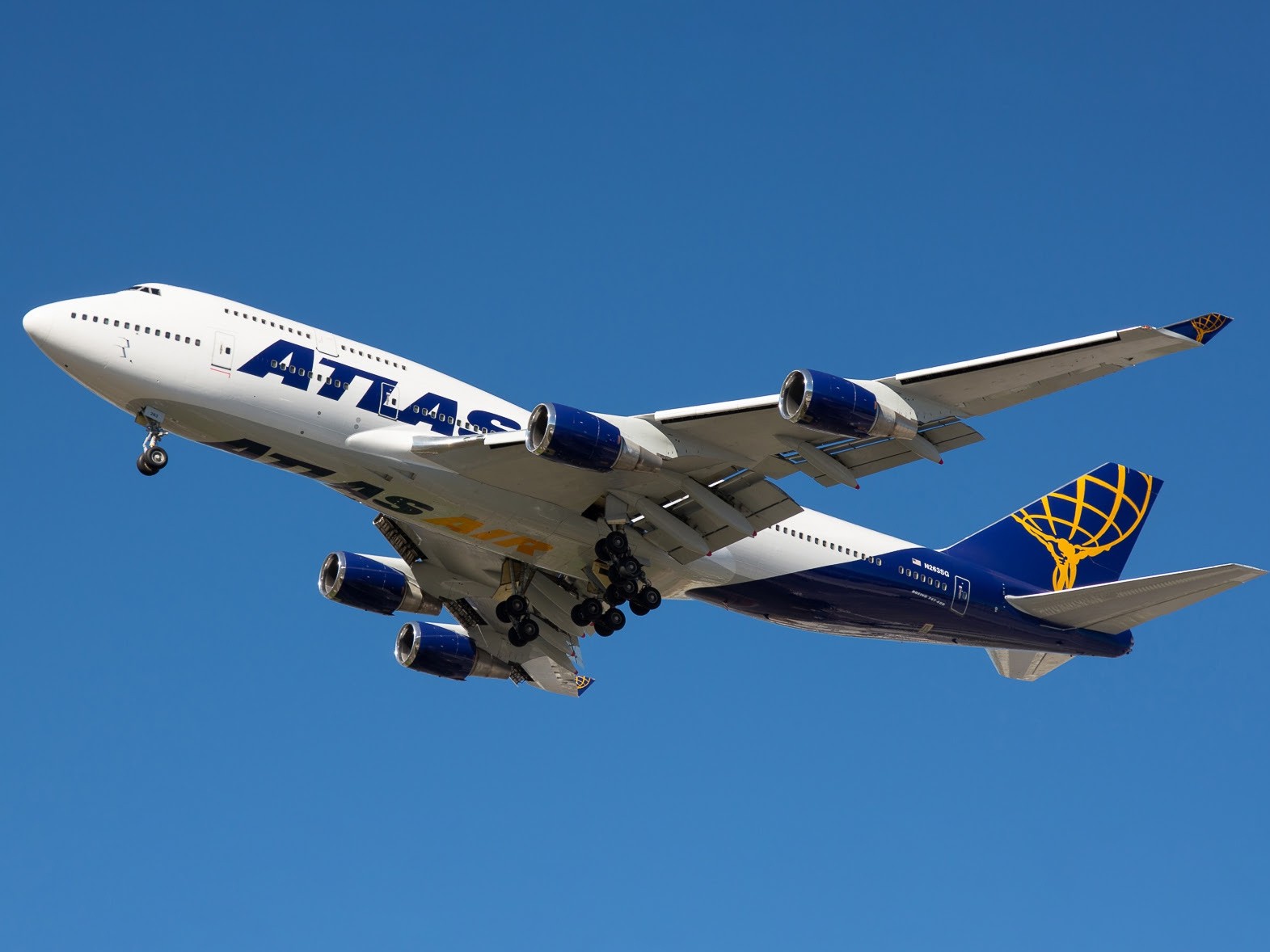
Boeing built 694 of them. According to Simply Flying, of that production, only 43 passenger variants remain in service. Of those, only 26 examples are actively flying. The airline with the largest fleet of active passenger Boeing 747-400s is Lufthansa, which still runs eight of them to and from Frankfurt in Germany.
While passenger 747-400s are rare, they can be found all over the world hauling cargo. Pop open a game of SkyCards and hone in on a major cargo hub, and you’re bound to see one or two of them taking off or landing.
The Queen’s Not Dead Yet
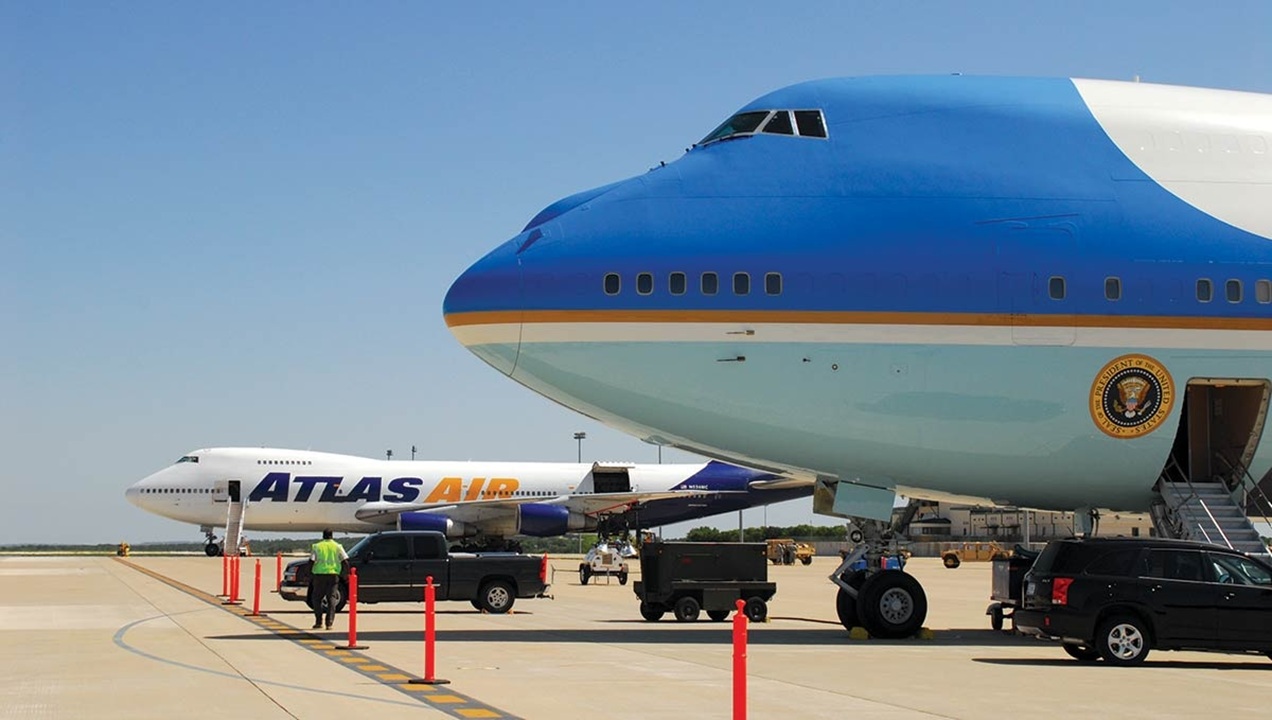
Sadly, chartering one of the Atlas 747s probably isn’t going to be for most people. Atlas doesn’t give pricing, but, depending on who you ask, a Boeing 747-400 can be $15,000 per hour to run on the low end and closer to $30,000 per hour on average. So, if you want a 747 for your wedding, you’d better be loaded. But, if your rich friend is getting married, maybe nudge them towards chartering a 747, and you might be able to experience a rare opportunity to fly in a 747 aboard an American airline.
Still, I love everything about this. I adore that, technically, passenger 747s are still flying for an American airline. It just blows my mind that the airline flying them is usually known for cargo operations.
While the chances of you flying on one of these is low, at the very least, you now have a handful of fun planes to look for at the airport. If you see an Atlas Air Boeing 747 with all of its windows intact, there’s a chance it’s one of these passenger jets. The world is going to be a sadder place when the 747 is gone, but for now, there’s still time to dream.
Top graphic image: Atlas Air