The Caribbean has a crowd problem.
If you’ve been to Cancun, Punta Punta, or Montego Bay recently, you know the drill. You pay a premium to stay inside a walled resort, you fight for a pool chair at 7:00 AM, and you eat overpriced food that has nothing to do with the local culture. It’s a mass-produced vacation.
But there is a growing movement of travelers who are actively rejecting this model. They are seeking out the islands that are slightly harder to get to, where the mega-resorts haven’t paved over the local life, and where the prices haven’t been artificially inflated by cruise ship crowds.
If you are willing to trade the convenience of a direct flight for an authentic, low-density experience, here are 4 Caribbean islands that have smaller crowds and lower prices in 2026.
1. Caye Caulker, Belize
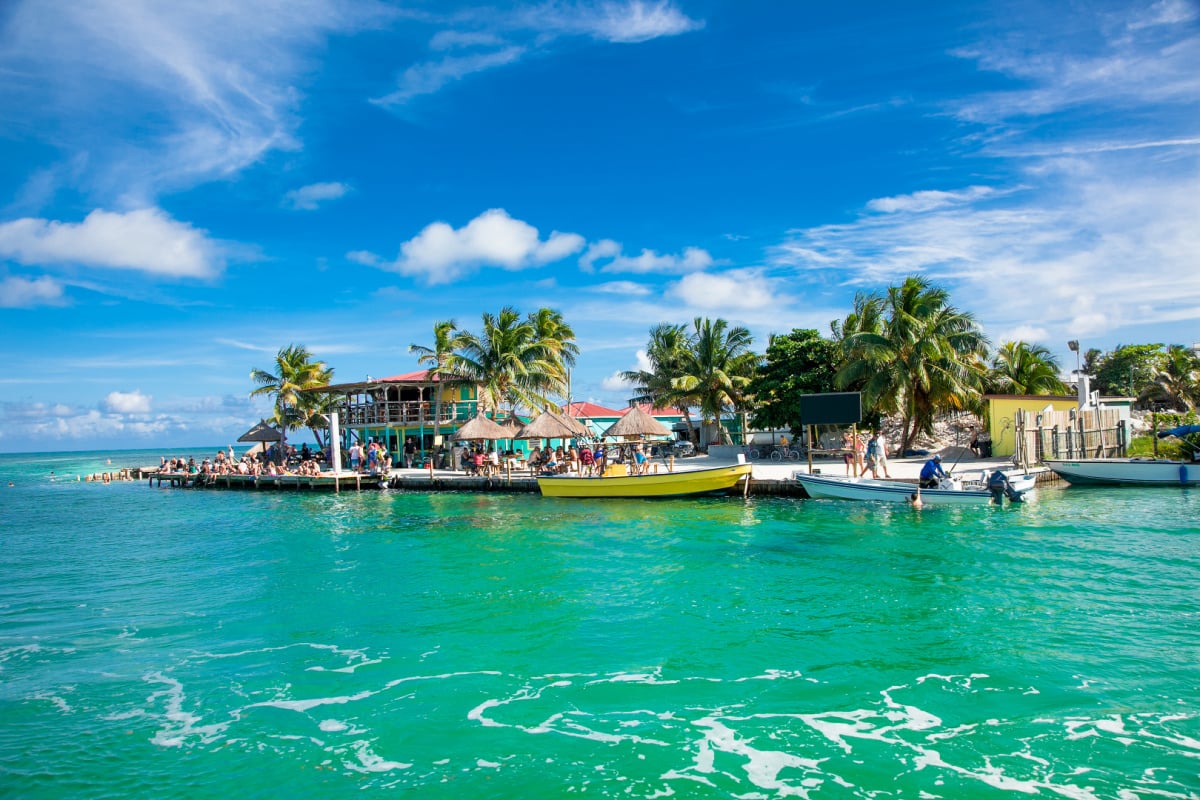
The “Go Slow” Sanctuary
Right next door to the heavily developed Ambergris Caye is Caye Caulker. The island’s official motto is “Go Slow,” and they enforce it physically: cars are strictly banned. The only way to get around the sandy streets is by walking, biking, or taking a golf cart.
This lack of infrastructure is the island’s greatest defense mechanism. It prevents the rapid suburbanization that ruins so many coastal towns. The island is split in half by a canal, leaving the northern half as a protected nature reserve, while the southern half remains a colorful, walkable village.
The Price of Authenticity:
Because Caye Caulker relies heavily on local fishermen rather than imported resort food, it is incredibly affordable. You can get a massive plate of fresh snapper or conch ceviche at Reina’s for around $25, or grab street food for $5. Entire boutique bungalows rent for under $150 a night.
The Strategy:
Fly into Belize City (BZE) and take the 45-minute water taxi over to the island. Spend your days snorkeling Shark Ray Alley or the Great Blue Hole on the Mesoamerican Barrier Reef, and your evenings eating jerk lobster with your toes in the sand.
2. Little Corn Island, Nicaragua
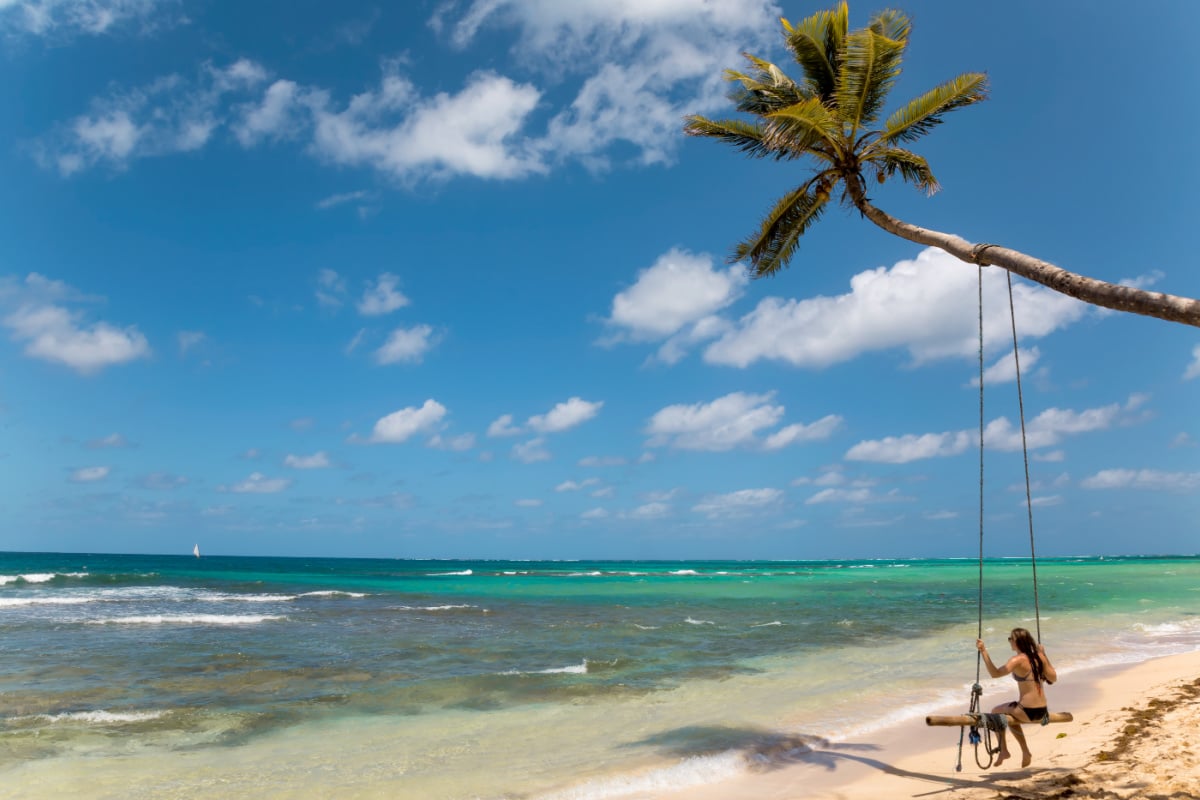
The Frontier of the Caribbean
If you want to know what the Caribbean looked like 50 years ago, you have to go to Little Corn Island. Located 40 miles off the coast of Nicaragua, this island measures just over one square mile and has absolutely zero paved roads, no cars, and no ATMs.
The culture here is deeply Afro-Caribbean, and Creole English is the primary language—a stark contrast to the Spanish-speaking mainland. The economy is still driven by artisanal lobster fishing, meaning you are stepping into a functioning community, not a tourist trap.
The Price of Authenticity:
The isolation keeps prices aggressively low. You can find double-occupancy rooms for as little as $30 a night, and a multi-course, fresh lobster dinner at a local spot like Rosa’s Restaurant will set you back about $10.
The Strategy (The Friction):
Getting here requires commitment. You fly into Managua, take a domestic turboprop flight to Big Corn Island, and then negotiate a 25-minute, open-ocean “panga” boat ride to Little Corn. That wet, bumpy boat ride is the filter that keeps the cruise crowds away.
3. Roatán’s East End, Honduras
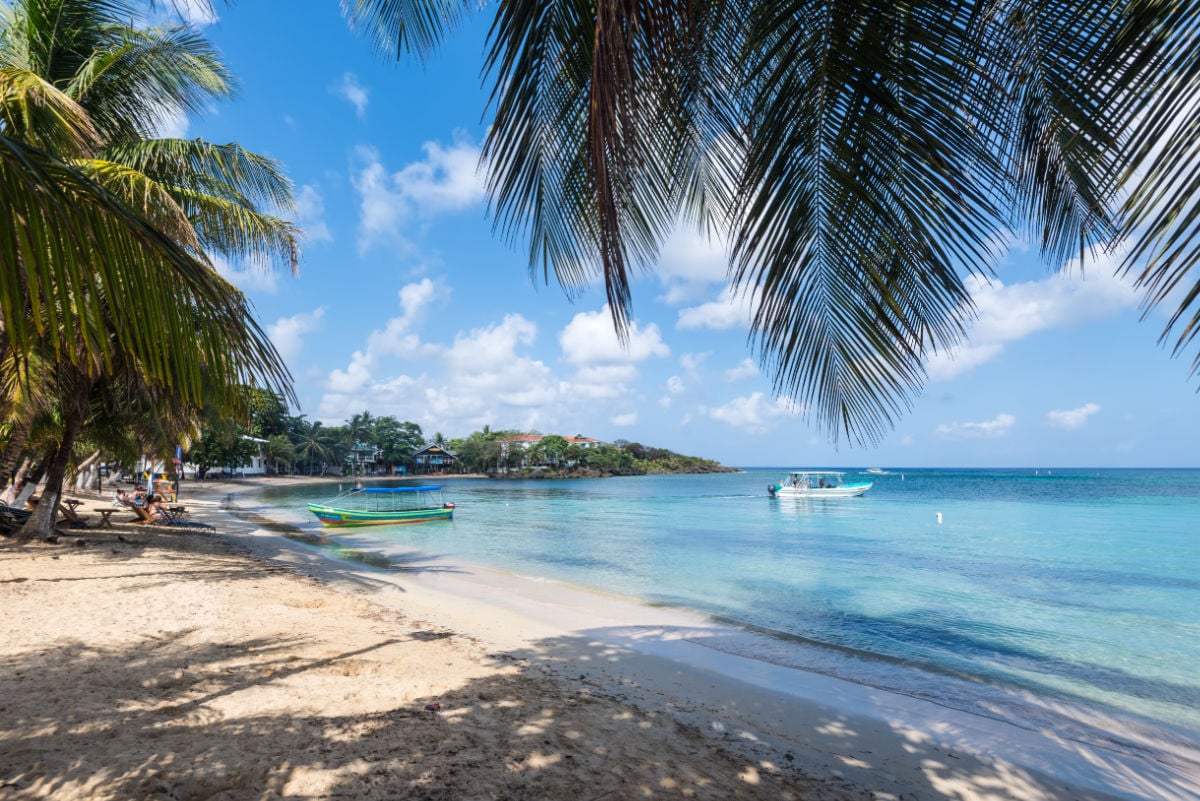
The Garifuna Stronghold
Roatán is a tale of two islands. The West End is packed with cruise ship terminals and crowded beaches. But if you rent a car and drive an hour east, the pavement degrades, the crowds vanish, and you enter the authentic heart of the island.
The East End is defined by historical cattle ranches, mangrove forests, and traditional fishing villages like Punta Gorda—the oldest permanent settlement on the island and the ancestral home of the Garifuna people. Here, tourism is community-based; you can take tours to learn about their history, music, and food, directly supporting the locals.
The Price of Authenticity:
Waterfront rooms on the East End can be found for around $50 a night. Street food is a staple—grab a baleada (a thick tortilla filled with beans and cheese) for $2. World-class scuba diving on the reef is also incredibly cheap, averaging $45 a tank.
The Strategy:
Head to Oak Ridge, known as the “Venice of the Caribbean,” where houses are built on stilts over the water. Hire a local to take you on a wooden dory tour through the mangrove tunnels or out to explore the old pirate ruins at Port Royal.
4. Dominica
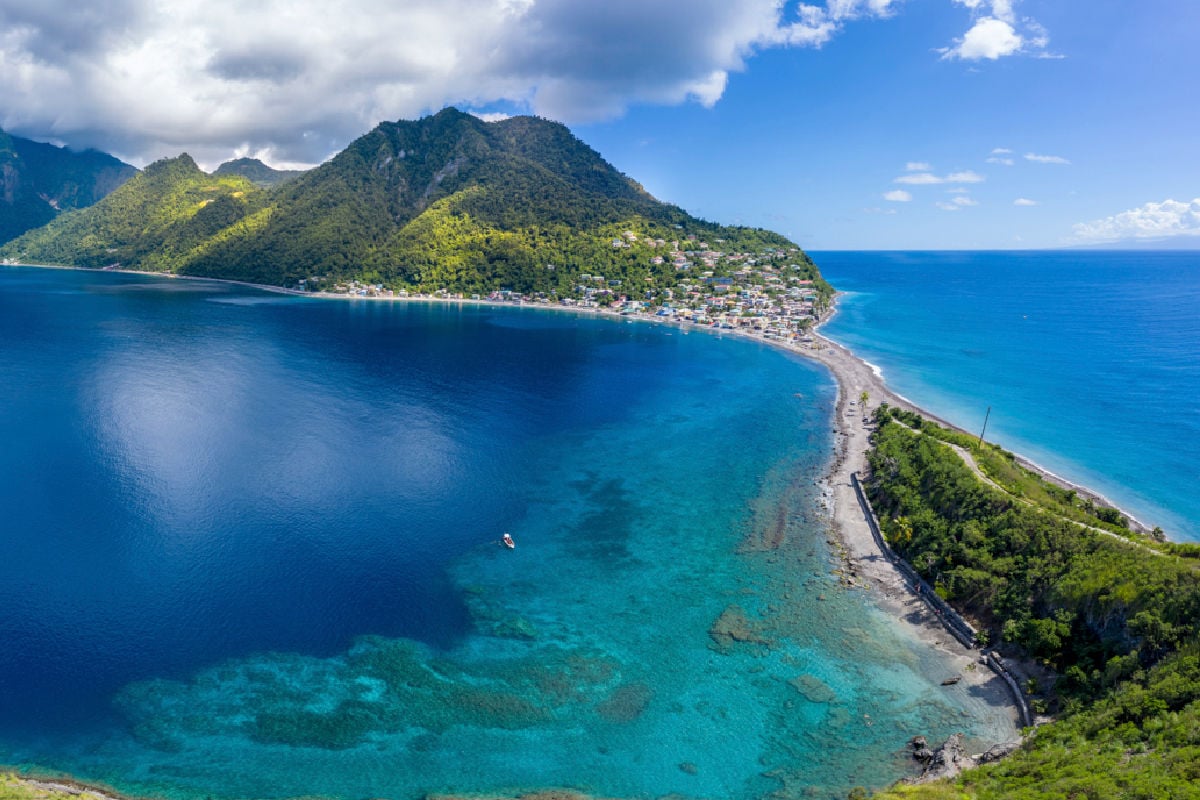
The Nature Island
Do not confuse this with the Dominican Republic. Dominica is a sovereign island nation in the Lesser Antilles, sitting between Guadeloupe and Martinique. It is the absolute apex of Caribbean eco-tourism.
Dominica’s defense against mass tourism is its geology. It is covered in sheer volcanic peaks, dense rainforests, and black sand beaches. There is no room to build sprawling, 500-room all-inclusive resorts, which has perfectly preserved the island’s Creole culture and pristine environment.
The Price of Authenticity:
Because the island produces so much of its own food (the volcanic soil is incredibly fertile), the cost of living is shockingly low. You can live like a king on $80 a day, covering a basic eco-lodge, public transport (minibuses cost under $1), and local meals.
The Strategy:
This is an island for doing, not just sitting. Hike a section of the 115-mile Waitukubuli National Trail, or take the grueling 3-hour trek through the jungle to see the Boiling Lake (the second-largest hot spring in the world). For a unique underwater experience, snorkel the Champagne Reef, where active volcanic vents release bubbles from the sea floor.

The Travel Off Path Advantage: Your Travel Toolkit
Subscribe To Our Latest Posts
Enter your email address to subscribe to Travel Off Path’s latest breaking travel news, straight to your inbox.