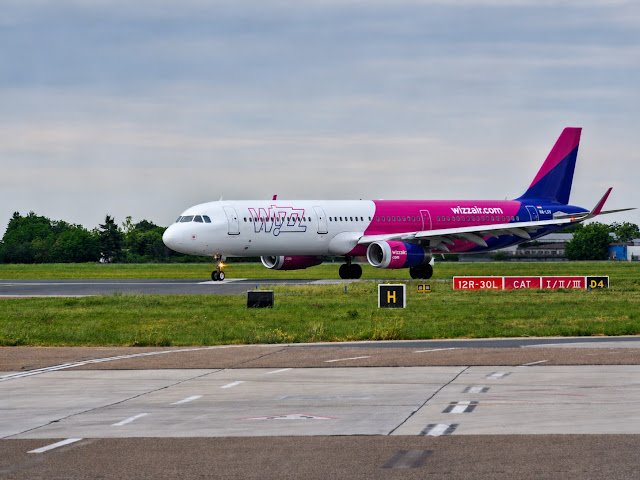

Wizz Air has accused Serbian authorities of introducing discriminatory and protectionist measures that could undermine its long-established operations in the country. In an interview with EX-YU Aviation News, Wizz Air’s Chief Corporate Officer, Owain Jones, outlined the airline’s concerns over the recently adopted regulation, arguing it is incompatible with Serbia’s obligations under the European Common Aviation Area (ECAA) Agreement and warning it could have far-reaching consequences for competition and consumer choice in the market.
EX-YU Aviation News: What do these new rules mean for Wizz Air in Serbia?
Owain Jones: As things currently stand, Serbia has signed the ECAA Agreement, and that gives an unlimited right to Serbian carriers and to European carriers to fly between Serbia and the EU. Now, for fifteen years we have had a base here in Belgrade to fly between Serbia and the EU using those traffic rights. We do that in a number of other Balkan countries as well and that’s generally understood. That’s exactly what the agreement is intended to achieve.
What the Serbian authorities have done is implement a new regulation in Serbia which says that if you’re an EU carrier and you’re flying between the EU and Serbia, you must start the rotation in the EU. So that would mean that we would be prohibited from having a base here in Belgrade. A base we started fifteen years ago, we have more than 200 colleagues, we carried more than fourteen million passengers. This year capacity is up 20% year-on-year for the summer. So, this is an important market for us, but just as important market for Serbian consumers. We are the low cost alternative here in Serbia.
Why do you think these actions have been taken now?
I think it’s quite clear. There’s an incumbent carrier which is now wholly government owned. Over the last few years, it’s swallowed hundreds of millions of euros of Serbian taxpayers’ money to keep it afloat. Wizz Air has been investing its own money to build up the base that we have here. So, as far as we’re concerned, it’s an illegal move, it’s discriminatory, and it’s clearly protectionist.
Are you implying Air Serbia is behind these changes?
I don’t know if Air Serbia is behind it, but certainly Air Serbia is 100% owned by the government.
What will Wizz Air’s course of action be now?
So, we have a Plan A and we don’t have a Plan B. Our Plan A is that we believe that this move is illegal. We are calling on the Serbian authorities to reverse direction because they will be in breach of their international obligations. If they push ahead, they will be depriving Serbian consumers of a high-quality, low-fare airline giving significant connectivity to Serbia, boosting the Serbian economy, supporting thousands of Serbian jobs. That’s the direct result for Serbia. For us, we believe that it’s a discriminatory, illegal move. It must be reversed. So, we’re calling on the Serbian authorities to see sense. We’re also calling on the European Union. The European Union has to enforce the obligations of Serbia under the ECAA.
Could Wizz Air seek a Serbian Air Operators’ Certificate (AOC)?
No, as I say, our plan at the moment is that this regulation is illegal. It has to be stopped.
Some critics contend that your recent network growth has focused primarily on routes already served by Air Serbia, rather than opening up new and underserved markets from Belgrade. How would you respond to those claims?
Look, our business model is very much to stimulate demand. We operate as an ultra-low-cost carrier. We’re an extremely efficient company, an extremely efficient airline. We have the youngest fleet flying in Europe, with the lowest carbon dioxide emissions per passenger-kilometre on the continent, and that allows us to offer low fares. So, what we provide is a stimulation to the market. We don’t take other people’s customers. We grow markets by keeping fares low and making it more affordable for more people to fly.
Have you had discussions with Belgrade Airport’s operator, another EU company, about these latest developments?
We believe that most stakeholders in Serbia fully support our position. We need to be having the dialogue with the government, and the EU needs to be having that dialogue as well.
Has Wizz Air ever faced similar measures in any other country?
This is the first.
I think the key thing is that Wizz Air comes in and stimulates demand. We’ve never been a company that steals other people’s passengers. We concentrate on being efficient, we concentrate on having the lowest prices, and we concentrate on satisfying demand for our new customers. So, we’re the airline that democratizes air travel. We make it more affordable. That’s always been our mission for the last 22 years. It’ll continue to be our mission.



