WASHINGTON- A stranded business class passenger flying with American Airlines (AA) reported being offered accommodation at a Motel 6 following an overnight disruption, raising questions about the quality of airline-provided hotels during controllable delays at Dallas Fort Worth International Airport (DFW).
The incident highlights a broader industry issue, where airlines provide complimentary hotel stays after cancellations caused by factors within their control, but are not required to meet any minimum accommodation standards.

American Airlines Hotel Policies in the US
Airlines in the United States generally provide hotel accommodation when passengers face overnight delays caused by mechanical issues or crew shortages. These obligations have strengthened in recent years under regulatory pressure, but the rules focus on availability rather than quality.
As a result, passengers may receive rooms at budget properties located near airports. While the accommodation fulfills the airline’s obligation, it may not align with the expectations of premium cabin travelers.
Industry observers note that airlines prioritize cost control when arranging distressed passenger lodging. This often leads to contracts with lower-cost hotel chains, which can handle large volumes of stranded passengers at short notice.

Passenger Alternatives
Travelers increasingly choose to arrange their own accommodation instead of relying on airline-provided options. This approach allows them to select better-quality hotels and avoid long queues at service counters.
One common strategy is to use credit cards that offer trip delay coverage. These policies typically reimburse hotel stays, meals, and transport if delays exceed a defined threshold, provided passengers retain receipts.
Passengers without such coverage may request distressed passenger rates at hotel desks or airline baggage offices. These rates are often lower than standard pricing and can provide access to better properties than those assigned by airlines.
Frequent travelers also use loyalty points to secure last-minute stays. Airport hotels often have favorable redemption rates due to airline crew contracts, making points a practical alternative during disruptions.
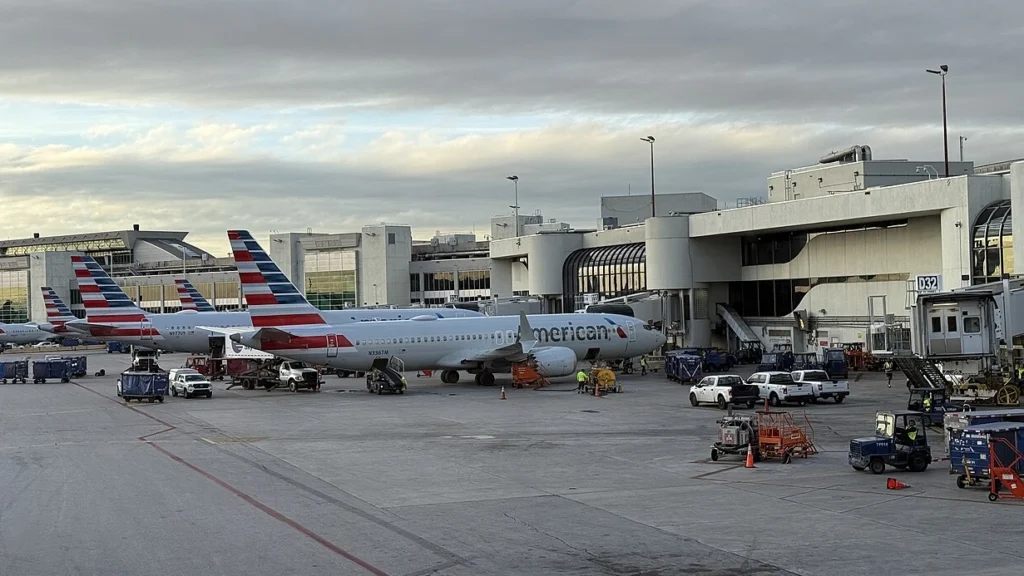
https://commons.wikimedia.org/wiki/File:American_Airlines_N336TM_at_Miami_International_Airport_Terminal_D.jpeg
Industry Implications
The case underscores a gap between regulatory requirements and passenger expectations. While airlines must provide accommodation, they are not obligated to ensure a certain level of comfort or service.
This disconnect becomes more visible when premium passengers, including those traveling in business class, receive basic lodging options. The inconsistency can affect customer satisfaction, especially on long-haul itineraries.
For airlines, balancing operational costs with passenger experience remains a challenge. For travelers, the incident reinforces a practical takeaway: accepting airline-provided accommodation may not always deliver the most comfortable outcome.
Stay tuned with us. Further, follow us on social media for the latest updates.
Join us on Telegram Group for the Latest Aviation Updates. Subsequently, follow us on Google News


