For its tenth annual survey, the British magazine polled around 24,000 residents across major cities worldwide, covering topics from nightlife and street food to dating, transport and, crucially, how easy it is to explore a city on foot.
The ranking is based on the proportion of locals who rated their city’s walkability as “good” or “amazing.” To ensure global representation, only the highest-scoring city from each country was included. The list also considers how easily visitors can navigate without cars, alongside factors such as density of attractions, safety and overall street experience.
 |
|
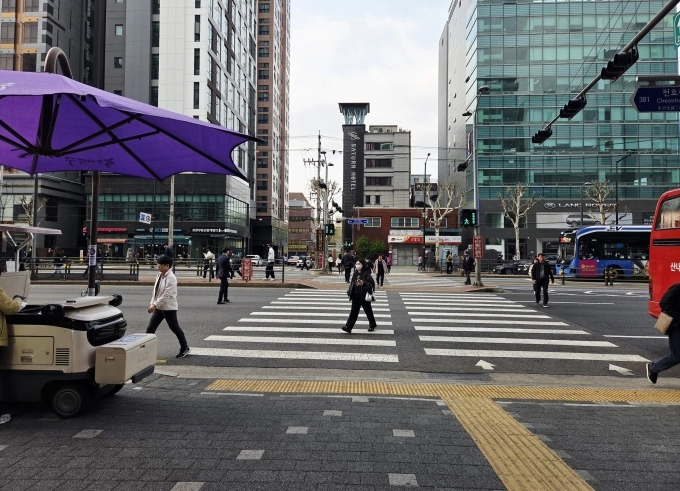
People walk on the streets of Seoul, South Korea, April 2025. Photo by VnExpress/Minh Nga |
Seoul’s appeal lies in its seamless blend of tradition and modernity, with historic districts, shopping areas and cultural hubs often located within walking distance of one another.
Neighborhoods such as Myeongdong, Insadong and Bukchon Hanok Village allow visitors to move easily between street food markets, heritage architecture and contemporary retail zones, according to Time Out.
The city’s pedestrian-friendly infrastructure further enhances its walkability. Projects like the Cheonggyecheon Stream have transformed former highways into scenic walking corridors, while wide sidewalks, efficient crossings and clear signage make navigation intuitive for both residents and tourists.
The recognition adds to Seoul’s strong global standing in 2026. The city also ranked ninth in Time Out‘s broader list of the world’s best cities, marking its first entry into the global top 10.
Urban planners and tourism experts say the growing appeal of walkable cities reflects shifting travel preferences, with visitors increasingly seeking immersive, human-scale experiences. In Seoul, that translates into neighborhoods where cafés, galleries, parks and historic landmarks are all accessible within a short stroll.
Coming in second is Edinburgh. Despite its hills and cobblestone streets, the compact Scottish capital allows major attractions such as Calton Hill, Edinburgh Castle and the Old Town to be reached within 15 minutes on foot. Walking is central to the experience, from climbing Arthur’s Seat for panoramic views to navigating the city during the Edinburgh Fringe.
New York City ranks third. Despite its scale and constant bustle, Manhattan remains easy to navigate thanks to its grid system, introduced during the 19th-century population boom. With roughly 20 blocks per mile and Fifth Avenue acting as the dividing line between east and west, the layout keeps the city manageable on foot. Walkability extends to Brooklyn, particularly neighborhoods such as DUMBO, Cobble Hill and Williamsburg, all linked by the pedestrian-friendly Brooklyn Bridge.